


Texas A&M Transportation is no longer just a parking issue for Aggies home games. As of Oct. 20, 2026, the enhanced plan has changed how fans reach Kyle Field, how pedestrians move through West Campus Garage, when permit holders must adjust, and how shuttles fit into game-day timing. The changes are practical, not cosmetic: separate walkers from vehicle lanes where possible, move traffic control earlier, and give fans fewer last-minute decisions around campus.
For Texas A&M football crowds, the biggest change is the way the plan treats the walk to and from Kyle Field as part of traffic operations. The stadium crowd still creates heavy pressure on Olsen Boulevard, John Kimbrough Boulevard, Reed Arena, West Campus and the surrounding garages. The difference in 2026 is that more of the movement is being assigned to specific routes, timed closures and pre-set parking rules before fans reach the stadium.
Why Texas A&M Transportation Changed Fan Flow
Texas A&M Transportation Starts With Separation
The key adjustment near West Campus Garage is a new pedestrian pathway through the basement level of WCG. Texas A&M says the route connects Olsen Boulevard to Pickard Pass and separates pedestrians from vehicle entry and exit lanes along John Kimbrough Boulevard, according to the official WCG event pedestrian path. That matters because postgame movement around Kyle Field is not just a traffic-volume problem. It is also a conflict-point problem, with thousands of walkers and drivers trying to clear the same zone at the same time.
The pathway does not remove congestion by itself. Texas A&M has not published an official time-savings estimate for fans using the route. Its value is more direct: it gives pedestrians a defined connection through a garage area that had been tied closely to vehicle access. In game-day terms, that can reduce hesitation, cut down on cross-flow and make the postgame exit more predictable for fans headed toward West Campus or parking areas beyond Reed Arena.
After-Action Reviews Keep The Plan Moving
The Kyle Field transportation plan was first implemented in 2014 and has been refined through reviews after each home football game. Those reviews measure congestion across about 80 miles of roadways, including where traffic lasts longest and where it creates the sharpest pinch points. That process explains why the 2026 changes are more operational than promotional. The plan is built around repeated adjustments, not one large change.
That matters for Aggies fans because game-day traffic patterns are different depending on kickoff time, opponent interest, weather and campus activity. A night game can stack arrivals differently than an 11 a.m. window. A late-arriving crowd changes the value of shuttle timing. A tight fourth quarter can delay the main exit wave. The enhanced plan gives Texas A&M more structure before those variables show up.
What Changed Around West Campus Garage
The West Campus Garage Route
The West Campus Garage change is the most visible pedestrian adjustment. WCG permit holders must remove vehicles from Row L on Level B1 by 12:00 p.m. on the Friday before each home football game so the new pedestrian pathway can be cleared, according to Texas A&M’s football parking information. That deadline shifts part of game-day planning into Friday and puts permit holders on a firm clock before football traffic reaches campus.
For fans, the practical effect is simple. Anyone parking near West Campus or walking through that side of campus should expect the garage to function as both a parking structure and a controlled pedestrian route. The Texas A&M Transportation adjustment at WCG is meant to reduce the overlap between people leaving the stadium and vehicles trying to exit toward John Kimbrough Boulevard.
Resident And Permit Holder Effects
Resident permit holders in West Campus Garage also have specific rules. WCR permit holders may leave their vehicles in the garage and may re-enter on game day without paying, but they must move vehicles to Level P5 or higher by 6:00 a.m. on game day. That is a small detail with real consequences for students who live on campus or near West Campus and treat the garage as part of their regular routine.
Lot 100 also changed in 2026. Much of the Fan Field and Lot 100 area is reserved on game days. As of Aug. 24, 2026, the Lot 100 area around Reed Arena required a Lot 100 permit and no longer accepted Any Valid Permit during weekdays. That puts more responsibility on fans and campus users to check the exact designation of their permit instead of assuming regular weekday access carries into football operations.
How Parking And Shuttle Timing Shift Plans
Permit Deadlines And Prepaid Parking
For fans without season parking permits, the prepaid parking rule is direct. ParkMobile is the only approved prepaid vendor, and permits bought through other vendors are not accepted. That reduces ambiguity at the lot entrance but increases the penalty for fans who rely on resale listings or third-party parking pages that are not part of the official system.
For Texas A&M Transportation planning, the point is not just payment. It is arrival control. If more fans have verified parking before they reach campus, attendants spend less time sorting out invalid permits at the point of entry. That does not eliminate lines, but it can help keep a queue from turning into a blocked lane near a heavily used lot.
Shuttle Windows And Road Closures
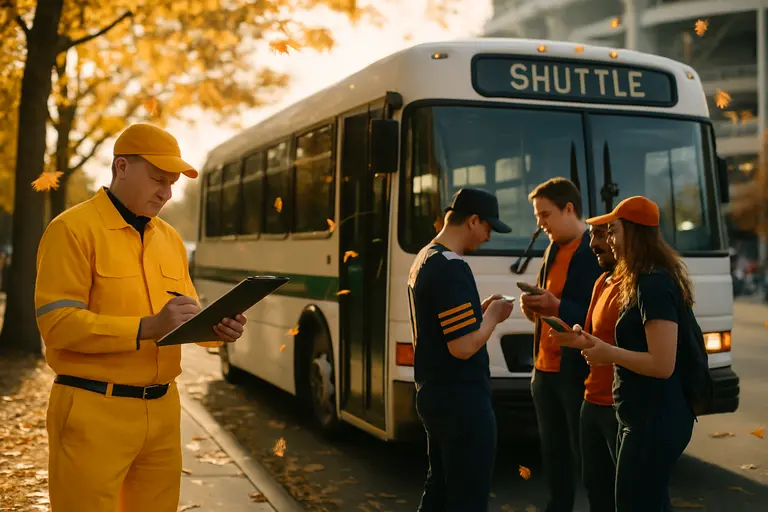
The shuttle schedule sets another planning marker. Game-day shuttles, both on campus and off campus, run from three hours before kickoff until one hour after the game ends. The Bush Library shuttle starts earlier, beginning five hours before the game and running until one hour after the final whistle. The Downtown Bryan Game Day Shuttle operates from the Roy Kelly Garage, with free and paid parking options downtown, and follows the three-hour pregame to one-hour postgame window.
Road closures frame the rest of the plan. Pregame closures begin 4.5 hours before kickoff, but no earlier than 7:30 a.m. Postgame closures start at the beginning of the fourth quarter so crews can stage exits and prepare the road network before the full crowd leaves Kyle Field. That timing matters for fans who plan to move cars during the second half or meet rideshare drivers near campus. By the fourth quarter, parts of the postgame traffic plan are already being put in place.
- Pedestrians: expect the WCG basement route to be part of the West Campus walking pattern.
- WCG permit holders: clear Row L on Level B1 by noon on the Friday before a home game.
- WCR resident permit holders: move to Level P5 or higher by 6:00 a.m. on game day.
- Prepaid parkers: use ParkMobile only for approved prepaid parking.
- Shuttle users: plan around the three-hour pregame window, with Bush Library service starting five hours before kickoff.
What Texas A&M Transportation Means Around Kyle Field
Practical Read For Aggies Fans
The plan does not change the central fact of Kyle Field game day: more than a stadium crowd is moving through a compact campus grid. It changes how that crowd is sorted. Pedestrians get a safer defined path through WCG. Drivers get earlier road-control signals. Permit holders get firm relocation deadlines. Shuttle riders get a clearer timing window. For readers tracking the broader campus access issue, the same pattern has shown up in recent Kyle Field transportation planning coverage.
The strongest read is that Texas A&M is trying to remove uncertainty before fans reach the pressure points. The plan asks more of fans before game day, especially WCG permit holders, resident permit holders and prepaid parkers. In return, it gives the university more control over pedestrian separation, garage access and postgame staging. For a venue the size of Kyle Field, that tradeoff is the core of the 2026 approach.
Texas A&M Transportation will still be judged by what happens after the fourth quarter, when thousands of fans leave at once and traffic spreads beyond campus. The enhanced plan gives the operation more defined pieces to work with. Fans who know those pieces before arriving should have fewer surprises around West Campus, Reed Arena, downtown shuttle service and the exits around Kyle Field.