
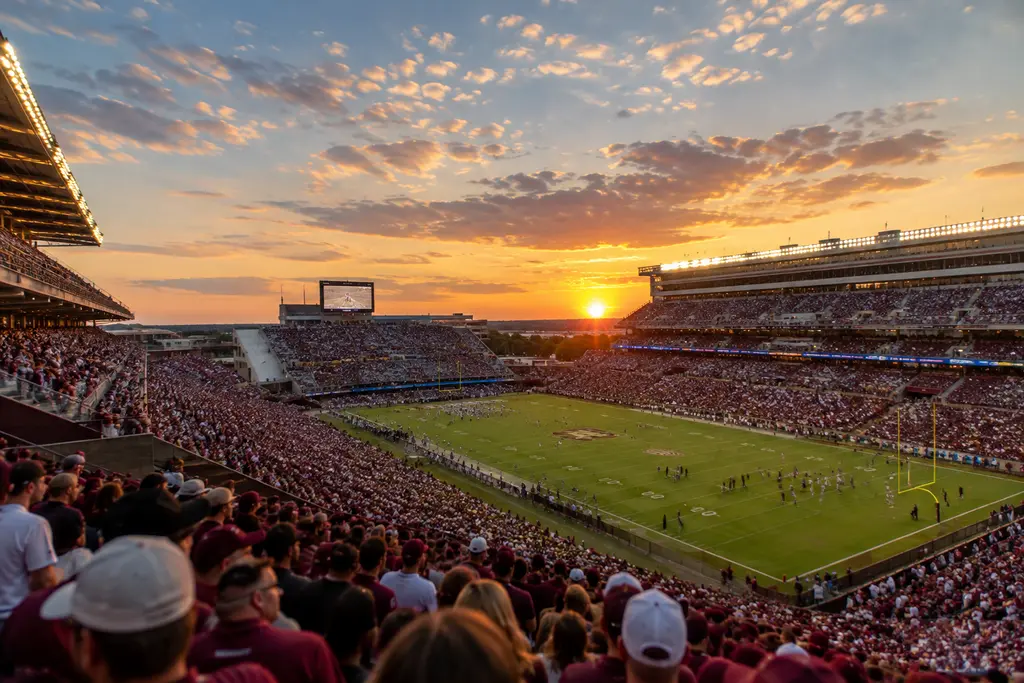

Texas A&M’s Kyle Field pathway is not a roster move, but it has become one of the more practical changes around Aggies football since September 4, 2026. The route was first operational for the opener against Missouri State, giving pedestrians a separated path through West Campus Garage on a football night built around heavy foot traffic, garage movement and the usual postgame pressure points near Kyle Field.
The change matters because game-day operations in College Station are not just about getting fans to their seats. They shape how quickly families leave, how safely students move through crowded zones and how drivers get out of West Campus Garage after the final whistle. Texas A&M built the path through the basement level of West Campus Garage to connect Olsen Boulevard with Pickard Pass during large events, according to the official WCG event pedestrian path page.
Why The Kyle Field pathway Matters On Game Day
How The Kyle Field pathway Separates Foot Traffic
The main football value is separation. Before this project, pedestrians moving between Olsen Boulevard and Kyle Field often had to cross vehicle entry and exit lanes in front of West Campus Garage. That created congestion in an area where two competing needs met at the same time: people walking toward or away from the stadium and vehicles trying to move through garage access points on John Kimbrough Boulevard.
The new route gives pedestrians a designated large-event path through the garage basement instead of sending them across those vehicle lanes. That does not remove every crowded spot around Kyle Field, and Texas A&M has not released public time-saved data in the research provided. It does, however, address one of the clearest friction points in the West Campus side of the stadium district: people and cars trying to occupy the same crossing space after a game.
What Changed At West Campus Garage
The project added a pedestrian entrance at the northwest corner of West Campus Garage and expanded the northeast corner pedestrian entrance near Pickard Pass with a reconfigured plaza. Those details matter because a pathway is only useful if its entry points can handle the traffic feeding into it. The route is not a normal daily shortcut through the garage. Texas A&M Transportation Services says it opens only for large events, including football games, while normal garage operations remain in place outside those event windows.
- The path connects Olsen Boulevard to Pickard Pass through the basement level of West Campus Garage.
- It is reserved for pedestrians during large events.
- Vehicles parked in Level B1, Row L are asked to relocate before large events so the route can operate without vehicle-pedestrian conflict.
- The intended benefit includes faster postgame garage exits by moving pedestrians away from vehicle lanes.
That last point is where the football experience intersects with transportation operations. A smoother walking route can help the fan leaving on foot, but it also can help the driver who previously waited while crowds crossed in front of garage exits.
How The Route Fits Texas A&M Football Operations
Postgame Exits Around John Kimbrough Boulevard
The Kyle Field pathway also fits the larger pattern of Texas A&M trying to control postgame surges rather than simply react to them. John Kimbrough Boulevard and the West Campus Garage zone are part of the western stadium approach, where pedestrians coming from Kyle Field, Reed Arena-area parking, Olsen Boulevard and campus routes can stack up quickly.
For football operations staff, the issue is timing. Pregame arrivals are spread across tailgating, team walk times and staggered seat entry. Postgame exits compress almost everyone into the same window. Even when a portion of the crowd remains for the band or walks slowly back to tailgates, the pressure near garage exits builds fast. Routing walkers through a controlled corridor gives transportation staff a cleaner way to move traffic without asking drivers and pedestrians to sort it out at the curb.
Why The SEC Crowd Size Matters
Texas A&M’s move into the SEC in 2012 changed the size and rhythm of football Saturdays in College Station. The Kyle Field Gameday Transportation Plan was first established in 2014 to handle growing traffic and pedestrian volume, according to the Texas A&M Transportation Institute’s review of the Kyle Field transportation plan. The West Campus Garage route is one piece of that longer plan, not a stand-alone fix.
That context matters for Aggies fans because Kyle Field crowds are regularly in the range where small bottlenecks feel much larger. A pedestrian crossing that seems manageable on a normal class day can become a choke point when tens of thousands of people leave at once. The pathway does not change the opponent, the kickoff window or the crowd count. It changes how one high-use stream of people is sorted on the west side of the stadium.
What Fans Learned From The September 4 Opener

A Route Built For Large Events
September 4, 2026, against Missouri State gave Texas A&M its first football test for the route. The game supplied the kind of large-event environment the project was designed to serve: heavy stadium foot traffic, garage exits, fans moving between Olsen Boulevard and Pickard Pass, and transportation staff trying to keep multiple streams from crossing at the wrong places.
The key takeaway from that debut was not that every delay disappeared. Texas A&M has not published a public performance report in the provided research with measured exit-time reductions or survey results from fans. The supported point is narrower and still significant: the school now has a dedicated pedestrian-only path through West Campus Garage during large events, and that path was created to keep walkers out of vehicle entry and exit lanes.
Planning Around Garage Restrictions
For fans who park in or near West Campus Garage, the operational details are worth knowing before game day. Vehicles in Level B1, Row L are asked to relocate ahead of large events because that part of the garage must support the pedestrian route. That is a small parking adjustment for a specific row, but it reflects the tradeoff behind most stadium operations changes: a limited inconvenience inside the garage can reduce a larger conflict outside it.
The same planning point applies to fans arriving from Olsen Boulevard or leaving toward Pickard Pass. The path is not meant to be discovered by accident after a game. It works best when people follow event routing and understand that the garage’s basement level has a special role on football days. For more background on the same stadium-access issue, prior coverage of the Kyle Field passageway changes tracked how the West Campus Garage connection altered foot traffic near Pickard Pass.
Why The Kyle Field pathway Matters For Aggies Game Days
For Texas A&M, the Kyle Field pathway is a game-day infrastructure move with a clear football purpose: keep people moving while reducing conflict between pedestrians and vehicles. It does not carry the visibility of a new scoreboard, a depth-chart change or an SEC home opener, but it directly affects the stadium experience that surrounds all of those things.
The most useful measure will be consistency across future large events. If pedestrians use the route as designed, and if garage traffic avoids the old stop-and-start conflict at crossing points near John Kimbrough Boulevard, the west side of Kyle Field should function better in the hardest postgame window. That is the practical value for Aggies fans: a safer, cleaner route between Olsen Boulevard and Pickard Pass, built for the crowd scale Texas A&M football now brings to College Station.