
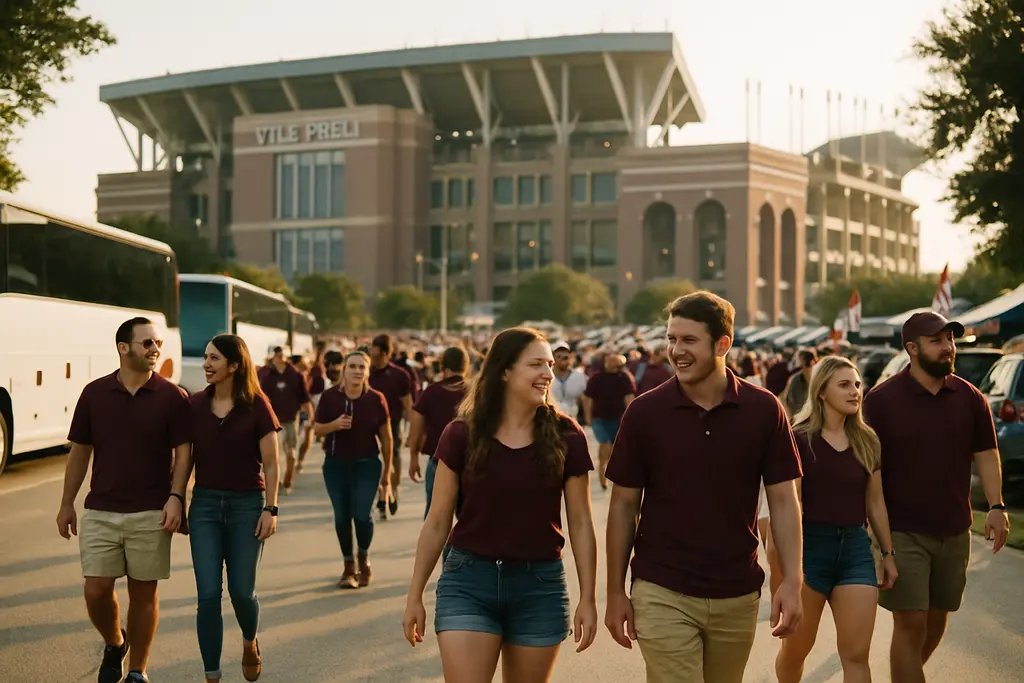

Kyle Field Transportation became part of the Texas A&M game-day story before the Aggies even kicked off against Missouri State on September 5, 2026. The changes were not flashy in the way a new video board or a fourth-quarter defensive stand can be flashy. They showed up in quieter places: a safer walk through West Campus Garage, earlier road closures, clearer separation between people and cars, and shuttle timing meant to take some of the strain out of a six-figure crowd moving through College Station.
That matters because the 12th Man does not begin at the stadium gate. It starts in the truck line on George Bush Drive, in the family group text about where to park, in the slow walk past tailgates, and in the decision to bring grandparents, kids, former students and first-timers into the same Saturday routine. Transportation is not the romance of Aggie football, but it can protect the rhythm that makes the day feel like Aggieland.
The September 2026 changes did not erase traffic. No plan can make more than 100,000 people vanish from a campus grid in a few minutes. What they did was push the operation toward separation: people here, cars there, buses in known lanes, and fans nudged to make parking decisions before they reached the bottleneck.
How Kyle Field Transportation Changed The Walk
The most human change was the new pedestrian passageway at the basement level of West Campus Garage. Texas A&M Transportation Services introduced it on September 3 and 4, 2026, ahead of the Missouri State game, creating a safer route between Olsen Boulevard and Pickard Pass without asking fans to cross active vehicle exit lanes, according to Texas A&M Transportation Services.
Kyle Field Transportation And The Garage Cut-Through
That sounds plain until you picture the scene. West Campus Garage is not just concrete and signs on a football Saturday. It is families unloading coolers, former students pointing children toward the stadium, visitors trying to read a campus they may see only once a year, and drivers trying to exit with the same urgency everyone else feels. The new passageway gave pedestrians a route that did not rely on reading a driver’s mind or trusting a hand wave in a crowded lane.
For regulars, the cut-through may become one of those small habits that defines a season. Fans learn which sidewalk breathes better, which corner pinches, where a stroller can move without stopping every few yards. For first-time visitors, fewer conflict points can mean less guessing. In a stadium culture built on timing, from the Spirit Walk to the War Hymn, reducing confusion before kickoff carries real weight.
This is where enhanced pedestrian routing fits the larger Kyle Field experience. It is not only about getting from a parking space to a seat. It is about making the approach feel less like a scramble and more like part of the day.
Separating Wheels From Foot Traffic
The 2026 operation also leaned into clearer boundaries around the stadium. The official game-day traffic update said no-wheels zones near Kyle Field began 3½ hours before kickoff and lasted until one hour after the game. That window matters because the busiest fan movement does not happen at one clean moment. It comes in waves: early tailgaters, late-arriving students, halftime walkers, postgame surges and families who pause to let the crowd thin.
By drawing a harder line around wheeled traffic near the stadium, the plan treated pedestrian safety as a game-day condition rather than a side issue. That is a smart fit for Kyle Field, where the crowd is not only large but emotional. People stop for photos. They meet friends. They move in packs. They sing. A transportation plan around this venue has to expect human behavior, not just map behavior.
Parking Decisions Moved Earlier
The September 5, 2026 opener came with more than 100,000 fans expected at Kyle Field. The parking system required fans to reserve parking ahead of time through ParkMobile, listed by Texas A&M as the only approved provider, or pay upon arrival in specified lots where prices ranged from $25 to $40.
That shift pushed one of the most stressful choices away from the stadium perimeter. Instead of circling late and hoping a lot still had room, fans were asked to plan before they joined the crowd. For a local fan who knows every road around campus, that may feel like one more pregame task. For a family driving in from Houston, San Antonio, Dallas-Fort Worth or East Texas, it can be the difference between arriving with a plan and arriving with a problem.
Digital Passes And The Cell-Service Problem
Digital parking and entry habits carry a catch at major events: phones do not always behave once tens of thousands of people gather in the same place. The research notes for the 2026 plan point to saved credentials and screenshots as practical safeguards because cellular service can be unreliable during large events on campus. That is not a glamorous upgrade, but it reflects the modern stadium reality.
The best game-day plan is the one that survives the moment a phone stalls, a child needs a restroom, or a group realizes one person has all the passes. Texas A&M’s push toward advance reservations only works for the fan experience if fans treat those passes like a ticket to the game itself: loaded, saved and ready before the car reaches campus.
Shuttles And Closures Set The Day’s Tempo
Road closures around Kyle Field now begin approximately 4½ hours before kickoff, with many roads moving to full closure by the fourth quarter so postgame traffic can be set before the final whistle. The listed roads include Houston Street, Joe Routt Boulevard, Gene Stallings Boulevard and Olsen Boulevard near West Campus Garage.
For some fans, that can feel restrictive. For operations crews, it is the price of order. A late closure can leave cars, pedestrians and buses competing in the same space at the worst possible time. Earlier closures ask fans to adjust, but they also give the traffic plan a chance to work before the crowd reaches its loudest and least patient stage.
The Shuttle Window Around Kickoff
Shuttle timing gave fans another path into the day. On-campus shuttles started three hours before kickoff, while off-campus routes, including the free Downtown Bryan shuttle from Roy Kelly Parking Garage, ran until one hour after the game, according to the official game-day traffic update.
That matters beyond convenience. Downtown Bryan has become part of the broader Aggie weekend pattern for many visitors, especially those who build a trip around meals, hotels and family time rather than only the game window. A free shuttle from the Roy Kelly Parking Garage gives fans a way to keep cars away from the tightest campus streets while still connecting to the stadium routine.
The postgame hour is just as important. Fans leave Kyle Field with different speeds. Students may linger. Families may wait for the first wave to pass. Former students may walk slowly, taking one more look at the stadium lights. A shuttle network that stays active after the game recognizes that departure is not one single event.
The Fan Experience Is Now More Choreographed

Kyle Field Transportation in 2026 felt less like a single fix and more like a set of cues. Reserve before arrival. Know the road closure window. Use the passageway. Respect the no-wheels zone. Choose the shuttle if it fits the day. Save digital credentials before service gets crowded.
That choreography can feel demanding, especially for fans who prefer the old habit of showing up and figuring it out. Yet the size of modern Texas A&M football has changed the math. A crowd of more than 100,000 does not reward improvisation. It rewards clear routes, early decisions and fans who know the plan before the first yell practice story gets retold at the tailgate.
The best part of these upgrades is that they serve both the diehard and the newcomer. The longtime season-ticket holder gets fewer surprises around familiar roads. The first-time visitor gets more official structure. The student walking from campus gets clearer space near the stadium. The family using a shuttle gets a defined window rather than a guessing game.
There is no need to pretend the operation is perfect. Big crowds still bring waits. Weather can still change the feel of a walk. Kickoff time still shapes everything from meal planning to traffic patience. Texas A&M did not publish, in the cited updates, a universal wait-time savings number that applies to every fan. The better reading is narrower and more grounded: the 2026 upgrades reduced points of conflict and gave fans more predictable choices.
Why Kyle Field Transportation Now Feels Different
The impact of Kyle Field Transportation is felt in the spaces between the headline moments. It is the calmer crossing. The shuttle that keeps a car out of the campus core. The fourth-quarter traffic setup that begins before everyone rushes the exits. The parking pass saved before cell service fades. None of that will get the same roar as a goal-line stand, but it shapes how fans remember the day.
Texas A&M’s game-day identity has always depended on scale and unity. The 12th Man works because so many people move with a shared purpose, from the first walk toward Kyle Field to the last turn out of College Station. The 2026 upgrades respected that truth. They did not try to make a football Saturday small. They tried to make a massive one move with a little more care.