
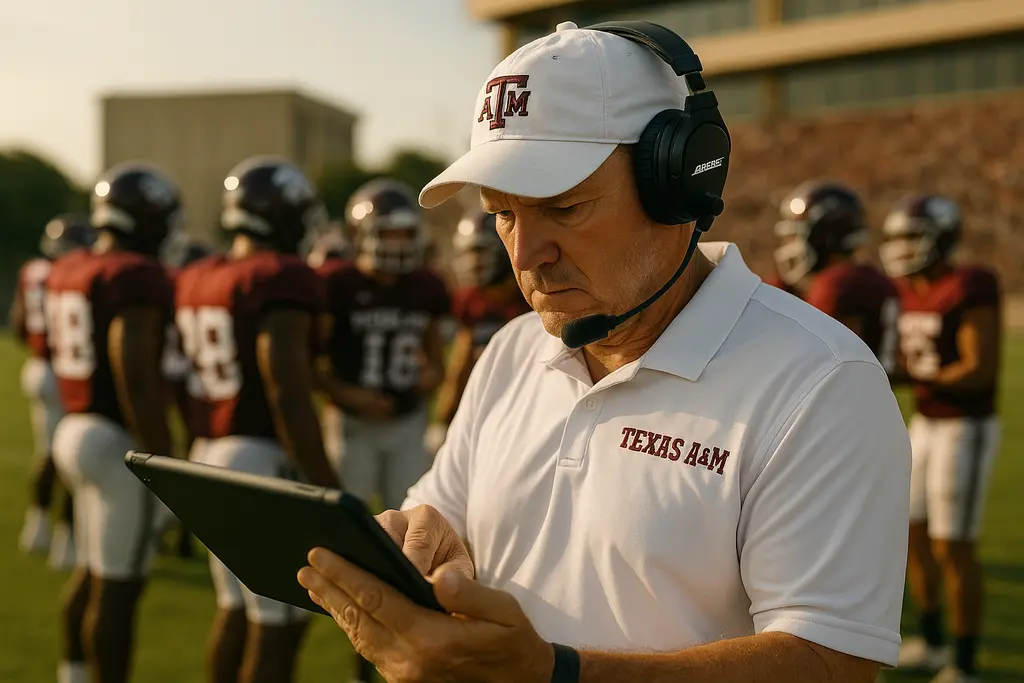

Texas A&M transfers are not just filling out the back half of the roster for 2026. The Aggies used the portal to address specific stress points: an offensive line reset after the departure of all five starters, more bodies across the defensive front, new options in the secondary, a receiver addition from Alabama, a local tight end, and a kicker with recent production.
The scale of the move matters. Texas A&M added 18 players through the transfer portal while losing 14, and the Aggies’ portal class was ranked third nationally by On3, behind Texas Tech and Indiana, according to Dave Campbell’s Texas Football. That is not a complete depth chart by itself, but it shows where the staff placed its emphasis before spring and summer sorting.
The immediate question is how those additions fit into a team trying to handle an SEC schedule with fewer weak spots. The transfer group gives Texas A&M more proven snaps in high-contact areas, more competition in the back end, and a possible answer in the kicking game after prior inconsistency. The roles will be settled on the practice field, but the roster plan is visible.
How Texas A&M Transfers Fit The 2026 Roster
Texas A&M Transfers And Immediate Need
The clearest portal theme is need-based allocation. Texas A&M did not simply collect available names. The Aggies had a major offensive line vacancy after losing all five starters, and they responded by adding experienced linemen. They also added multiple defensive linemen, which points to a desire to keep the front fresh and reduce the risk that one injury or one missed development step changes the shape of the defense.
These Texas A&M transfers also help create competition without forcing every incoming player into a fixed role in January. A portal player with starting experience can push for a first-team job, but he can also stabilize a second unit, play in packages, or allow a young signee to develop without being rushed. That is the main roster value here: Texas A&M has more ways to build a two-deep before the season begins.
Roster Math After Portal Movement
The 18 additions and 14 departures show a net gain, but the bigger story is positional balance. The portal is not always about raw numbers. In this case, the additions line up with the areas that normally decide SEC games: line play, coverage depth, pass-catching options, and field-goal operation. The Aggies still have to sort chemistry, communication and assignment work, especially up front, but the transfer class gives the staff more tested choices.
That matters because portal additions arrive with different timelines. Some are plug-in candidates. Others may need a spring and preseason to learn calls, footwork rules and weekly preparation standards. Texas A&M’s plan appears built around raising the floor at several positions rather than leaning on one player to solve a full unit.
Line Of Scrimmage Plans
Offensive Line Rebuild
The offensive line is the most direct roster problem. Texas A&M had to replace all five starting offensive linemen, and the portal additions reflect that urgency. Wilkin Formby arrives from Alabama after starting 16 games and has two years of eligibility remaining. Tyree Adams comes from LSU with a 6-foot-7, 310-pound frame and playing experience. Those two profiles give the Aggies SEC-tested size and a stronger base for competition across tackle and interior combinations.
The staff still has to identify the best five, and just as important, the next three or four. Offensive line play depends on timing and trust, especially with protection calls and run-game fits. Transfer experience can shorten that process, but it does not remove it. The spring and preseason periods should determine whether Texas A&M can form a stable first unit early enough to avoid constant reshuffling.
Defensive Front Rotation
On defense, Texas A&M added more weight and production inside and off the edge. C.J. Mims transferred from North Carolina after a season in which he had 42 tackles, 2.5 tackles for loss and two sacks in 12 games. Anto Saka transferred from Northwestern after earning honorable mention All-Big Ten honors with four tackles for loss, three sacks and two forced fumbles, according to KBTX.
Those additions point toward a rotation-first approach. In the SEC, a defensive front rarely survives on four starters alone. The Aggies need interior players who can absorb double teams, edge players who can set the point, and enough depth to keep pressure packages available late in games. The new transfers do not guarantee more takeaways or sacks, but they give Texas A&M more options to build the defensive front by down, distance and opponent.
The defensive additions also fit with the broader work being done on that side of the ball. Texas A&M has already been working through a 2026 defensive reset, and the portal front helps support that plan. For a closer look at that direction, the program’s defensive shift is connected to Texas A&M’s 2026 defensive strategy.
Skill Spots And Special Teams

Secondary Competition
The secondary additions are about coverage depth and role flexibility. Rickey Gibson arrives from Tennessee after starting 12 games in 2024. Tawfiq Byard comes from Colorado and gives Texas A&M another safety option. The research available points to both players as part of the back-end response, but their exact roles remain to be set by practice performance and scheme fit.
That distinction matters. Cornerback and safety roles can shift based on matchups, nickel packages and special teams needs. A corner with starting experience can compete outside, work in sub packages, or help raise the practice standard for younger defensive backs. A safety transfer can affect communication, run fits and coverage structure. Texas A&M’s secondary planning has been a major offseason topic, and the transfer pieces tie directly into the developing 2026 secondary depth.
Receiver, Tight End And Kicker Roles
The offensive skill additions are narrower but still relevant. Isaiah Horton comes from Alabama to add to the receiving corps. The supported information does not define his target share or starting status, so the safe read is that he gives Texas A&M another competition piece at wide receiver. In a league where third-down spacing and red-zone matchups can decide possession swings, added receiver depth has value even before a depth chart is set.
Houston Thomas, a College Station native, joins from UTSA after totaling 78 receptions for 918 yards and five touchdowns over four seasons. His arrival gives the Aggies an experienced tight end option with local ties. That experience can matter in multiple-tight end sets, protection help, underneath passing work and special teams, depending on how the staff assigns his role.
Special teams also received a direct portal answer. David Olano transferred from Illinois after going 17-of-20 on field goals in 2025 and earning honorable mention All-Big Ten honors. The Aggies added him to address previous inconsistency in place-kicking. Kicker competition can stay open deep into camp, but a recent conversion record gives Texas A&M a clearer baseline entering 2026.
- Offensive line additions respond to the loss of all five starters.
- Defensive line transfers give the Aggies more rotation options.
- Secondary additions create competition at corner and safety.
- Skill and kicking additions address specific offensive and special teams needs.
Why Texas A&M Transfers Matter In SEC Play
Competitive Margin For 2026
The Texas A&M transfers matter because they are targeted at places where SEC games usually tighten. Offensive line continuity affects the quarterback, the run game and late-game possession control. Defensive line depth affects pass rush, tackling angles and the ability to hold up through long drives. Secondary competition affects explosive-play prevention. A steadier kicking option can change how a staff manages fourth downs and end-of-half possessions.
None of that should be read as a finished product in January. Transfer additions still have to win jobs, adjust to terminology and prove they can hold up over a full season. The Aggies’ portal work gives them more credible answers before camp, not automatic solutions. For Texas A&M, that is the practical edge: fewer roster holes, more position battles, and more ways to build a 2026 depth chart capable of handling SEC pressure.