
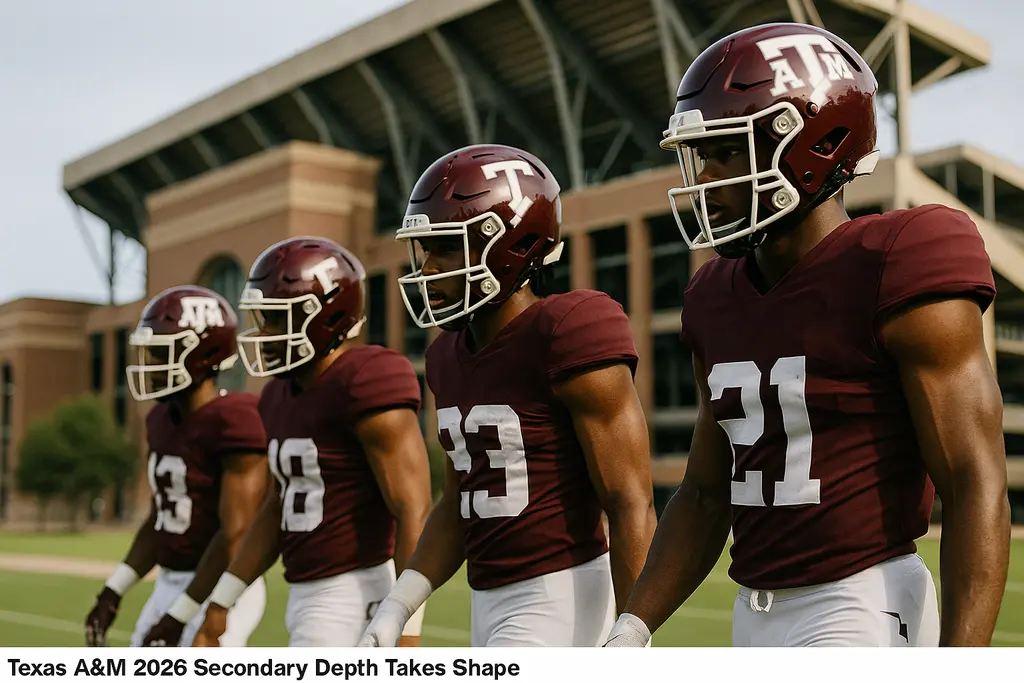

The Texas A&M 2026 secondary sits at the center of one of the more important roster conversations in College Station because the room combines projected returnees, transfer competition and a major recruiting push at defensive back. The Aggies have not released an official 2026 depth chart, so any pecking order at corner, nickel and safety should be treated as a working projection rather than a fixed lineup. What is clear from the available reporting is that Texas A&M has invested heavily in the back end of the defense and will be teaching it under a coordinator with a new title.
What Is Verified About The 2026 Room
Recruiting Changes The Baseline
Texas A&M’s 2026 defensive back group has drawn national attention because the Aggies secured a top-ranked defensive back class that includes five blue-chip additions and the nation’s top cornerback, according to Sports Illustrated’s recruiting report. That matters for depth before it matters for starting jobs. In the SEC, most defenses need more than five defensive backs ready for live snaps, and injuries, special teams demands and matchup packages can push young players into meaningful roles quickly.
The immediate question is not whether every freshman plays right away. That is rarely how a secondary is built. The more useful question is how quickly the newcomers can close the gap in technique, communication and tackling. Blue-chip corners and safeties often arrive with length, speed and ball skills, but the SEC forces them to process formations, route stems and motion at a much faster rate. Texas A&M can benefit if even one or two members of that class become reliable rotation pieces by conference play.
Coordinator Change Sets The Teaching Point
The staff structure also changed. Lyle Hemphill was promoted to defensive coordinator in December 2025 after previous roles at James Madison and Duke, according to Saturday Down South’s report on the move. That places the coverage plan under a coach whose first task is not just calling pressures or coverages. He has to sort out who communicates best, who can handle split-field rules and who can survive isolated coverage downs against SEC receivers.
For the secondary, a coordinator change can be felt in small details. The teaching language may shift. The leverage rules may be phrased differently. Safeties may be asked to disguise earlier or later in the snap count. Corners may play with different cushion based on down, distance and formation. Those changes sound minor from the outside, but they often decide whether a defense gives up a contested catch or a clean explosive play.
Depth Chart Picture At Corner, Nickel And Safety
Cornerback Competition
The working projection in the research identifies Dezz Ricks and Rickey Gibson III as the top cornerback names. Because Texas A&M has not issued an official 2026 depth chart, that should be read as a projection, not a program announcement. Ricks is listed among the key returning pieces in the research, while Gibson is identified as a transfer addition. If that pairing holds through camp, the Aggies would have one corner with continuity in the building and another competing to translate his experience into a new defensive system.
Cornerback depth is where the 2026 class could press the veterans fastest. A top cornerback signee does not have to take a starting job to change the room. He can affect practice reps, push the second group and give the staff another option in dime packages. The bigger challenge is trust. Coaches will want corners who understand when to challenge throws, when to protect the sideline and when to keep the ball in front on third-and-medium.
Nickel Value In SEC Matchups
The nickel spot may be the most demanding position in the Texas A&M 2026 secondary. The research projection lists Julio Humphrey at nickel back, again as a projection rather than an official depth chart entry. In a 4-2-5 structure, that player has to cover slot receivers, fit the run like a smaller linebacker and communicate with both the corner and safety to his side. Against SEC offenses, that means seeing condensed formations one week and spread tempo the next.
The nickel’s job also affects how aggressive the front can be. If the nickel can hold up in man coverage, the coordinator has more freedom to pressure. If he is better in zone, the call sheet may lean toward match coverages and simulated pressures that keep eyes on the quarterback. That is why the position is less about one highlight skill and more about down-to-down answers.
Safety Roles
The research projection places Marcus Ratcliffe and Dalton Brooks at safety, with Tawfiq Byard listed as a transfer addition in the broader secondary picture. Ratcliffe and Brooks are also identified among the key returning names. If that structure holds, Texas A&M would have a safety pairing with internal continuity, plus another player adding competition to the depth chart.
Safety play will likely define how flexible Hemphill can be with coverage. A reliable deep safety allows the corners to play more aggressively underneath. A safety who can roll down into the box gives the defense a better answer against run-heavy looks without leaving the formation too light. The best version for A&M is a group that can rotate late without busts, pass off vertical routes and tackle cleanly when the ball is forced underneath.
Coverage Plan Under A 4-2-5 Structure
Man Coverage Stress Points
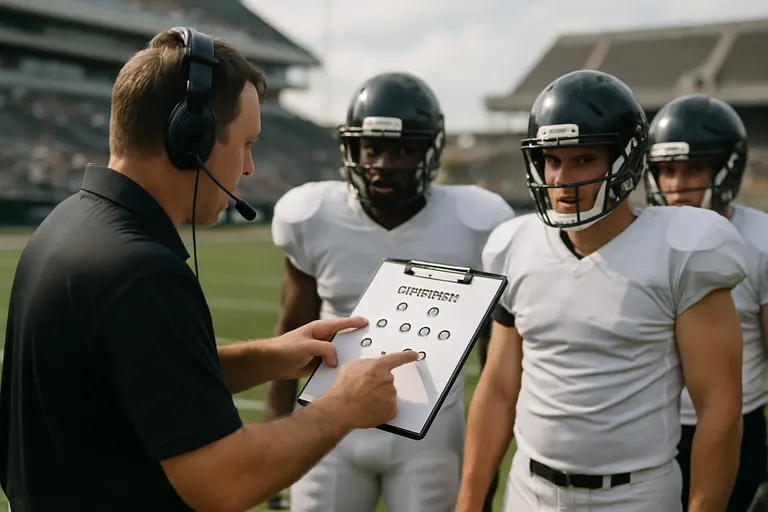
The working scheme projection is a 4-2-5 nickel structure, which fits the way most SEC defenses now live against three-receiver personnel. For Texas A&M, the benefit is speed on the field. The cost is that defensive backs have to win in space and tackle without constant help. Man coverage will test whether the corners can stay patient at the line and whether the nickel can avoid getting picked off by bunch sets and crossing routes.
Man coverage also puts pressure on safeties. If the Aggies want to bring pressure, somebody in the back end has to erase mistakes. That does not always mean interceptions. Often, it means taking the proper angle, forcing a receiver to the sideline and preventing a 12-yard completion from turning into a field-position swing. That kind of snap rarely makes a highlight reel, but it is central to winning on the road in league play.
Zone Rules And Safety Fit
Zone coverage may be just as important as man coverage for this group. With a deep defensive back class and several projected contributors, Texas A&M can mix coverages if the communication holds. The danger in zone is spacing. Young corners can sink too deep and give away easy access throws. Safeties can widen too far and leave seams open. Linebackers can carry routes just a step too late, forcing the safeties to clean up the mistake.
The best coverage plan for this roster projection is likely one that protects young players early while still allowing the top corners to compete. That could mean more split-safety looks, late rotation and pattern-match calls that let defensive backs play with help. The staff will have to find the right balance between pressure and protection. If the rush gets home, the secondary can play faster. If quarterbacks have time, every coverage rule gets tested.
Why The Texas A&M 2026 Secondary Matters In SEC Play
The Texas A&M 2026 secondary matters because the SEC schedule does not allow a defense to hide weak links in the back end for long. Texas A&M’s recruiting work gives the room more raw talent. The projected returnees give it a base of continuity. The transfer names add competition. Hemphill’s promotion gives the defense a clear coordinator voice heading into the season. Those are solid starting points, but the depth chart still has to be earned through practice, camp and game snaps.
The key for A&M is sorting roles before the weekly matchups get heavier. Cornerback has to produce at least three playable options. Nickel has to be steady enough to stay on the field against tempo. Safety has to be the communication hub, not just the last line of defense. If those pieces settle, the Aggies can build a coverage plan that matches the talent in the room. If the roles remain unsettled, the staff may have to simplify calls until the unit proves it can handle more.
That is the real state of the room entering the 2026 discussion: promising, deeper on paper and still short of official answers. The first depth chart will matter, but the rotation behind it may matter just as much.