


The Marcel Reed LSU conversation has moved past a single confident quote. It now sits at the center of a cleaner football question for Texas A&M: can its starting quarterback pair playmaking with down-to-down restraint on September 26, 2026, at LSU? Reed has shown he can tilt a game with his legs and change defensive math, but the next step is less about volume and more about decision quality.
That is why his comments on execution and mental discipline matter. In late May 2026, Reed said, “It felt amazing, I don’t lose to LSU,” when asked at a youth camp about a previous start against LSU, according to Sports Illustrated’s report. The line traveled because rivalry games amplify tone. Inside a football building, though, the more useful read is how a quarterback backs up confidence through protection calls, ball security, route timing and red-zone patience.
Marcel Reed LSU Framing Starts With Control
Why Marcel Reed LSU Comments Matter
The Marcel Reed LSU angle is easy to reduce to bravado, but quarterback confidence is not automatically a problem. Coaches want the huddle to believe the ball is in steady hands. The issue is whether that confidence becomes clean operation or loose football. Against SEC defenses, the difference often comes before the throw: identifying pressure, setting the back in protection, confirming leverage outside and knowing when a five-yard answer is better than forcing a vertical shot.
Reed has already tied his growth to the right checkpoints. In mid-May 2026, he emphasized that Texas A&M’s College Football Playoff hopes depended on eliminating “mental mistakes” and handling small details properly, as covered by Yahoo Sports. That framing is more valuable than a rivalry soundbite because it points to how Texas A&M wants him to play: aggressive enough to stress the defense, but disciplined enough not to create avoidable second-and-long or turnover situations.
The Quarterback Standard Under Mike Elko
Under Mike Elko, the quarterback job is not just a production role. It is a game-management role tied to field position, complementary football and situational awareness. Texas A&M does not need Reed to turn every snap into a highlight. It needs him to keep the offense on schedule, protect the defense from sudden-change possessions and punish defenses when they lose rush-lane integrity.
That is where coaching legacy enters the discussion. Elko’s public identity as a head coach has leaned toward preparedness, accountability and defensive structure. A quarterback in that type of program must understand that not every successful play ends in an explosive gain. A throwaway against pressure can be a win. A slide after moving the chains can be a win. A checkdown on third-and-medium can keep the call sheet open for fourth-down decisions near midfield.
The 2024 LSU Tape Still Drives The Plan
How The Prior Matchup Shapes The Scout
The 2024 LSU game remains the most concrete football reference point. On October 26, 2024, against No. 8 LSU, Reed came off the bench, rushed 9 times for 62 yards and 3 touchdowns, completed both of his pass attempts for 70 yards, and Texas A&M won 38-23 after trailing at halftime. That performance matters because it showed how quickly his running ability can change defensive rules.
Once a quarterback run threat becomes real, the defense has to account for the extra gap. Ends cannot crash as freely. Linebackers have to hesitate before widening with backs. Safeties can be pulled into the run fit, which opens space behind them. Reed’s best value is not only the yards he gains himself; it is the stress his presence creates for defensive assignments.
The return trip to LSU on September 26, 2026, will not be a replay of that night. LSU will have studied the package answers, the quarterback run menu and the situations where Texas A&M liked to use Reed’s legs. The adjustment for the Aggies should be sequencing. Early quick-game throws, perimeter access throws and controlled quarterback movement can force LSU to defend width before the quarterback run becomes the primary answer.
Where Confidence Can Help Or Hurt
The Marcel Reed LSU storyline becomes dangerous only if emotion changes the way he processes the game. Rivalry energy can push a quarterback toward late throws, unnecessary contact or attempts to answer every defensive stop with a major play. A mature version of Reed lets the structure carry him early, then uses his athleticism when LSU breaks contain or rotates coverage late.
That is why completion percentage has been a relevant theme in his own comments. Reed has pointed to taking safe, sound passing opportunities and avoiding risky “maybes.” For Texas A&M, that is not a conservative mindset. It is an efficiency mindset. Safe completions force LSU to tackle in space, keep the offense in manageable downs and reduce the number of obvious passing situations where exotic pressure can arrive.
How The Aggies Can Protect Execution
Build The Call Sheet Around Answers
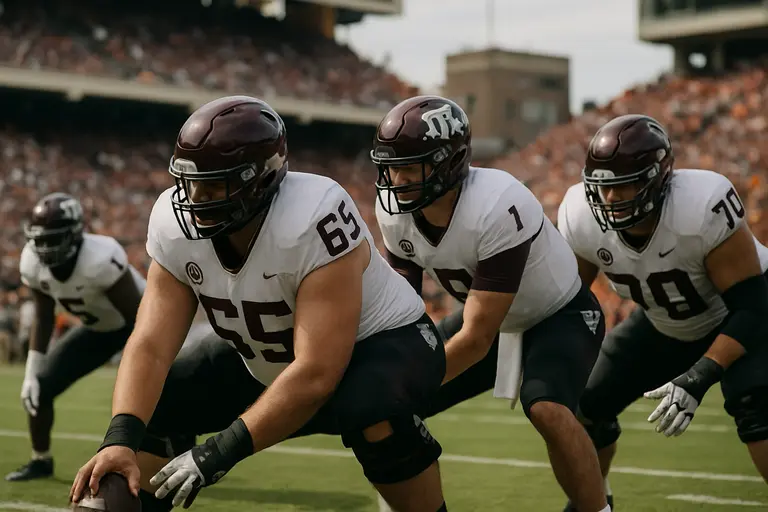
Texas A&M’s staff can help Reed by giving him defined answers against pressure and movement. That starts with formation structure. Condensed sets can create natural rubs and easier access throws. Motion can force LSU to declare coverage. Half-field reads can let Reed confirm one safety rotation rather than scan the entire field under immediate pressure.
The Aggies should also treat quarterback movement as a tool, not a rescue plan. Designed movement can change the launch point and slow edge rushers, but too much movement can cut the field in half and make route spacing easier to defend. The balance is to mix pocket throws, sprint-outs, read-game concepts and quick rhythm throws so LSU cannot sit on one answer.
- Early downs: use efficient throws and read concepts to avoid predictable passing downs.
- Third down: give Reed built-in outlets so pressure does not force late throws over the middle.
- Red zone: use his run threat to widen the front, then make LSU defend tight-window timing routes.
- Backed-up field position: prioritize ball security and punt-field protection over forced explosives.
That approach fits the broader path of Marcel Reed development, where the central task is not removing his athletic edge but attaching it to better timing and risk control. The more the offense gives him clear progression rules, the less LSU can bait him into impulse throws.
The Line Between Toughness And Bad Math
Mental fortitude is often framed as a willingness to absorb hits or answer crowd noise. For quarterbacks, it is more practical than that. It is the ability to accept the boring decision after a failed first-down call. It is taking the sack when the alternative is a blind throw. It is trusting the punt team after a stalled possession instead of handing the opponent a short field.
Reed’s mobility gives Texas A&M a high ceiling, but it also creates a constant coaching point. Scrambling is valuable when it punishes man coverage or breaks a pressure design. It becomes bad math when it drifts behind the line, loses throwing posture or invites contact after the play is already won. The staff’s job is to draw that line during the week, then trust Reed to feel it on Saturday.
What Marcel Reed LSU Means For A&M’s Standard
What makes Marcel Reed LSU important for Texas A&M is not the quote by itself. It is the collision between identity and execution. The Aggies want a quarterback who plays with belief, but belief only travels in the SEC when it is backed by clean feet, sharp eyes and a low tolerance for preventable errors.
If Reed manages the September 26, 2026, matchup with that balance, Texas A&M can make LSU defend the full field without handing over cheap possessions. If the game becomes too emotional, the same traits that make him difficult to defend can create stress for his own sideline. That is the coaching test: turn confidence into procedure, turn mobility into structure, and turn a rivalry week talking point into disciplined quarterback play.