
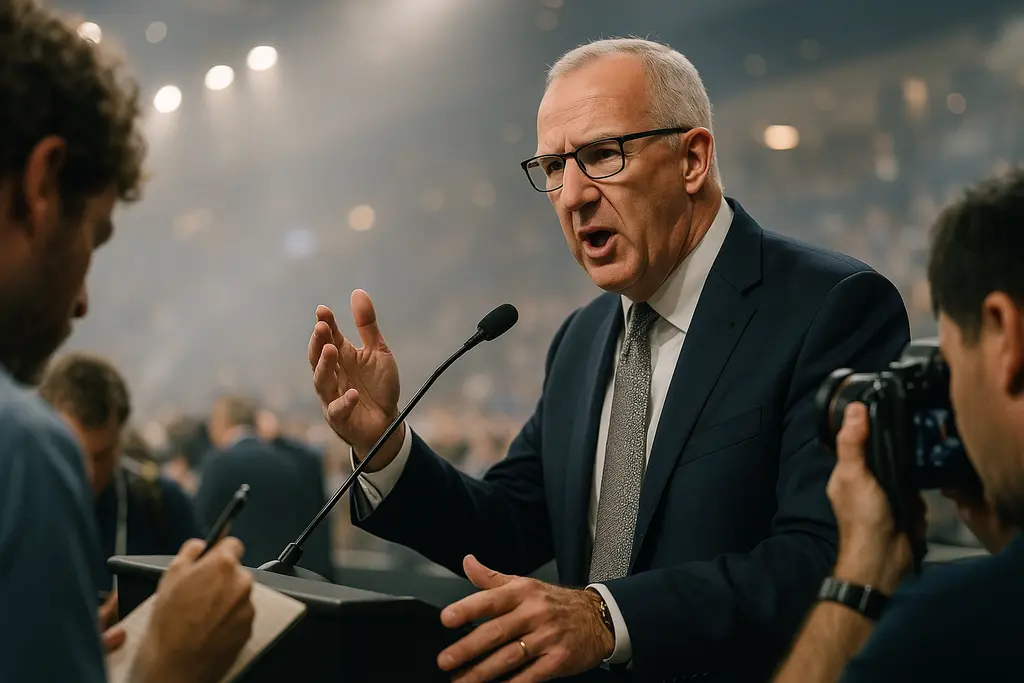

Greg Sankey Vision matters to Texas A&M because it is not abstract conference-office language. It shapes who the Aggies play, when they play, how deep the roster must be, and how coaches manage November. For a program trying to define its next era in a 16-team SEC, the commissioner’s direction creates the operating rules for every staff meeting in College Station.
The headline facts are clear. The SEC expanded to 16 members in July 2024 by adding Texas and Oklahoma, and Sankey said at SEC Media Days that the league was not actively seeking more expansion, stating, “Sixteen is our today, and 16 is our tomorrow” SEC expansion update. That sentence matters for Texas A&M because it frames the league as a closed, high-pressure room rather than a conference still chasing more inventory.
The other concrete change sits on the schedule. Beginning in 2027, the SEC will require conference games during the penultimate week of the regular season, ending the familiar late-November slot against lower-tier opponents before rivalry week; Sankey described it as “the end of cupcake weekend” SEC scheduling change. For Texas A&M, that affects player usage, self-scout timing, travel load, and the way coaches pace a roster through the most physical part of the season.
Why Greg Sankey Vision Matters For Texas A&M
Greg Sankey Vision As Governance, Not Coach-Speak
Commissioners do not call third-and-four, but they set the conditions under which coordinators call it. A fixed 16-team SEC with Texas and Oklahoma inside the structure increases the premium on week-to-week adaptability. The Aggies are no longer dealing with a league map that can be described through old East-West shortcuts. Even if yearly opponent rotations remain a scheduling question, the strategic theme is settled: Texas A&M has to prepare for a deeper conference inventory with fewer soft edges.
The Greg Sankey Vision, as reflected in the available record, is built around conference strength, media value, playoff relevance, and schedule credibility. That is not the same thing as making life easier for coaches. It means fewer chances to hide a thin offensive line, fewer chances to coast through a late-season fatigue spot, and fewer chances to use November as a recovery lab. A staff that wants to win in this version of the SEC needs answers that hold up against multiple styles: tempo spread teams, heavy personnel groups, quarterback run games, and defensive fronts that can win without blitzing.
Why Stability Changes The Aggies’ Planning Window
Sankey’s comment that 16 is both the league’s present and near-term posture gives Texas A&M a planning baseline. That matters in roster management. If the conference footprint is not being treated as a short-term holding pattern, the Aggies can build with a clearer view of annual travel, rivalry inventory, television windows, and recruiting pitch points. The presence of Texas in the same conference also changes local recruiting conversations. The argument is no longer SEC versus Big 12. It is how Texas A&M differentiates itself inside the same league structure.
That is where coaching legacy intersects with administration. Great coaches are remembered for culture, player development, and game management, but their eras are often shaped by the league rules around them. For more background on how conference messaging affects College Station, the site’s prior analysis of SEC changes for Texas A&M tracks the same pressure points from an Aggies-first angle.
Conference Structure And Schedule Pressure
The End Of The Late-November Reset
The 2027 end of the SEC’s late-season lower-tier scheduling habit is the most direct football change in the research. From a film-room perspective, that weekend often functioned as more than a win probability cushion. It gave staffs a chance to reduce the call sheet, limit snap counts for front-line players, correct protection issues, and bank developmental reps. Replacing that slot with a conference game changes the rhythm of a season.
For Texas A&M, that late-November shift could alter how the staff handles September and October. If there is no softer landing before rivalry week, coaches may need to rotate more earlier in the year, especially along the defensive line and at receiver. The Aggies’ practice structure also becomes more important. Full-contact periods, special teams workload, and scout-team tempo have to be calibrated with the knowledge that the final SEC stretch may offer no controlled breather.
Where Greg Sankey Vision Hits The Call Sheet
Greg Sankey Vision does not prescribe offensive identity, but it rewards teams that are hard to prepare for on short rest and durable enough to avoid scheme shrinkage late in the season. A coordinator can carry a thick menu in September. By late November, injuries, fatigue, and protection problems usually narrow the board. If the Aggies are playing league opponents deeper into the calendar, their best concepts must be repeatable under stress.
That means base runs that can hit against loaded boxes, play-action answers that do not require long-developing protection, and pressure checks the quarterback can handle without constant sideline rescue. On defense, it means split-safety answers, simulated pressure packages, and red-zone calls that do not depend on having every starter at peak health. The schedule does not design the scheme, but it exposes schemes that depend on ideal conditions.
Roster Building Under A Tighter SEC Calendar
Depth Becomes A Competitive Trait
In the older scheduling rhythm, the week before rivalry games could sometimes absorb roster strain. A starter with a minor issue might sit. A young tackle might get live snaps. A defense might simplify coverage and still control the game. The 2027 model reduces that margin. Texas A&M’s roster-building response has to be practical: more playable linemen, more special teams contributors who can handle defensive or offensive snaps, and more second-unit players who are trusted before emergency moments arrive.
This is not just a recruiting issue. It is a development issue. The Aggies need practice reps that prepare depth pieces for SEC speed before November, not after the injuries arrive. Coaches often talk about being “two-deep,” but the new schedule pressure asks a harder question: can the second wave execute the same core calls without forcing the staff to abandon its identity?
- Offensive line depth matters because late-season SEC games punish protection leaks.
- Defensive front rotation matters because tackling quality drops when legs fade.
- Special teams depth matters because hidden yardage becomes harder to recover against conference opponents.
- Quarterback readiness matters because one injury can alter both the run game and protection menu.
The Administrative Side Of Football Depth
Revenue sharing and media strategy sit outside the white lines, but they affect how programs support players, retain contributors, and fund football infrastructure. Sankey’s broader posture, based on the research, favors SEC autonomy in major media and financial questions. For Texas A&M, the football point is simple: resources only matter if they are organized toward player development and retention. A related breakdown on SEC revenue sharing and Texas A&M explains why spending discipline matters as much as revenue access.
The Aggies have the fan base, facilities, and SEC platform to compete in this structure. The separator is alignment. Coaches, administrators, recruiting staff, strength staff, and player personnel departments have to work from the same calendar. If late November becomes heavier, offseason planning has to reflect that in conditioning, recovery, travel preparation, and snap distribution.
Media, Playoff Access And Program Positioning

Why Conference Strength Cuts Both Ways
The research notes Sankey’s support for a 16-team College Football Playoff model rather than a 24-team format. That posture fits the same philosophy as the scheduling change: make the regular season strong, then argue that SEC teams have earned national access through difficult conference play. For Texas A&M, that can be an opportunity and a warning at the same time.
The opportunity is obvious. A strong SEC schedule can help an Aggies team with quality wins present a serious postseason case. The warning is just as clear. A league schedule with fewer soft spots can turn one thin position group into multiple losses. Program positioning in this environment is not built through brand alone. It is built through bankable line play, quarterback efficiency, coverage discipline, and the ability to avoid wasted possessions in tight road games.
Texas A&M’s Identity In A 16-Team SEC
The addition of Texas and Oklahoma changes the temperature of the room. Texas A&M’s SEC identity was once partly built on being the Texas program inside the league. That distinction is gone. The Aggies now have to define themselves through performance, development, and consistency inside a more crowded regional fight.
That does not erase the value of College Station. Kyle Field remains a major game-day environment, and the 12th Man identity still gives the program a distinct local pull. But in the new SEC structure, atmosphere must be paired with clean operation. Home-field energy can stress an opponent’s communication, yet it cannot fix missed fits, blown protections, or weak tackling angles. The best version of Texas A&M uses its setting as an accelerator, not a substitute for execution.
What Greg Sankey Vision Means For Aggie Planning
Greg Sankey Vision should push Texas A&M toward a sharper football model: recruit and develop for a full SEC calendar, build depth before it is needed, and treat November as a competitive separator rather than a survival test. The commissioner’s direction is not built around protecting individual programs. It is built around strengthening the league’s product and postseason argument.
That leaves the Aggies with a clear task. They need a roster that can absorb physical strain, a staff that can adjust without losing core identity, and an administration that understands football planning as a year-round operation. In this version of the SEC, legacy will not come from nostalgia or conference membership. It will come from how Texas A&M responds when the schedule stops offering cover and every late-season snap carries league weight.