
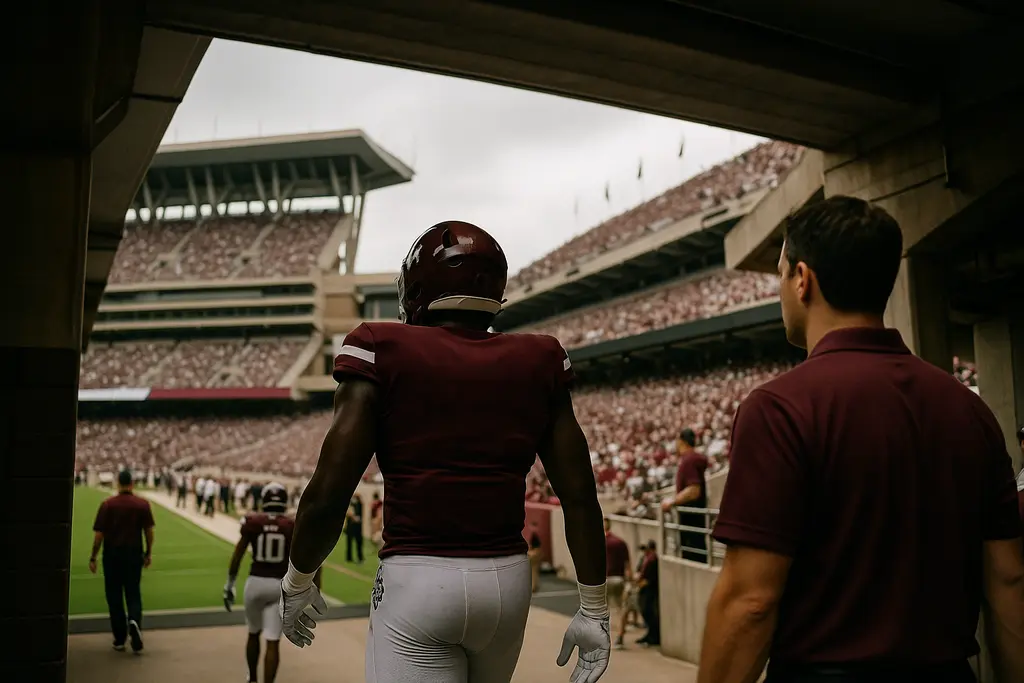

The Texas A&M South Carolina 2026 matchup already carries a specific edge on the Aggies’ SEC schedule. Texas A&M is set to visit South Carolina on Nov. 7, 2026, at Williams-Brice Stadium in Columbia, according to the Aggies’ listed schedule from CBS Sports. That date is not just another road trip. It sends A&M back to the site of a 44-20 loss to the Gamecocks in 2024, a game that still sits as a clear reference point for the program.
Texas A&M does not need extra theater to understand the assignment. The 2024 trip to Columbia exposed defensive issues, stalled momentum and became part of a late-season slide. FOX Sports reported that after the South Carolina loss, the Aggies lost three of their next four games, and linebacker Taurean York described the prior result in direct terms: “We got embarrassed at South Carolina last year. It’s personal,” per FOX Sports.
That history shapes how this game will be discussed around College Station, even with two seasons of roster movement between the 2024 result and the 2026 meeting. The Aggies will not be preparing for a rematch in the weekly sense. They will be preparing for a November SEC road game with a recent bad memory attached to it, and that can affect everything from defensive emphasis to how the staff manages the week.
Why The South Carolina Trip Matters
The 2024 Loss Still Frames The Conversation
The 44-20 score from 2024 gives this matchup a sharper starting point than most cross-division SEC dates. Texas A&M did not simply lose in Columbia. It left with a result that became tied to the direction of that season. When a game becomes the start of a late-season downturn, players and coaches tend to remember more than the scoreboard. They remember missed fits, poor angles, stalled drives, road noise and the feeling of losing control after halftime adjustments fail to land.
That is why the word redemption fits here, but it should stay grounded. Texas A&M cannot erase the 2024 result in 2026. It can show whether the program has corrected the type of road-game issues that surfaced in that trip. For a staff trying to stack SEC wins, that distinction matters. A cleaner performance in Columbia would say more about preparation, maturity and travel response than any slogan could.
Williams-Brice Adds A Real Road Variable
Williams-Brice Stadium has never been a neutral setting for SEC visitors. The game-day environment in Columbia can turn disjointed quickly if an offense starts behind the chains or if special teams put the visiting team in poor field position. For Texas A&M, that puts early-game operation near the top of the checklist: handle cadence, avoid drive-killing penalties and prevent South Carolina from feeding off field-position swings.
Road SEC games in November often come down to discipline more than novelty. By that point, teams have enough film to know tendencies. The question becomes whether the offensive line handles communication, whether the quarterback protects possessions and whether the defense can force South Carolina to earn long drives rather than getting quick momentum plays.
Texas A&M South Carolina 2026 Schedule Context
A Demanding SEC Stretch Around Columbia
The Columbia date falls inside a 2026 schedule that includes several high-profile SEC checkpoints. CBS Sports lists Texas A&M against LSU on Sept. 26, Alabama on Oct. 24 and Texas on Nov. 27, with the South Carolina road game set for Nov. 7. That placement matters. The Aggies will not be entering the game in isolation. The roster will already have been tested by conference opponents, and the staff will have a clear sample of what the team does well and what keeps showing up as a problem.
- Sept. 26: Texas A&M vs. LSU
- Oct. 24: Texas A&M vs. Alabama
- Nov. 7: Texas A&M at South Carolina
- Nov. 27: Texas A&M vs. Texas
That stretch also affects fan planning. Aggie fans looking at the Columbia trip will weigh travel against a late-season run that also includes the rivalry date with Texas later in November. For the team, the South Carolina game sits in the portion of the year when depth, health and staff adjustments tend to decide which programs keep pace in the SEC race.
Why Timing Changes The Preparation
A November road game tests a different version of a roster than an early-season matchup. By then, position rotations are usually tighter. Younger players either have a role or are still waiting. Coaches have less patience for repeated assignment errors. The staff has also built months of self-scout material, which means South Carolina will enter with a clear view of Texas A&M’s habits on third down, red-zone calls and defensive pressure looks.
That puts pressure on A&M to be efficient rather than flashy. If the Aggies are still sorting out key roles by Nov. 7, the game becomes tougher. If the depth chart has stabilized, the staff can spend the week attacking matchups instead of fixing basic execution. The difference between those two situations is often what separates a road win from another frustrating trip.
Roster And Depth Chart Questions To Watch
Defense Starts With Response And Tackling
The supplied research points to linebacker Taurean York as a central defensive voice in the South Carolina conversation. His public framing of the prior loss as personal gives the defense a clear emotional reference point, but emotion alone will not travel. The needed response is technical: better run fits, cleaner tackling in space and fewer explosive plays created by missed assignments.
For Texas A&M, the defensive review from the 2024 loss should remain useful even with personnel changes. South Carolina’s exact roster and play-calling identity in 2026 may differ, but the broader test is familiar. Can A&M keep leverage on the perimeter? Can the linebackers fit downhill without opening cutback lanes? Can the secondary tackle well enough to prevent moderate gains from becoming field-flipping plays? Those answers will matter more than pregame motivation.
Quarterback Play Has To Travel
The research notes identify Marcel Reed as a key offensive figure entering the 2026 season. Any firm depth-chart projection should wait for official team information, but the broader offensive need is clear. Texas A&M’s quarterback play in Columbia has to be steady enough to quiet the crowd and keep the defense from playing short fields all night.
That means first-down efficiency, smart third-down decisions and protection checks that hold up against pressure looks. South Carolina’s defense will try to make the Aggies operate in noise and long-yardage situations. A&M’s answer has to be patience. The Aggies do not need every series to be aggressive. They need enough early rhythm to prevent the game from becoming a replay of the problems that showed up in 2024.
Coaching Adjustments That Can Define The Trip

Staff Planning Must Match The Road Setting
The research notes point to coordinator changes for Texas A&M entering 2026, which makes this matchup a useful measuring point for staff cohesion. Without leaning on unsupported scheme claims, the fair question is simple: will the Aggies have a clear offensive and defensive identity by early November?
Coordinator changes often show up most on the road. Communication has to be sharp between the sideline, booth and players. Calls must arrive cleanly. Substitution packages cannot become rushed. If Texas A&M is still working through those details late in the year, South Carolina will have a chance to create stress before the snap. If the staff has settled into a clean rhythm, the Aggies can play faster and limit avoidable errors.
Situational Football Is The Practical Path
Texas A&M’s best path in this game is not built on revenge talk. It is built on situational control. The Aggies need to win enough early downs to keep the playbook open, protect the ball in scoring territory and make South Carolina drive the length of the field. On defense, third-down discipline and red-zone tackling will likely carry more weight than raw yardage totals.
Special teams also belong in that discussion. A road game can shift on one return, one coverage lapse or one missed chance to pin an opponent deep. If Texas A&M is serious about turning the Columbia trip into a program progress marker, the details away from the ball have to match the main-plan focus.
Why The Columbia Trip Tests Texas A&M
A Measured Chance To Prove Growth
The Texas A&M South Carolina 2026 game gives the Aggies a clean measuring stick: take a bad recent road memory, prepare through a tough SEC schedule and show that the same setting does not produce the same mistakes. That does not require bold predictions. It requires a sharper team than the one that left Columbia with a 44-20 loss in 2024.
For Aggie fans, the date is worth circling because it sits at the intersection of schedule pressure, roster maturity and staff execution. For the program, it is a chance to turn an old problem into current evidence. If Texas A&M handles the road environment, tackles better and plays with cleaner offensive rhythm, the trip to Williams-Brice can become more than a payback storyline. It can become a sign that the Aggies are better equipped for the November SEC grind.