
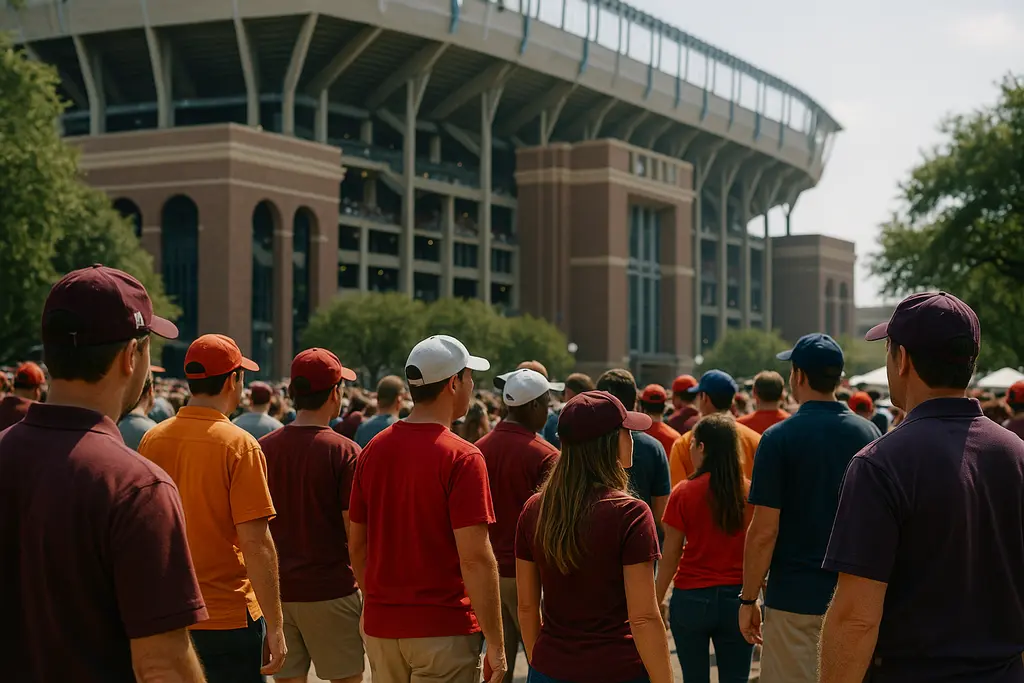

The Texas A&M SEC Opponents list for 2026-2029 gives the Aggies a defined annual core in a larger conference model. The SEC announced that Texas A&M will play LSU, Missouri and Texas every year during that four-season cycle as part of a nine-game conference schedule starting in 2026, according to the Texas A&M announcement. That structure keeps two regional games with clear fan interest on the calendar and gives Missouri a steady place in A&M’s league rotation.
The move matters beyond the opponent names. For a program that sells season tickets around SEC home dates, rivalry weekends and travel habits across Texas and the region, the schedule model offers more clarity than the temporary formats used during conference expansion. The Aggies now know the three league opponents that will define the annual rhythm of the schedule, even though full game dates, kickoff windows and exact year-by-year placement are separate pieces of the process.
Texas A&M SEC Opponents And The New Format
Why Texas A&M SEC Opponents Matter
The SEC’s new model starts with a larger conference slate. Texas A&M’s annual league schedule will include nine SEC games beginning in 2026. Three will come against the same permanent opponents each year. The remaining conference games will come through the rotation, with the SEC aiming for every school to play each other at least once every two years and host every league opponent at least once every four years.
For Texas A&M SEC Opponents, that format creates a mix of stability and access. The Aggies keep Texas, LSU and Missouri on the schedule every season, but they also avoid a closed loop that limits trips to the rest of the conference. That is a key point for a fan base that has already adjusted once to life in the SEC and now sees the league stretch deeper into Texas and the former Big 12 footprint.
How The Four-Year Balance Works
The four-year plan gives Texas A&M two home games and two road games against each of its permanent opponents. That home-away balance is important for Kyle Field planning and for fan travel. It means the Texas game, the LSU game and the Missouri game should each cycle through College Station evenly from 2026 through 2029, rather than giving one side a structural edge over the full window.
The format also protects the broader SEC rotation. Schools will see each other more often than they did under older divisional schedules, when some cross-division matchups could go years between campus visits. For the Aggies, that means more regular exposure to the full conference while still anchoring the schedule around three known games.
The Texas Game Stays Annual
Lone Star Showdown Returns To The League Schedule
The biggest fan-facing piece is Texas. The Lone Star Showdown will continue as an annual SEC game under the new schedule structure. The Houston Chronicle reported that the Texas-Texas A&M rivalry is among the annual league matchups set through 2029 in the SEC’s plan Houston Chronicle report.
That was the cleanest possible outcome for the state’s college football calendar. Texas and Texas A&M no longer have to rely on non-conference alignment or one-off scheduling talks to keep the game alive. It is now part of the SEC framework for the four-year cycle. That matters for players from Texas high school programs, for recruiting weekends, for campus visitors and for local businesses that build staffing and inventory around the largest home games.
Why The Annual Slot Changes The Feel
An annual Texas game carries a different weight than a rotating matchup. It gives each recruiting class multiple chances to play in the rivalry. It gives coaches a yearly measuring point against another in-state SEC program. It also gives fans on both sides a regular travel target, whether the game is in College Station or Austin.
From an Aggies football perspective, the return of Texas as a locked opponent also changes how the rest of the schedule is viewed. A&M’s permanent set now includes one in-state rival, one border-region game with LSU and one former Big 12 opponent in Missouri. That is a clear regional identity for the program inside a nationalized SEC.
LSU And Missouri Give A&M A Steady SEC Core
LSU Remains A Regional Test
LSU staying annual is not a surprise given the programs’ recent SEC connection and regional proximity. The Tigers give Texas A&M a consistent measuring stick against a conference opponent with a strong recruiting base and a fan base that travels well. For Kyle Field, LSU is the kind of home date that shapes the season-ticket value discussion before kickoff times are even assigned.
The game also keeps A&M tied to Louisiana recruiting and Gulf Coast exposure. The Aggies have long needed to recruit Houston, East Texas and Louisiana-adjacent areas at a high level. Playing LSU every season keeps that regional lane visible. It is not the same as the in-state Texas game, but it is a major SEC date with clear roster and fan interest.
Missouri Adds Continuity To The Rotation
Missouri is the less heated of the three permanent games, but it gives the Aggies another familiar opponent with history from the Big 12 era and the SEC. The annual placement creates a chance for that matchup to gain more definition over time. Rivalries are not assigned by press release alone. They build through close games, recruiting overlap, staff connections and repeated stakes.
For Texas A&M, Missouri also brings a different travel and style profile than Texas or LSU. It stretches the Aggies north within the league map and keeps a former Big 12 connection active. That has value in a conference where scheduling variety can be hard to preserve once permanent games take three spots every season.
What Rotating Arkansas Means For Fans

Southwest Classic Moves Off The Annual Line
The tradeoff is Arkansas. The Southwest Classic will not be an annual permanent game in this model. It will continue through the rotation, based on the SEC structure, but it no longer sits in the same category as Texas, LSU and Missouri for Texas A&M. That is the most noticeable rivalry cost of the new format.
For many A&M fans, Arkansas has been a familiar annual date tied to regional history and, in recent years, a neutral-site identity. Moving it to the rotation changes the rhythm of that series. It does not erase the matchup, but it lowers its annual presence. In practical terms, fans should expect Arkansas to appear within the broader SEC cycle rather than as a fixed yearly weekend.
Fan Planning Shifts With The Rotation
The rotation may help with variety, but it asks fans to adjust. Road trips will change more often. Opponent-specific family weekends, alumni plans and local travel routines will be less predictable outside the three permanent games. For a College Station audience, that makes the locked opponents even more important because they become the most reliable points on the future schedule.
The SEC also set a non-conference requirement tied to schedule strength. Teams must schedule at least one opponent each season from the ACC, Big Ten, Big 12 or Notre Dame. That rule means the Aggies’ full schedule strength will not be defined by the SEC slate alone. The non-conference opponent choice will matter, especially in years when the rotating SEC draw is heavier.
Why Texas A&M SEC Opponents Shape Rivalries
The Annual Three Set The Program’s Rhythm
The Texas A&M SEC Opponents set gives the Aggies a clear identity in the next phase of SEC scheduling. Texas brings the in-state rivalry back as a yearly anchor. LSU keeps a major regional SEC game in place. Missouri supplies continuity and a chance for a steadier series to grow. Arkansas shifts to a rotating spot, which will be felt by fans who valued that annual date.
The remaining unknowns are not minor. Dates, kickoff windows, broadcast slots and exact home-road sequencing will determine the final fan experience each season. Still, the main structure is now set. For Texas A&M, the annual SEC path from 2026 through 2029 will run through Texas, LSU and Missouri, with the rest of the league rotating through Kyle Field and the road schedule on a more regular cycle.