
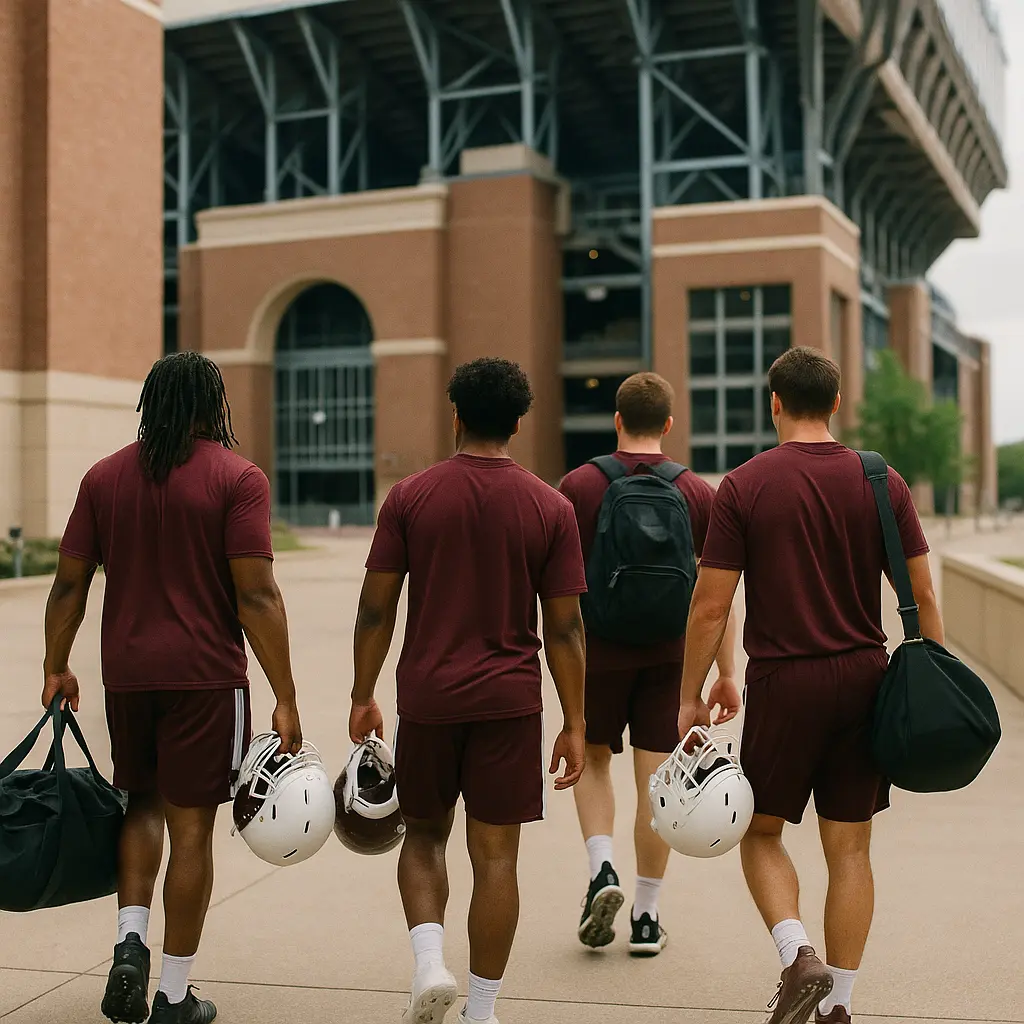

The Texas A&M 2026 recruiting class gives the program a sizable high school intake to pair with roster rebuilding in the SEC. As of July 28, the class sits in top-10 territory across the major services cited in signing-day reporting, with Texas A&M listed ninth by 247Sports, Rivals and On3, and sixth by ESPN in KBTX’s tracker KBTX signing tracker. The Aggies also signed 28 recruits during National Signing Day for the 2026 cycle SI signing report. That combination of volume and ranking is the cleanest starting point for judging the group: Texas A&M added numbers, kept the class nationally relevant and gave itself more options at positions that often decide SEC depth charts.
Class Standing And Signing Volume
National Placement
The ranking profile matters because it shows consensus more than a single-service spike. A class ranked ninth by three services and sixth by another is not built on one outlet’s evaluation. It points to a group viewed as a high-end national haul across different scouting staffs. For Texas A&M, that keeps the Aggies in the same recruiting conversation as the programs they face every season in a league where line play, receiver speed and secondary depth are tested weekly.
The exact order of recruiting rankings can shift as services update evaluations, but the cited snapshot is clear. Texas A&M is positioned inside the top 10 nationally by all four services named in the available reporting. That does not guarantee immediate wins, and it does not solve every roster issue by itself. It does give the staff a larger pool of scholarship talent to develop, redshirt, cross-train or push into special teams roles early.
Why 28 Signees Matter
A 28-player high school class is a volume play as much as a talent play. In the current roster cycle, programs are constantly balancing signees, transfers, departures and early NFL decisions. A class that large can create more internal competition without forcing every freshman into the two-deep right away. It also gives the staff more room to miss on a projection, because not every signee is expected to arrive as a finished SEC player.
The Texas A&M 2026 recruiting class should be viewed through that lens. The value is not only in the top-rated names. It is in how many position rooms receive young bodies. Freshmen who are not ready to start can still help on scout teams, special teams and developmental depth. That matters in College Station, where the schedule demands more than 22 playable starters by midseason.
Skill Talent And Line Needs
Offensive Names To Track
The available research identifies Brandon Arrington, a 6-foot-2, 180-pound athlete from San Diego, California, as the highest-rated signee in the group and ranked No. 34 nationally. That profile gives Texas A&M a flexible skill piece, though the exact college position will determine his early path. An athlete label usually means the staff can evaluate fit after arrival, whether that is in the secondary, at receiver or in a return-game role. The key is not assuming an immediate starting job, but identifying where his speed and frame can get on the field fastest.
Running back KJ Edwards from Carthage, Texas, is listed as a four-star addition after a senior season credited in the research with 1,596 rushing yards on 133 carries and 14 touchdowns. His production stands out because it came from an in-state pipeline that Texas A&M always has to defend. At running back, early playing time often depends on pass protection, ball security and special teams value as much as rushing totals. Edwards gives the room another developmental option with verified high school production, but his first fall in College Station will be about translating that work against SEC size.
Aaron Gregory, a 6-foot-3, 177-pound wide receiver from Douglasville, Georgia, is listed as a four-star prospect ranked No. 84 nationally. The frame is notable for a receiver room because length changes the throw window on the boundary and in the red zone. Texas A&M has recruited receivers with size before; the development question is whether Gregory can add strength while keeping enough separation ability to handle press coverage.
Defensive Front And Coverage Depth
Defensive lineman Bryce Perry-Wright from Buford, Georgia, is listed as a four-star prospect ranked No. 60 nationally. That is a significant piece because defensive line recruiting remains one of the clearest separators in the SEC. The league does not allow undersized fronts to hide for long. A young lineman can still need time in the weight room, but adding a nationally ranked defensive tackle or end prospect helps the staff keep the front stocked.
The research also points to an emphasis on defensive backs and wide receivers within the broader position mix. That tracks with modern SEC roster needs. Offenses spread the field, rotate receivers and force defenses into nickel personnel as a base package. Teams that cannot cover with five or six defensive backs, or rotate receivers without a major drop-off, get exposed by the middle of conference play. Texas A&M’s class volume gives the staff more chances to find those playable rotational pieces.
Recruiting Footprint And SEC Fit

Texas Base With Out-Of-State Reach
The geographic spread in the available research includes Texas, California, Georgia and Ohio. That is important for Texas A&M because the Aggies cannot build a complete SEC roster on one recruiting lane alone. Texas remains the foundation, especially with players such as Edwards coming from Carthage. But the class also shows the program working west for Arrington and back into Georgia for Gregory and Perry-Wright.
Georgia has become a major recruiting battleground for SEC programs because of the volume of high-level high school talent in the state. California offers a different type of pool, especially for skill players and defensive backs. Ohio adds another regional layer. The Aggies do not need to dominate every out-of-state area to make the plan work. They need to win targeted evaluations and bring in players who fit defined roster roles.
What Remains Unknown
There are limits to what can be said from the available signing information. The research notes mention transfer portal activity and NIL spending, but the approved signing sources used here do not provide verified contract values or a full roster-by-roster portal audit. For that reason, this outlook does not assign dollar figures to the class or claim a final portal impact. Those areas require official roster updates, enrollment confirmation and staff comments before firm conclusions can be drawn.
Enrollment timing will also shape the first-year impact. Early enrollees usually get a spring practice head start, while summer arrivals have less time to learn terminology before camp. The provided material confirms the size and national standing of the class, but it does not verify every arrival date. That keeps the early depth-chart forecast cautious.
Why This Class Matters For The 2026 Roster
Development Timeline
Freshman impact is usually uneven, even in a highly rated class. A few players may push for snaps right away. Many will need a redshirt year. Some may first appear on coverage teams before earning offensive or defensive roles. The staff’s job is to avoid forcing players into bad fits while still letting the best freshmen compete. With 28 signees, Texas A&M has enough bodies to stage that competition across multiple rooms.
The class also matters for practice quality. In the SEC, weekly preparation depends on scout-team players who can mirror opponent speed and size. A deeper freshman group can raise that floor. That does not show up in a signing-day ranking, but it affects how starters work from August through November.
Roster Pressure Points
The clearest pressure points remain the same: line of scrimmage depth, perimeter speed and defensive back readiness. Perry-Wright gives the defensive front a ranked young piece. Gregory and Arrington add skill and length. Edwards keeps an in-state running back in the pipeline. The class is balanced enough to help several position groups, but the biggest return will come if a few of those players become reliable second-year contributors rather than emergency freshmen.
For the Texas A&M 2026 recruiting class, the signing-day grade is only the first checkpoint. The more useful read will come when these players enter the strength program, settle into position rooms and start competing against older SEC bodies. The Aggies have the numbers and the national ranking. Now the class has to become roster depth that can hold up through a full conference schedule.