
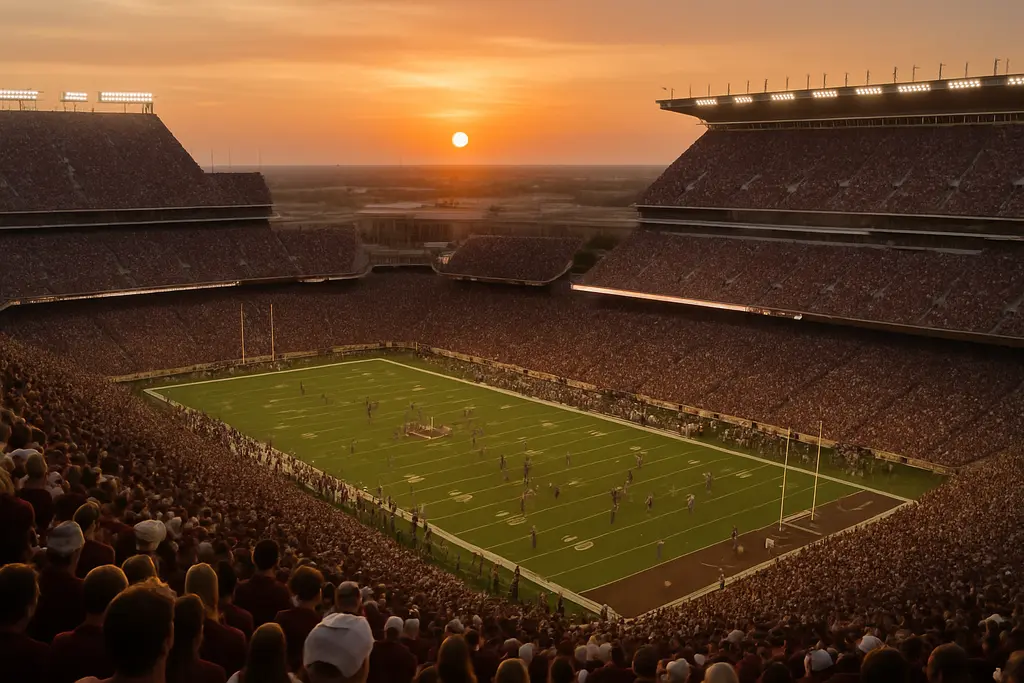

SEC Kickoff Windows have made Texas A&M game-day planning more defined in some places and less settled in others. The league’s 2026 television structure gives fans broad time ranges earlier than a normal game-week announcement, but flex assignments still leave real questions for travel, tailgating, student routines and Kyle Field operations.
Texas A&M announced on June 10, 2026, that SEC football games would be assigned to four television windows: Early from 11 a.m. to noon CT, Afternoon from 2:30 to 3:30 p.m., Night from 5 to 7 p.m., and Flex for either Afternoon or Night, according to the official Texas A&M release. That structure matters in College Station because the game itself is only one piece of a Saturday. Midnight Yell, tailgates, Fan Zone timing, Corps of Cadets movement, parking arrivals and postgame departures all depend on the kick time.
As of Sept. 8, 2026, the most useful read is not that every problem has been solved. It is that Texas A&M fans now have a clearer framework for the 2026 regular season, while the flex dates still require patience. That is especially true for season-ticket holders driving in from Houston, Dallas-Fort Worth, San Antonio, Austin and smaller towns across the Brazos Valley.
How SEC Kickoff Windows Reset The Schedule
SEC Kickoff Windows And Home Dates
The 2026 Texas A&M schedule has 12 regular-season games in the research set, with four listed as Flex, one listed as Afternoon and several home dates carrying direct game-day impact. The research also contains a conflict on the early-game count: one note says Texas A&M has two Early games and both are on the road, while another identifies the Sept. 12 home game against Arizona State as an 11 a.m. kickoff at Kyle Field. Because the Arizona State item is game-specific, that date should be treated as the clearest supported home example of an early Kyle Field start.
Under SEC Kickoff Windows, that Sept. 12 Arizona State assignment changes the pace of the entire day. An 11 a.m. kick cuts down the pregame runway. Fans who normally build a full morning around tailgating, campus walks and Corps step-off timing have less margin. Staff working gates, parking, concessions and in-stadium services also face an earlier surge.
- Early window: 11 a.m. to noon CT
- Afternoon window: 2:30 to 3:30 p.m. CT
- Night window: 5 to 7 p.m. CT
- Flex window: either Afternoon or Night
Why The Flex Tag Still Matters
The Flex category gives television partners room to place higher-interest games later in the day, but it also limits final planning for fans. Texas A&M’s Oct. 3 home game against Arkansas and Nov. 14 home game against Tennessee are listed in the research as Flex window games. That means either could land in the mid-afternoon or evening range.
For local fans, that difference may be manageable. For out-of-town families, it affects hotel stays, child-care plans, Sunday travel and how early they need to enter College Station. The program gains a clearer national broadcast structure, but fans still need to hold open more of the day on flex dates than they would for a fixed 11 a.m. or 6:30 p.m. kick. That same planning issue was central to our recent breakdown of Texas A&M television windows and the way they shape travel decisions.
What Changes Around Kyle Field
Tailgating And Traditions Move With The Clock
Visit College Station’s game-day guide ties several Aggieland routines to the scheduled kickoff time, including tailgating, Midnight Yell, the Fan Zone and the Corps of Cadets march, according to its game-day information. That is the core issue with the new window format. A kickoff window is not just a television label. It sets the operating rhythm for the entire campus.
For an early kick, the tailgate setup window tightens. The student section has less time to build toward kickoff after morning arrival. Families with younger children may prefer the earlier finish, but the tradeoff is a faster start and less pregame spacing. For afternoon and night slots, the day stretches out. That helps restaurants, tailgates and campus foot traffic breathe, but it can push postgame traffic and long drives deeper into the evening.
Traffic And Heat Require Different Plans
The research notes traffic and weather concerns tied to kickoff times, but the approved source set does not provide a verified, current temperature projection or a linkable transportation data point for specific 2026 games. That means no precise heat or congestion claim should be attached to the Sept. 12 Arizona State game here. The supported planning point is still clear: an 11 a.m. game moves more arrivals into the morning, while later windows spread fan activity across more of the day.
College Station’s September weather can be uncomfortable, and direct sun can shape the fan experience at Kyle Field. Without a verified forecast in the research, the safer analysis is operational. Earlier starts reduce pregame time. Later starts extend time on campus. Flex starts delay the final decision for both fans and staff. Each version asks something different from the same game-day system.
How The 2026 Slate Affects Fan Planning

Arizona State, Arkansas And Tennessee Set The Range
The Sept. 12 Arizona State game gives Texas A&M one clearly identified early home example in the research. Arkansas on Oct. 3 and Tennessee on Nov. 14 give the home schedule two key Flex examples. Together, those dates show how wide the experience can be inside one season at Kyle Field.
An early nonconference home game puts pressure on arrival timing. A flex SEC home game asks fans to wait longer before locking in the final version of the day. A late slot can improve the atmosphere for students and reduce daytime heat exposure, but it also changes departure patterns and travel fatigue. None of those factors decide a game, but they shape the crowd’s energy and the logistics around it.
The Texas Game Carries A Late Fixed Point
The research identifies the Nov. 27 game against Texas at 6:30 p.m. That date stands apart because it gives fans a fixed evening framework well ahead of time. It also falls on a Friday, which changes the routine from a standard Saturday in College Station. A fixed late kick can help fans plan lodging and travel earlier, even if the late departure creates a different challenge after the game.
For Texas A&M, that fixed window also offers a clean operational target. Stadium staffing, campus traffic flow and fan communication can be built around a known time. Flex dates do not give the same certainty. That distinction may be the biggest practical difference between the league’s new categories.
Why SEC Kickoff Windows Matter At Kyle Field
The value of SEC Kickoff Windows is that they give Texas A&M fans a working calendar earlier than a traditional late TV pick. The cost is that some of the most important home games still sit in a range rather than a fixed time. For a fan base that fills Kyle Field at a high level and builds Saturdays around more than the final score, that distinction matters.
The new format should help fans separate firm plans from flexible plans. Arizona State on Sept. 12 requires an early-day approach. Arkansas on Oct. 3 and Tennessee on Nov. 14 require patience until the final TV selection. Texas on Nov. 27 gives the season a fixed late anchor. Each slot changes the way Aggies use campus, move through College Station and prepare for kickoff.
For the athletic department, the task is communication. For fans, the task is leaving enough room in the day for the window to dictate the details. The 2026 schedule does not erase the usual Kyle Field routine. It puts that routine on a more formal broadcast clock.