
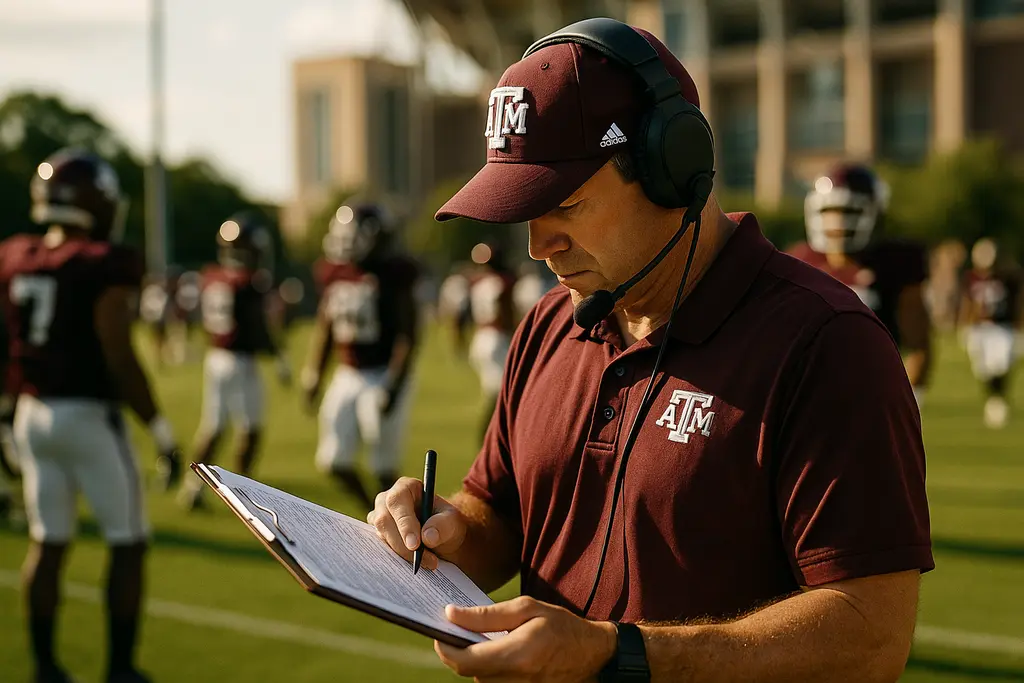

The Protect College Sports Act gives Texas A&M football a recruiting issue that sits beyond the usual film room, depth chart and visit-weekend work. The proposal, introduced by U.S. Senators Ted Cruz and Maria Cantwell, seeks a federal structure for college athletics, including NIL compensation, transfer rules, eligibility and medical coverage, according to the bill summary. For the Aggies, the football impact starts with how the staff explains certainty to prospects and transfers in an SEC race where roster retention already matters every month.
This is not a simple recruiting slogan. Texas A&M has to prepare for a possible system where federal rules, conference policy and athletic-association oversight all touch the same roster decisions. The staff can still sell Kyle Field, SEC competition, player development and a Texas recruiting base. What could change is the legal frame around those selling points. If rules become more uniform, A&M’s pitch may depend less on who can describe the loosest NIL setup and more on who can show structure, compliance and a stable football plan.
Protect College Sports Act And Recruiting Control
How Protect College Sports Act Changes The Pitch
The most direct recruiting question is how NIL fits into the first conversation with a high school prospect or portal target. The Protect College Sports Act would protect student-athletes’ ability to earn compensation from their name, image and likeness while allowing athletic associations to regulate that compensation. That combination matters because it could pull some of the current recruiting gray area into a more formal process.
Texas A&M has already had to recruit in a world where NIL is part of roster construction. The possible shift is not whether NIL remains relevant. It is how much of the NIL discussion can be standardized, audited or limited by rules outside the school. A&M’s best path would be to present NIL as one piece of a broader plan: development, playing time, academic support, medical care and a clear depth-chart role. That is a more durable pitch if federal rules make collectives and school-adjacent support operate within tighter lines.
That approach also fits how SEC recruiting battles work. Texas A&M is not trying to win isolated commitments; it is trying to build position groups that can hold through signing day, spring practice and the next portal window. A prospect who understands the full support structure may be easier to retain than one who arrived mainly for the least-defined NIL conversation. That is why the bill’s NIL language could push A&M toward cleaner, earlier explanations of what is allowed and what is not.
Why The Transfer Rules Matter
The transfer piece could be just as significant. The proposal guarantees one transfer without losing eligibility and sets conditions for any added transfers. That would not end portal recruiting, but it could change the risk profile for both the school and the player. Texas A&M would need to know not only whether a transfer can help in the fall, but whether his eligibility path is clear under the new model.
For roster management, that pushes more work onto evaluation before an offer. A&M would have to sort portal targets by eligibility, prior movement and long-term fit. A player with one clean transfer profile is different from a player needing another exception. The staff would also need to explain the same details to high school signees who are watching older players move in and out of the room. If the bill narrows confusion, that helps planning. If it creates new interpretation questions, the schools with stronger compliance support could have an edge.
That is where internal alignment matters. Football personnel, compliance, academics and medical staff would all need to work from the same rule sheet. The same issue connects with Texas A&M’s broader roster planning under federal proposals, a topic tied closely to Texas A&M player development and how the Aggies allocate resources around retention.
NIL Rules And Roster Value
High School Recruiting May Need More Certainty
For high school recruiting, the key issue is certainty. A top prospect and his family want to know what happens after enrollment. They ask about role, development, injury support, position coach stability and financial opportunity. If the Protect College Sports Act creates a more consistent federal NIL frame, Texas A&M can make a more rule-based presentation rather than leaning on market assumptions that may change by the next signing class.
That could help A&M with prospects who want a defined plan. It could also reduce some advantage for programs or groups willing to promise loosely. The hard part is that a more regulated setup may make every school sound similar on paper. In that case, Texas A&M’s football-specific assets become more important. The Aggies can point to SEC competition, the visibility of Kyle Field and a roster pathway that must be explained position by position. The staff would need to show how a player fits, not just that the program can support him.
Recruiting also becomes more tied to retention. If athletes have defined NIL rights and transfer options, the signed class is only the first step. Texas A&M must keep players engaged through development plans, honest depth-chart feedback and steady support. That is why the proposed structure intersects with the retention pool stakes around Aggies football. Retention is now part of recruiting, not a separate department issue.
Portal Evaluation Gets Less Forgiving
The portal already rewards fast decisions, but a federal transfer structure could make mistakes harder to absorb. If a player’s transfer history affects his next move, Texas A&M has to know that before building a spring or summer plan around him. That could narrow the pool of realistic targets late in the cycle, especially if eligibility conditions require deeper review.
The Aggies’ recruiting staff would also have to weigh immediate production against roster continuity. A one-year fix can help a position room, but it may also reduce snaps for a younger player A&M needs to keep. If the transfer system becomes more defined, the staff can be more precise about which portal additions are worth the tradeoff. The best portal recruiting would not be the largest class. It would be the cleanest fit with eligibility, need and locker-room timeline all matching.
Eligibility And Medical Costs
The Five-Year Window Could Shift Timelines
The legislation’s eligibility language matters for football because roster timelines drive recruiting numbers. The proposal establishes a five-year eligibility period for student-athletes and bars athletes who have competed professionally from college sports if they earned compensation beyond prize money. For Texas A&M, that means the staff would need to treat eligibility review as part of recruiting evaluation, especially with older athletes or players coming from nontraditional backgrounds.
A five-year period can help a program plan if the rule is applied clearly. It gives coaches a defined window for development and roster projection. It also forces sharper decisions on redshirt usage, portal additions and position balance. A&M cannot evaluate a quarterback room, offensive line room or defensive front only by the next season. The staff has to map how each player’s eligibility lines up with recruiting classes behind him.
There is uncertainty here because the bill remains a proposal, and rules can change before any final version takes effect. Texas A&M should not recruit as if every provision is locked. But the staff can prepare for the direction of travel: more formal eligibility standards, more documentation and more questions from families who want to know how a five-year path would work.
Medical Coverage Becomes Part Of The Resource Plan
The medical coverage section is not just an athletic department budget item. The proposal would require Division I institutions to provide five years of post-eligibility medical coverage for injuries or illnesses incurred during participation. That requirement could become a recruiting point, but it also affects how resources are planned across the program.
For Texas A&M, the value is clear in a living-room conversation. Parents want to know what happens if a player is hurt while representing the school. A defined post-eligibility medical requirement could make that answer stronger across the sport. The cost side is just as real. Money committed to medical coverage has to be accounted for alongside staffing, nutrition, travel, facilities and roster support.
That does not mean medical coverage weakens recruiting. It could strengthen trust if Texas A&M explains it plainly. The issue is whether the department can balance those obligations while keeping football competitive in the SEC. Strong programs will have to connect care for athletes with long-term roster planning rather than treating it as a separate compliance requirement.
SEC Pushback And Texas A&M Timing

Conference Concerns Keep The Situation Open
The SEC’s reaction matters because Texas A&M does not recruit in isolation. The league’s stance shapes competitive balance, scheduling pressure and how member schools interpret new rules. The Big Ten and SEC have raised concerns about the bill, according to The Washington Post. That means the Protect College Sports Act should be treated as a live policy fight, not a settled football rulebook.
For the Aggies, that timing affects messaging. Coaches cannot promise what the final law will say. They can promise preparation. That means recruits should hear that A&M is tracking NIL, transfer, eligibility and medical provisions and will adjust within whatever final rules are adopted. A calm, factual pitch may carry weight with families who are tired of shifting college sports rules.
SEC pushback also suggests that revisions may be part of the process. If the league seeks changes, Texas A&M has to stay flexible. The school’s football operation should be ready for several versions of the same issue: one with tighter NIL regulation, one with clearer transfer limits, one with stronger medical obligations, or one with delayed implementation.
What The Aggies Can Control Now
Texas A&M can control its evaluation process. The staff can build recruiting files that include eligibility history, transfer history, NIL education needs and long-term roster fit. It can prepare families for different outcomes without overstating what Congress or the conferences will do. It can also keep the football pitch rooted in development and role clarity, which remain relevant under any federal model.
The Protect College Sports Act could reduce some uncertainty in college athletics, but it could also move the pressure point from recruiting creativity to administrative strength. Programs that know the rules, explain them well and apply them consistently will be better positioned. For Texas A&M, that makes the next recruiting cycle about more than star ratings. It is about whether the Aggies can pair SEC-level talent acquisition with a compliance-ready roster plan.
Why This Matters For Aggies Recruiting
The football takeaway is direct: the Protect College Sports Act could make Texas A&M’s recruiting pitch more structured and less dependent on loose assumptions around NIL and transfers. That does not remove competition. It changes what must be proven. The Aggies would need to show prospects how compensation rules, eligibility windows, medical support and transfer options fit inside a real development plan.
If the bill advances in a form close to the current summary, Texas A&M’s advantage will not come from ignoring the new framework. It will come from explaining it earlier and better than its rivals. Recruits still want playing time, coaching, exposure and a path to professional football. Families also want stability. In a policy cycle where major rules remain unsettled, stability may become one of the strongest recruiting tools Texas A&M can offer.