
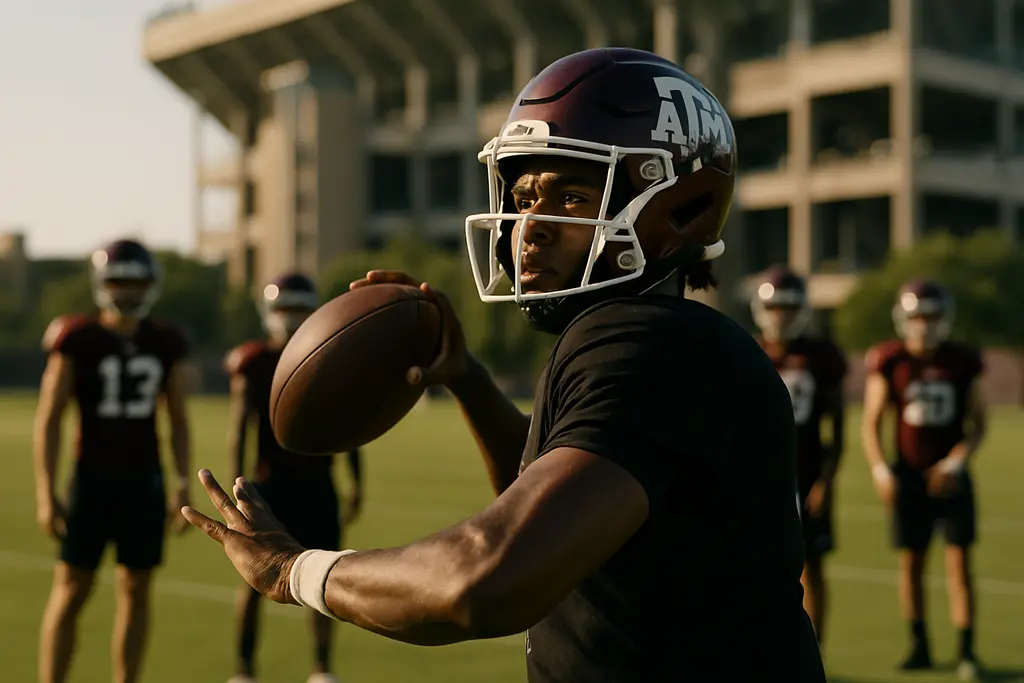

Marcel Reed development has become one of the central questions for Texas A&M’s 2026 offense after six games. The Aggies entered the year with a quarterback who had already built a national profile, but the production through Oct. 12, 2026, points to a different kind of assignment for the staff: protect the ball better, regain passing rhythm and keep Reed’s run threat involved without letting the offense become too narrow.
Reed was not a low-profile piece entering the season. Texas A&M announced on Aug. 3, 2026, that Reed and Mario Craver were named to the Preseason Maxwell Award watch list Texas A&M’s announcement. That recognition reflected the production he carried into the year: more than 5,407 career passing yards, 41 passing touchdowns, a completion rate near 62 percent and more than 1,085 rushing yards, according to the research provided.
The six-game sample in 2026 has been less clean. Reed has thrown for 1,097 yards, six touchdowns and six interceptions, with a 55.3 percent completion rate and about 5.8 yards per attempt. His average passing yards per game, 182.8, is down from 243.8 in 2025. Those numbers do not end the conversation. They do change the terms of it.
Marcel Reed Development And The Six-Game Reset
Marcel Reed Development In The Passing Game
The passing decline is the first item Texas A&M has to address. Reed’s 2025 profile gave the Aggies room to call deeper concepts and trust him to keep the offense on schedule across halves and down-and-distance situations. The 2026 numbers show less margin. A completion rate at 55.3 percent and a yards-per-attempt figure near 5.8 suggest that the ball is not coming out with the same timing or efficiency.
That does not point to one simple cause. The research notes Reed’s 3.24-second average time to throw and a significant number of turnover-worthy plays, with his current season stats listed on his PFF player page. Holding the ball that long can reflect several issues: late reads, covered receivers, protection stress or a quarterback trying to create after the structure breaks. For a dual-threat passer, that line can be thin. The same patience that creates a scramble lane can also expose the offense to pressure and tipped or forced throws.
Where The Run Threat Still Fits
Reed’s legs remain a real part of the scouting report. Through six games, he has 152 rushing yards and two rushing touchdowns. In 2025, he ran for 493 yards and six touchdowns. The current rushing totals are not enough by themselves to carry an SEC offense, but they matter because they affect defensive rules.
That frames Marcel Reed development as more than a passing drill. If linebackers have to account for quarterback keepers, zone-read looks and boot action, Texas A&M can slow pursuit and create cleaner windows. If defenses can treat Reed as a pocket-only passer because the Aggies are behind the chains or hesitant to expose him as a runner, the offense loses one of its strongest pressure points.
Why Texas A&M Can Shorten The Menu
Early Throws And Cleaner Reads
The clearest schematic response is to shorten the passing menu. That does not mean removing vertical shots. It means building drives with throws that ask Reed to identify leverage quickly and deliver before the rush can compress the pocket. Slants, screens, shallow crossers and quick outs fit that idea. They can also help Texas A&M stay away from second-and-long and third-and-long calls that invite pressure.
The 2025 data in the research showed Reed holding up across halves and certain situational splits. That matters because it suggests the issue is not simply whether he can process a full game. The 2026 adjustment is more about restoring rhythm. Fewer hold-and-wait concepts could help reduce interceptions and keep the offense out of the late-down scramble cycle.
Bootlegs, Play Action And Pocket Movement
The next phase of Marcel Reed development should include more movement throws if the staff believes the pocket timing is a problem. Bootlegs and play-action concepts fit Reed’s skill set because they force defenders to respect the run first and then react to the quarterback outside the original launch point.
Those calls also give Texas A&M a way to use his athletic ability without turning every key snap into a designed quarterback run. A bootleg can become a throw, a keeper or a throwaway. That range of outcomes is valuable for a quarterback trying to cut down on risky decisions. It also changes the picture for edge defenders, who cannot crash as freely if the quarterback is a threat to pull the ball and move.
How Personnel Shapes The Adjustment
Receivers And Timing
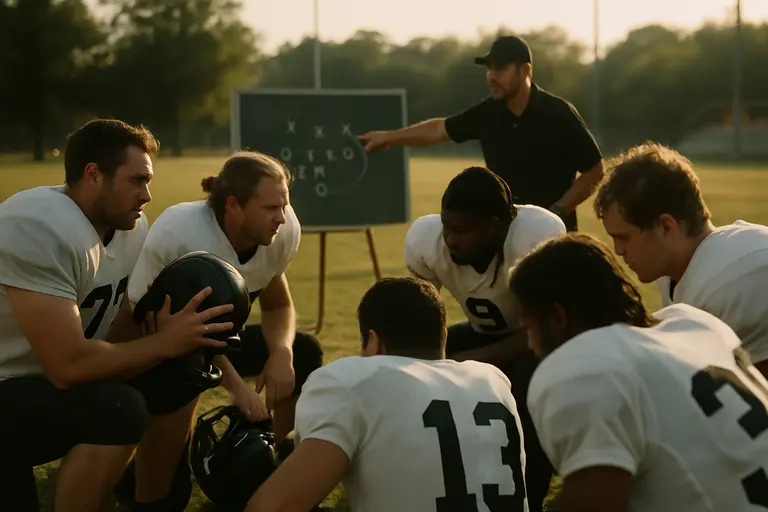
Reed expressed confidence before the season in a receiver group that included Bethel-Roman, Mario Craver, Terry Bussey and newcomer Isaiah Horton, according to the research notes. The names matter because Texas A&M’s passing fix is not only a quarterback issue. Timing throws require receivers to win early, settle in the right windows and stay consistent on option routes.
Craver’s Maxwell watch-list recognition placed him in the same preseason national conversation as Reed. That carries weight inside the offense. If defenses tilt coverage toward the most dangerous receiver, the Aggies need complementary options to punish single coverage and give Reed defined answers. If those answers are late or covered, the quarterback’s time-to-throw number will stay high.
Line Cohesion And Time To Throw
The offensive line is the other piece of the same problem. Reed’s 3.24-second average time to throw does not automatically mean the line is failing, but it does place strain on protection. SEC fronts are built to win if quarterbacks are still holding the ball late in the down. Even solid protection can break when a play extends past its intended timing.
That is where Texas A&M’s plan has to connect personnel with play design. Quick-game calls help the line. Designed movement can change rush angles. A credible run game can slow linebackers and safeties. The pieces do not have to be complicated, but they have to fit. The related Marcel Reed development plan has centered on that same balance: protection, timing and risk control.
What Marcel Reed Development Means Now
For Texas A&M, Marcel Reed development now points toward a more controlled offensive identity. The Aggies do not need to remove the aggressive parts of the playbook, but the six-game data makes clear that the offense has to earn those calls. Better first-down efficiency, more manageable second downs and fewer late-developing throws would give Reed cleaner chances to use the traits that made him a preseason award candidate.
The staff also has to decide how much quarterback run volume is the right amount. Reed’s 2025 rushing production showed that his legs can change a game plan. His 2026 passing numbers show why that threat still needs to be part of the offense. Designed runs, option looks and boot action can help Texas A&M avoid asking him to solve every problem from a static pocket.
The turnover issue is the largest checkpoint. Six interceptions through six games is not a small trend, and the research notes turnover-worthy plays as part of the same concern. If Reed lowers the risk throws and the Aggies give him more early answers, the offense can become steadier without losing its dual-threat edge.
That is the practical read through Oct. 16, 2026. Reed still gives Texas A&M a quarterback with enough mobility and experience to stress SEC defenses. The next step is less about expanding the call sheet and more about making the most useful parts of it show up earlier in drives, before pressure and long-yardage situations narrow the field.