
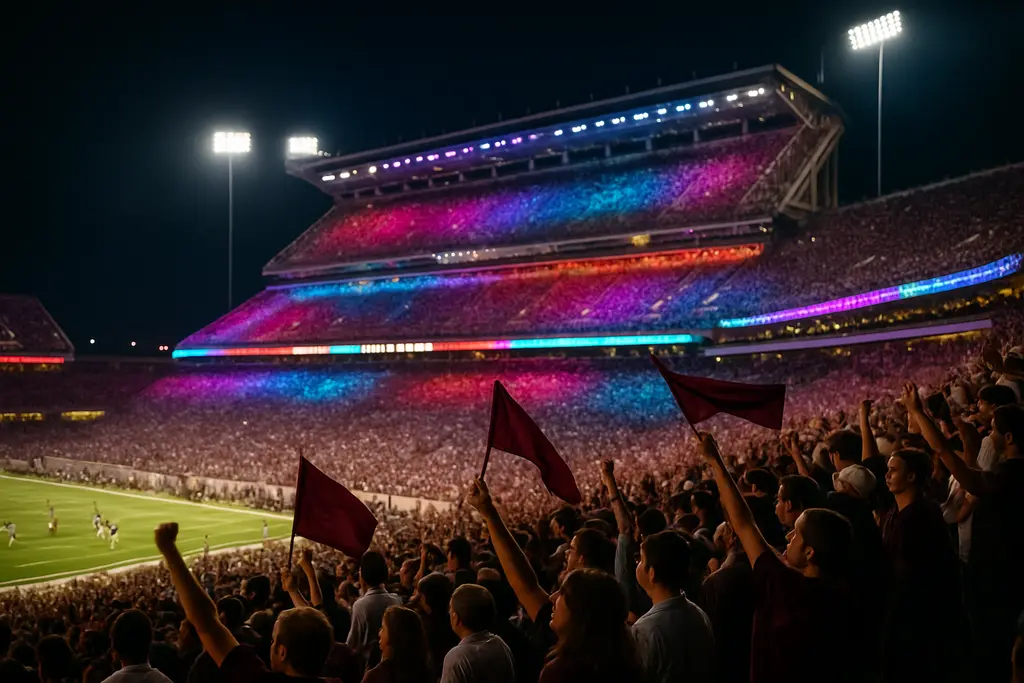

The LED Light Show at Kyle Field has changed more than the color of a late-game timeout. It has changed the pace of a Texas A&M Saturday, tightening the space between the team, the yell leaders, the video boards, the fireworks and the 12th Man into one shared surge. The effect is easy to feel, harder to measure, and worth judging with care.
College football atmosphere is not built by technology alone. At Texas A&M, it begins with people standing, swaying, yelling and refusing to treat the fourth quarter like a polite viewing window. The lights matter because they meet that tradition where it already lives. They do not replace the old sound of Kyle Field. They frame it, sharpen it, and make the closing stretch feel staged without making it feel imported from somewhere else.
That distinction matters for Aggies who worry about any change that might sand down the character of game day. Kyle Field has never needed a manufactured identity. The question is whether new production tools strengthen the existing one. Based on the reported upgrades and the early reaction around the stadium experience, the answer appears to be yes, with one fair caveat: public research available for this topic did not include decibel readings, fan survey data, or a clean before-and-after measure of home-field effect.
What The LED Light Show Changed
Why The LED Light Show Feels Different
The most visible shift is timing. A fourth-quarter lighting cue carries a different weight than a pregame feature. Pregame atmosphere can introduce the show. The fourth quarter asks the crowd to answer it. That is where Texas A&M’s choice fits the identity of the 12th Man: stand longer, yell louder, and make the visitor feel the end of the game before the scoreboard has settled it.
The LED Light Show does not work in isolation. Texas A&M also expanded the visual canvas around the building. For the 2026 season, the athletic department listed 26 new LED displays across Kyle Field, including field-level LED boards in both end zones and LED displays at tunnel entrances, among its stadium upgrades Texas A&M athletics upgrades. That detail matters because atmosphere now reaches fans from more angles. The show is not just overhead or in one corner of the stadium. It feels wrapped around the seating bowl.
There is also a psychological effect. A light cue tells the crowd when to rise into the moment. In a stadium that already leans on coordinated yells, hand signals and student-section rhythm, that kind of cue can feel natural rather than forced. Texas A&M has long asked its crowd to act together. The technology gives that crowd another signal.
Fireworks, Boards And The New Fourth Quarter Pulse
The lighting is only one piece of a larger production change. Yahoo Sports reported that Texas A&M increased its fireworks budget to $100,000, with pyrotechnics used more widely, including from corner video boards and the high tower of the south end zone; the same report described a stadium presentation that can feel like a concert because of the lights, fireworks and player introductions Yahoo Sports fan experience report.
That does not mean Kyle Field has become less like a college football venue. The best version of the new show still sounds like College Station. The yell leaders remain central. The student section remains the engine. The Corps, families in maroon, former students and first-time visitors still bring the human texture that no control room can fake. The lights succeed only if they amplify that crowd rather than ask it to sit back and watch.
For a deeper look at how stadium upgrades have shaped fan movement and stadium rhythm, our breakdown of Kyle Field enhancements at Texas A&M tracks the same shift from a game-day planning angle.
Why It Matters To The 12th Man
A Tradition Built On Participation
Some fan bases treat atmosphere as noise between snaps. Texas A&M treats it as duty. That is why the lighting change lands differently in College Station than it might in an NFL stadium or a neutral-site event. The show is not asking fans to clap on command for a sponsor cue. It is meeting a crowd already trained to participate, then giving that participation a sharper visual edge.
In that sense, the upgrade fits a long-running Texas A&M truth: the best Kyle Field moments are communal. A single fan cannot create the sound that rattles a protection call. A single student cannot make the visiting sideline feel swallowed by the building. But when thousands respond at once, the stadium becomes less like a venue and more like a living pressure system.
The newer effects also help bridge generations. Longtime fans may care most about yells, formation, and the feel of a packed student side. Younger fans who grew up with high-production sports and concerts may respond to synchronized light, video and sound. The value is not choosing one group over the other. It is giving both a reason to stay locked in as the game tightens.
Home Viewing Enters The Conversation
The research notes also point to Texas A&M linking the stadium experience with at-home lighting through a smart-lighting partnership. That part of the story is interesting, but the stadium impact remains the more important piece for football culture. Kyle Field’s edge is still built in person, shoulder to shoulder, with the student section setting the tone and the rest of the building joining in.
Still, the at-home idea shows how the program views atmosphere as part of the broader Aggie community, not just a feature for those inside the gates. For a fan in Houston, Dallas, San Antonio, West Texas or beyond, the ritual of game day can stretch past campus. The stadium remains the source. The home version is an echo.
The Football Value Without Fake Certainty
What Can Be Said With Confidence
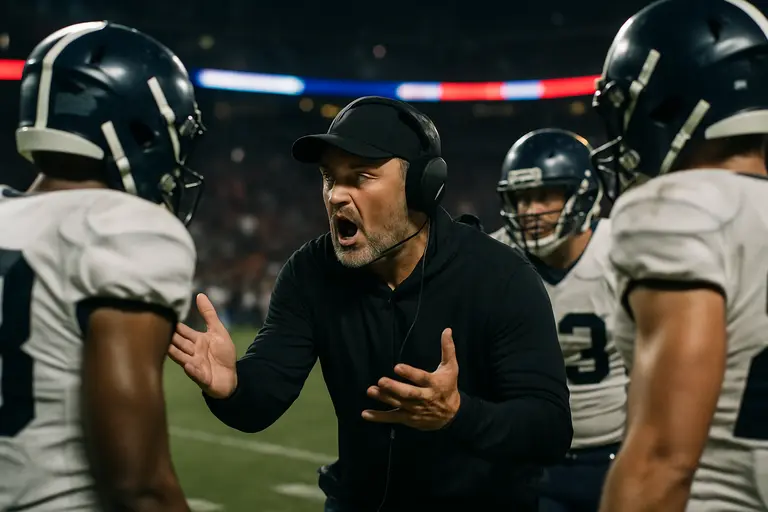
It is fair to say the new presentation has raised the sensory ceiling at Kyle Field. More light, more board space and more pyrotechnics create a stronger fourth-quarter feel. It is also fair to say that players, coaches and longtime fans have described the recent atmosphere in unusually strong terms, with reports tying the environment to home-field energy and recruiting impressions.
But it would go too far to claim the lights alone win games. Football still turns on blocking, tackling, quarterback decisions, third-down execution and red-zone discipline. A lighting system cannot cover a slot receiver or pick up a blitz. What it can do is help sustain crowd pressure at the exact point when fatigue, communication and poise matter most.
That is where the football value lives. Visiting offenses already deal with Kyle Field’s size and sound. If the production cue makes the crowd rise together before a key fourth-quarter series, the defense may get a little more juice and the opponent may face one more layer of stress. That is not magic. It is venue management paired with fan culture.
The Recruiting Lens
Recruiting also belongs in the evaluation, though it should be handled with restraint. Prospects notice stadium energy. Families notice presentation. High school players on visits notice whether a place feels alive or dated. The upgraded Kyle Field show gives Texas A&M another sensory detail to put around the program on game day.
The pitch is not simply that the lights are bright. Plenty of places can buy lights. The stronger pitch is that the 12th Man responds to them in a way that feels native to the school. For a recruit, that difference can matter. A loud crowd is impressive. A crowd that knows exactly when to surge, and why, can feel personal.
What The LED Light Show Means For Aggieland
The LED Light Show is best understood as a frame around something Texas A&M already had. Kyle Field did not need a new identity, but it did benefit from a sharper fourth-quarter presentation that fits the way Aggies already experience football. The lights, boards and fireworks give the building a modern pulse without removing the yells, the standing students or the uneasy feeling visitors get when the game tightens.
The next step in judging the impact should be evidence. Decibel readings, fan surveys, recruit feedback and game-operation reviews would help separate feeling from proof. Until those numbers are public, the safest evaluation is also the most honest one: the atmosphere feels bigger, the production is more coordinated, and the 12th Man has been given another tool for making Kyle Field feel like itself at full volume.