
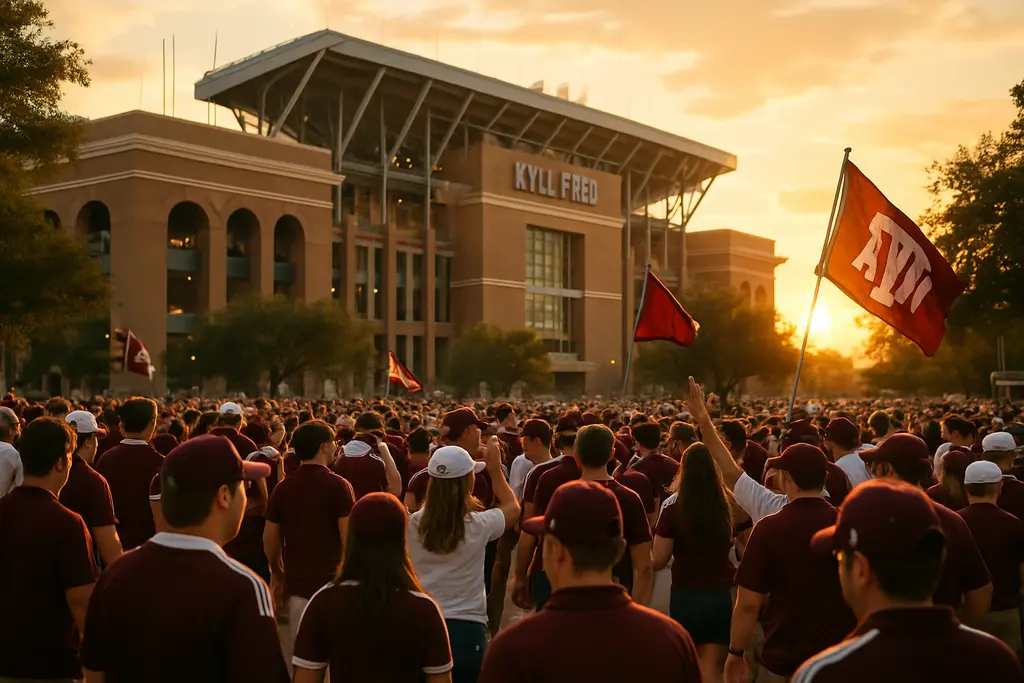

Kyle Field Enhancements are no longer a future promise around Texas A&M football. They were put into service for the 2026 season, and by September 24, 2026, Aggie fans had already begun feeling them in the ordinary pressure points of a Saturday: the walk from tailgates, the concession line before halftime, the screen in a hand, the roar between the third and fourth quarters, and the long push back toward cars and shuttles.
That matters because Kyle Field is not a small venue trying to add polish. It is a high-capacity SEC stadium built around noise, ritual and crowd movement. The 12th Man experience depends on emotion, but game-day operations depend on repeatable systems. Texas A&M’s 2026 upgrades touch both sides of that bargain: make the building feel sharper without draining the old pulse from the place.
Kyle Field Enhancements Now Meet The 12th Man
Kyle Field Enhancements Start With Wayfinding
Texas A&M introduced an all-new Kyle Field fan guide and interactive stadium map in late August 2026, with access through the 12th Man App, according to the school’s list of 2026 Kyle Field upgrades. That sounds simple until kickoff traffic begins to stack up and thousands of people are trying to answer the same small questions at the same time: which gate, which section, which restroom, which concession stand, which path back toward the tailgate?
In a stadium culture built on routine, wayfinding tools are not just for first-time visitors. They help longtime season-ticket holders adjust when a gate pattern, pedestrian route or meeting point changes. They also give families a better chance to move with purpose instead of standing in the concourse while the crowd presses around them. The win is not flashy. It is the quiet relief of knowing where to go before the band starts, before the Corps steps off, before a packed student section begins to lean into the night.
The enhanced 12th Man App also added game-day companion features, including faster alerts, short-form video content, navigation tools and stadium information. That moves the app closer to an operations tool rather than a simple ticket holder. Mobile ticketing, stadium maps and quick alerts all rely on fans trusting the same device during the same compressed window. If the app becomes habit, Texas A&M can communicate faster when weather, gate pressure or traffic patterns demand a change.
What Changed Inside Kyle Field
Concessions And Payment Speed
Some of the most noticeable changes sit at the counter. Texas A&M lowered prices by $1 on several core concession items for the 2026 season, including hot dogs, nachos and candy, and added a $6 popcorn option across the stadium. The practical effect is bigger than a menu board. Lower entry prices on familiar stadium food can soften the cost of bringing a family to an SEC game, especially for fans already paying for parking, travel and tickets.
The new point-of-sale system may matter even more for operations. All Kyle Field concession stands adopted upgraded hardware and software in fall 2026 with the stated aim of speeding transactions and reducing line delays. The second quarter is the stress test. Fans try to beat halftime, students sprint for water, parents make one last snack run before the next defensive series. Faster payment does not remove demand, but it can reduce the time people spend blocking concourse lanes.
That is where Kyle Field Enhancements connect directly to football atmosphere. The 12th Man is loudest when people are in seats, not stuck behind a stalled card reader. A faster concession system supports the sound inside the bowl by helping fans return before a drive turns into a field-position fight.
Screens, App Tools And Shared Attention
Kyle Field added 26 new LED display screens for 2026 home games, including field-level LED boards in both the north and south end zones and displays at tunnel entrances. In a building where traditions carry their own rhythm, added displays have to serve the moment rather than drown it out. Used well, they can sharpen timing, direct attention and support stadium information without pulling fans away from the field.
The 12th Man Memories program also became a permanent feature for the 2026 season. The official experiences program gives fans the chance to stand on the field between the third and fourth quarters or take behind-the-scenes stadium tours. That is an operations choice with a cultural edge. Texas A&M is taking pieces of the venue that used to feel distant and letting more fans brush against them in controlled ways.
There is a balance to protect. Kyle Field does not need manufactured feeling. It already has the War Hymn, the yell leaders, the student section, the sudden swell that comes when an opposing offense faces third down. The better use of new screens and access programs is to frame those moments, not replace them.
How The Stadium Moves Before Kickoff

New Pathway Near West Campus Garage
Outside the gates, Texas A&M opened a newly constructed pedestrian passage on the basement level of the West Campus Garage before the September 5, 2026 season opener. The pathway was designed to let fans avoid walking directly in front of garage exits, easing congestion between tailgate areas and Kyle Field, according to Texas A&M Transportation Services’ game-day traffic update.
That kind of change will not lead a highlight show, but it can change how a Saturday feels on the ground. A safer pedestrian path lowers friction between drivers leaving garages and fans moving in waves toward the stadium. It also gives operations staff a clearer way to separate foot traffic from vehicle movement. For a crowd that often arrives in clusters — families, former students, students moving from tailgates, visiting fans trying to read the campus — clearer routing can prevent small delays from becoming stubborn bottlenecks.
For readers tracking the broader transportation shift around the venue, our related look at Kyle Field transportation habits fits this same pattern: the best game-day plans are built before the crowd reaches the gate.
Shuttles, Parking And Fourth-Quarter Exits
The 2026 operations plan also leaned on shuttle timing and parking discipline. Transportation services were operating on-campus and off-campus shuttles beginning three hours before kickoff and ending one hour after the game. Off-campus options included free shuttle pickup from downtown Bryan at Roy Kelly Garage to Kyle Field, while PM parking credentials required prepayment through ParkMobile.
Those details point to a larger strategy: move more decisions earlier. Prepaid credentials reduce payment decisions near lots. Earlier shuttles give fans a reason to spread arrival times. Off-campus pickup gives some fans a way to avoid the tightest campus approaches. None of that eliminates the crush around a major SEC home date, but it gives Texas A&M more tools to shape demand instead of simply reacting to it.
Road closures were also part of the 2026 plan. Houston Street, Joe Rout Boulevard, Gene Stallings Boulevard and part of Olsen Boulevard were listed among game-day closures in the research notes, with post-game closures beginning at the start of the fourth quarter for traffic management. That fourth-quarter timing matters. By preparing exit routes before the final whistle, operations staff can start building outbound flow while the game is still being decided.
Kyle Field Enhancements And Future Game-Day Operations
The Human Test For Operations
The long-term question is not whether Texas A&M added technology, screens, maps, concessions systems and pedestrian routes. It did. The question is whether those changes make Saturdays feel more natural for the people who carry the place: students standing shoulder to shoulder, former students returning to old seats, parents guiding children through a crowd, and visiting fans trying to understand why Kyle Field feels different from other SEC stops.
Kyle Field Enhancements should be judged by how well they protect the emotional core of the day. A map should help a fan find a gate without missing a pregame ritual. A concession upgrade should move a line without making the concourse feel rushed. A new LED board should support the stadium’s rhythm. A pedestrian route should take stress out of the walk without turning campus into a maze.
By September 24, 2026, these changes had already shifted the operating model from a stadium-only focus to a full campus flow: phone, sidewalk, garage, shuttle, gate, concourse, seat, exit. That is the real implication of Kyle Field Enhancements. Texas A&M is treating game day as one connected system, and the 12th Man will feel the value most when the system fades into the background and the noise takes over.