
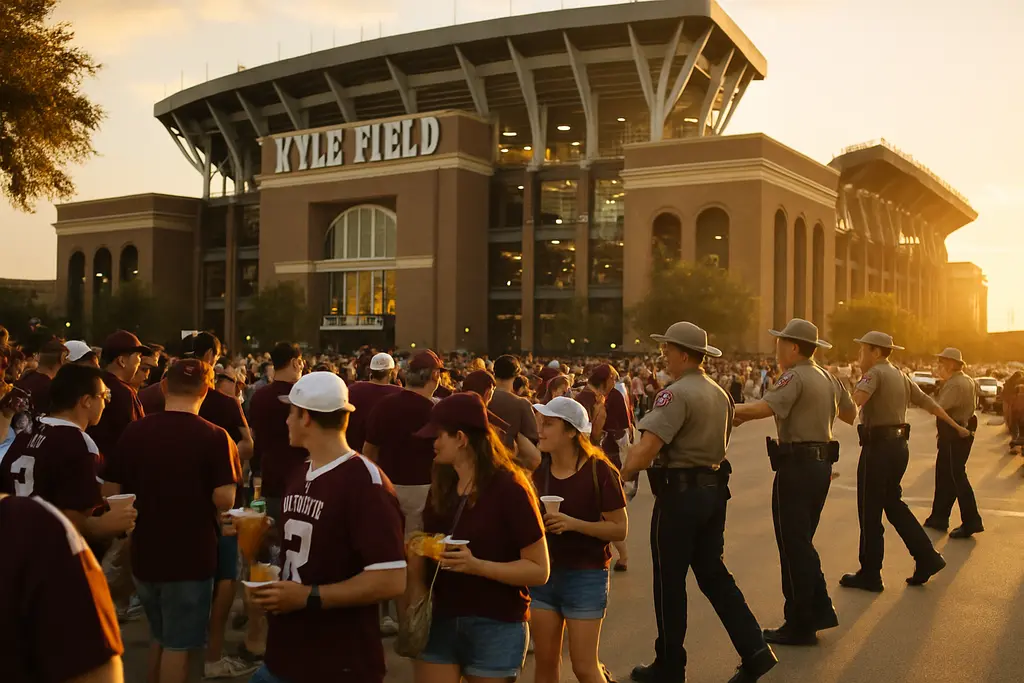

Kyle Field Transportation has been a clear operational focus for Texas A&M in 2026, and the changes have already shaped how fans move around College Station before and after Aggies home games. The first test came on September 4-5, 2026, when Texas A&M hosted Missouri State and more than 100,000 fans were expected at Kyle Field, according to Texas A&M’s official game-day guidance game-day guidance.
The impact is not best measured by a single travel-time number, at least not yet. Texas A&M has not publicly released game-by-game commute savings, queue reductions or shuttle wait-time averages through October 13, 2026. What is clear from the official guidance is the structure: earlier road controls, longer shuttle windows, a new pedestrian route near West Campus Garage, more direction toward prepaid parking and a safer separation of people and vehicles in the most crowded zones near Kyle Field.
For fans, that means the 2026 setup rewards early movement and punishes last-minute decisions. For Texas A&M, it reflects a practical reality around SEC football weekends: Kyle Field does not just host a game. It creates a temporary traffic system that has to absorb a six-figure crowd, campus pedestrians, downtown park-and-ride users, permit holders, accessible parking needs and postgame vehicle release.
Kyle Field Transportation Changes Around Kickoff
Kyle Field Transportation Starts Before Fans Reach Campus
The most important adjustment is timing. Road closures now begin approximately 4 1/2 hours before kickoff, with Houston Street, Joe Routt Boulevard, Gene Stallings Boulevard and parts of Olsen Boulevard adjacent to West Campus Garage included in the closure plan. Postgame closures begin in the fourth quarter, giving traffic staff time to prepare the exit pattern before the final wave of vehicles leaves the area.
That timing changes fan behavior. The window before kickoff is no longer just about tailgating or finding a gate. It is part of the stadium access plan. Fans trying to cross campus late have fewer route choices, and drivers who wait until the final hour face a more controlled street grid. The tradeoff is clear: fewer free-flowing vehicle options near the stadium in exchange for a more predictable separation between traffic, pedestrians and stadium operations.
The shuttle system also runs on a defined game-day window. Texas A&M Transportation Services says on- and off-campus game-day shuttles operate from three hours before kickoff through one hour after the game ends Transportation Services update. That matters for fans parking away from Kyle Field, especially those who choose Downtown Bryan or remote campus lots instead of pushing closer to the stadium.
Why The Shuttle Window Matters
The three-hour pregame shuttle window gives fans a practical arrival target. It also gives Transportation Services a way to spread demand rather than absorb everyone in the final push before kickoff. The one-hour postgame window is just as important because the exit rush around Kyle Field remains one of the hardest parts of any home Saturday.
Downtown Bryan’s game-day shuttle from Roy Kelly Garage fits into that plan. The setup gives fans a park-and-ride option with free and paid parking downtown, then moves them toward campus on the same three-hour pregame and one-hour postgame schedule. It does not eliminate the need to plan, but it gives fans who do not want to park close to Kyle Field a more defined option.
Fans without permits have also been steered toward prepaid parking through ParkMobile, which Texas A&M identifies as the only approved prepaid vendor. That detail is not minor. Unreliable cell service near campus on game days can make day-of-arrival parking decisions harder, and invalid credentials can slow entry at lots. Prepaying before arrival cuts one possible failure point out of the trip.
Pedestrian Flow And Parking Adjustments
A New West Campus Garage Pathway
The most visible physical change is the new pedestrian pathway on the basement level of West Campus Garage. It has entrances at the northeast corner and near Reed Arena, and it is designed to improve the separation of vehicle traffic and foot traffic between Olsen Boulevard and Pickard Pass.
That is a targeted fix for one of the core problems around Kyle Field. On a packed SEC Saturday, vehicles and pedestrians are often trying to use the same limited space at the same time. Even a small conflict point can slow a garage exit, force fans into awkward crossings or create a safety concern when drivers and walkers are both reacting to crowd pressure. The new pathway gives pedestrians a more defined route through a busy area and gives traffic staff a better chance to keep vehicles moving where they are supposed to move.
Kyle Field Transportation in 2026 is not just about cars. It is about how many different types of movement can be kept from colliding: students walking from campus, fans leaving tailgates, shuttle riders, permit holders, accessible parking users and traffic exiting garages. The West Campus Garage path is a sign that Texas A&M is trying to solve the fan-flow problem at ground level, not just by changing maps.
Permit Lots And Accessible Parking
Parking access has also been widened in specific ways. On home game days, fans with any valid Texas A&M parking permit can use many “Any Valid Permit” lots. That gives permit holders more flexibility and can help spread demand away from a small number of preferred areas.
Accessible parking remains more structured. University Center Garage and Lot Y/114 are designated accessible parking areas for football game days, with listed prices of $40 and $25, respectively, in the research provided for October 13, 2026. Those locations and costs matter because accessible routes are not interchangeable with general parking routes. Fans who need them have less margin for trial and error, especially once road closures begin.
Campus speed limits have also been lowered in parts of the 2026 setup to improve safety in high-pedestrian areas. That slows vehicle movement by design. For drivers, it may feel like another constraint. For game-day operations, it fits the same pattern as the garage pathway and earlier closures: reduce conflict points before they become bigger problems.
What The 2026 Changes Mean For Aggies Fans
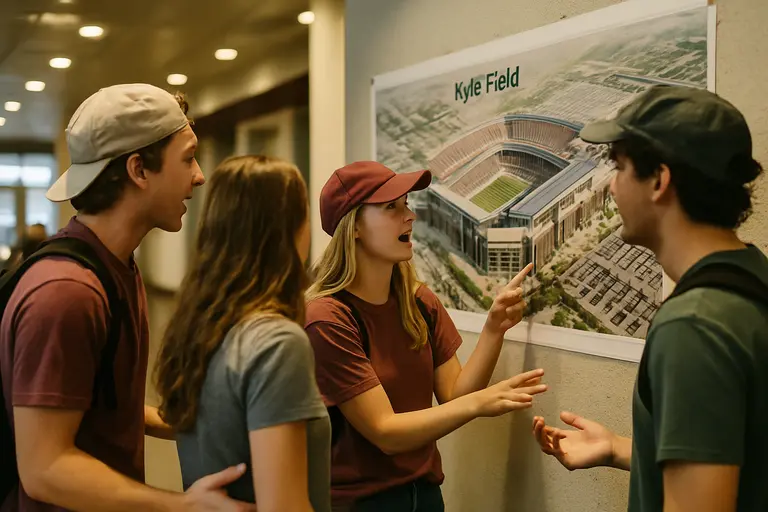
Predictability Is The Main Win So Far
The available facts do not support a claim that every fan is getting to Kyle Field faster in 2026. No public data set has shown exact average time savings or congestion reductions after the September opener. The fair read is narrower but still meaningful: Texas A&M has made the system more predictable for fans who follow the plan.
Fans who arrive inside the shuttle window, prepay for parking, use approved routes and account for closures have a clearer path than fans relying on habit from prior seasons. That is the practical value of Kyle Field Transportation changes. The setup gives people more information before they leave home, and it gives campus staff more control before the peak crowd arrives.
The flip side is that the system is less forgiving. A fan who used to drive near the stadium late and adjust on the fly may run into closures, slower campus speed zones and limited cell service. A fan who parks downtown or in an approved lot and moves early is working with the design instead of against it.
Why This Fits The SEC Game-Day Model
Texas A&M’s home schedule places Kyle Field inside the same operational category as the largest venues in college football. The stadium crowd is only part of the equation. The surrounding campus, West Campus Garage, Reed Arena area, Downtown Bryan shuttle option and key streets around the stadium all become part of the event footprint.
That is why the transportation plan matters even to fans who already know College Station. A familiar route may not be the best route under the 2026 traffic setup. A preferred parking habit may no longer be the cleanest choice. The best plan now starts with kickoff time, shuttle hours, prepaid parking status and the road closure window.
For more on the broader shift in local routes and fan habits, this site previously examined how the Kyle Field transportation plan changed parking, shuttles, walking routes and exits around Aggies home games.
Why Kyle Field Transportation Matters In October
By October 13, 2026, the story is not that Texas A&M solved every game-day traffic issue. No major college venue can promise that with a crowd of this size. The story is that Kyle Field Transportation has moved toward a more managed model: earlier closures, defined shuttle windows, clearer park-and-ride options, prepaid parking emphasis, safer pedestrian routing and lower speeds in crowded zones.
That model puts responsibility on both sides. Texas A&M has to keep communicating clearly and adjust pressure points as more home games produce more evidence. Fans have to treat transportation as part of game preparation, not a last-minute detail. In a stadium environment built around the 12th Man, the game-day experience now starts well before the team runs out of the tunnel.