
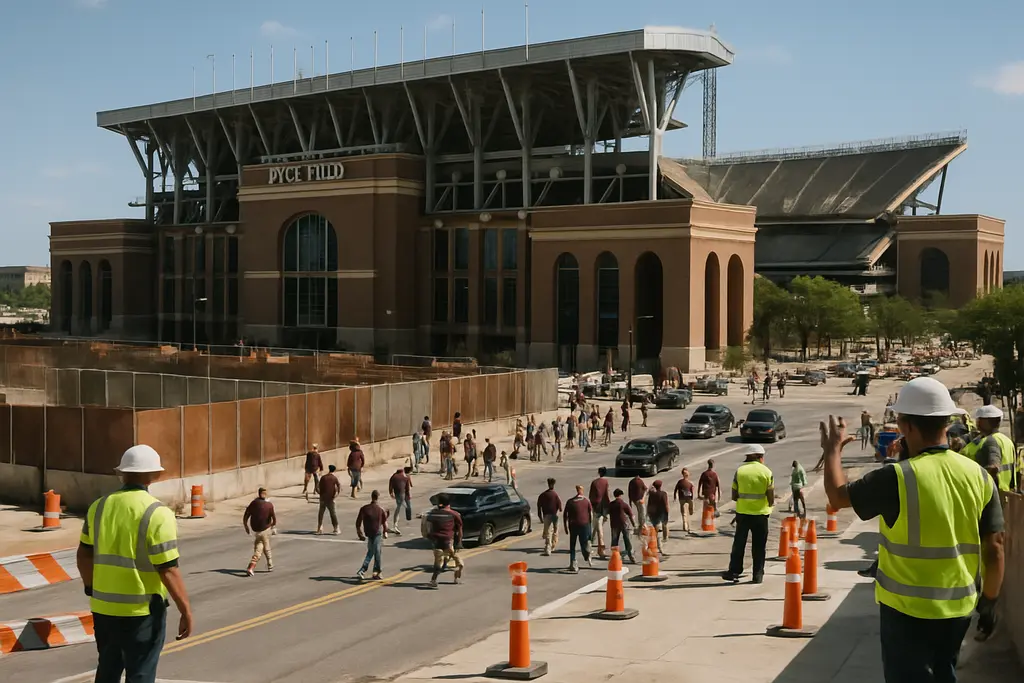

Kyle Field Transportation changed the fan experience around Texas A&M football in 2026 less through one single move than through a series of operational adjustments affecting parking, shuttle timing, pedestrian flow and pregame planning. For Aggies fans, the message has been clear: the trip to the stadium now requires more attention to route choice, parking rules and arrival windows than a simple drive toward campus.
The changes mattered because Kyle Field is not a neutral event site for most Saturdays. It sits inside a working university campus, next to student housing, academic buildings, garages, tailgate areas and heavy pedestrian movement. That mix creates pressure points before kickoff and after the final whistle, especially when thousands of fans converge from College Station, Bryan and other parts of Texas. A related site report on Texas A&M gameday transportation tracked the same fan-planning theme: movement around Kyle Field has become part of the football Saturday routine, not a side issue.
How Kyle Field Transportation Shifted In 2026
Kyle Field Transportation And Arrival Behavior
The clearest stress test came before football traffic reached its full fall rhythm. On June 6, 2026, Kyle Field hosted an international friendly between Argentina and Honduras. Planners found that arrival timing, parking behavior and reliance on navigation apps differed from typical football patterns. Fewer people tailgated early, more visitors drove cars, and many were unfamiliar with campus traffic and parking, according to the TTI event traffic review.
That match did not mirror a Texas A&M home game, but it gave transportation officials a useful comparison. Football crowds bring repeat visitors who often know their preferred lots, walking routes and postgame exits. A one-off international event brought more first-time campus visitors and different trip patterns. The contrast helped show where signs, digital guidance and pedestrian control can affect how quickly people adjust once they reach the edge of campus.
The 2014 Plan Still Frames Football Saturdays
The football traffic system did not start from scratch in 2026. The Kyle Field Gameday Transportation Plan was first implemented in 2014, and its core structure has remained built around dedicated transit routes, designated pedestrian corridors and separated vehicle pathways. That model tries to keep buses, cars and walkers from competing for the same space at the same time.
Kyle Field Transportation has not been rebuilt as a single fan-facing product. It works more like a layered control plan. Parking reservations influence where fans begin. Shuttle routes determine which groups arrive without adding cars near the stadium. Pedestrian corridors shape the final approach to Kyle Field. Postgame exits then test whether the same system can move people away without creating unnecessary conflict between vehicles and foot traffic.
Parking, Shuttles And Pedestrian Flow
West Campus Garage Gets A Safer Path
One of the most specific 2026 changes came at West Campus Garage. In September 2026, a new pedestrian pathway was added on the basement level, with entrances at the northeast corner and on the Reed Arena side. The goal was to improve safety and reduce conflict between vehicles and foot traffic, according to the Texas A&M Transportation Services update.
That change fits a common game-day problem at Kyle Field: the most crowded areas are not always inside the stadium gates. Garages, shuttle drops, road crossings and tailgate edges can become pinch points when fans arrive in waves. A marked pedestrian path gives people a more predictable route and gives drivers fewer surprise interactions in tight garage space. It is a small change on paper, but it addresses a high-contact area where confusion can slow everyone down.
Shuttle Windows Set The Day
The shuttle schedule also sets expectations before fans leave home. In 2026, game-day shuttles operated three hours before kickoff and continued until one hour after the game ended. The Bush Library shuttle had a longer pregame window, beginning five hours before kickoff. Those windows affect more than convenience. They shape tailgate timing, student movement, family arrival plans and the decision to park away from the stadium.
The Downtown Bryan Gameday Shuttle remained a key piece of the plan. It was free to ride, operated from Roy Kelly Parking Garage, and ran from three hours before kickoff through one hour after the game as the only park-and-ride option in 2026, per the same Transportation Services update. For fans coming from north of campus or planning time in Bryan before the game, that route carried a clear role: park away from the densest campus traffic and ride in.
- ParkMobile was the only approved parking reservation platform in 2026, and reservations from other vendors were not honored.
- Off-campus shuttle routes included 22, 26, 31 and 35, with on-campus routes including Agronomy and Bush Library.
- Accessible parking was available in University Center Garage or Lot 50 for a fee, with shuttle service from accessible spaces at Lot Y/114 near White Creek Apartments and the School of Public Health.
- No-wheels zones for bikes, scooters and skateboards were in effect 3.5 hours before kickoff until one hour after the game ended.
The parking-reservation rule carried a practical warning for fans who plan late or search third-party options. If a space was not secured through the approved platform, the university would not honor that reservation. That policy pushed fans toward one verified channel and reduced the chance of disputes at lots already under game-day pressure.
What The Soccer Match Taught Planners

Different Crowd, Useful Lessons
The June 6 international friendly offered a different crowd profile than a normal SEC Saturday. Texas A&M football crowds often include season-ticket holders, students and regular tailgaters who understand campus habits. The soccer crowd had more unfamiliar drivers and heavier use of navigation apps. That distinction matters because digital routing can send large groups toward the same roads, even if campus operators are trying to distribute traffic across multiple access points.
For football operations, the lesson was not that soccer traffic should be copied. It was that any Kyle Field event can change based on audience habits. A noon kickoff, night kickoff, visiting fan base or weather pattern can alter arrival curves. The more fans depend on phone directions without checking university guidance, the more likely they are to meet closures, restricted turns or full lots at the wrong point in the trip.
Why Pedestrian Control Carries More Weight
Pedestrian flow has become one of the most visible parts of the stadium experience. Fans do not judge the day only by how quickly they park. They remember whether the walk felt clear, whether signs made sense, whether shuttles were easy to find and whether the postgame exit felt orderly. For families, older fans and visitors who do not know campus, those details can define the difference between a manageable Saturday and a frustrating one.
The no-wheels zones also show how the university has treated pedestrian density as a safety issue. Requiring cyclists, scooter riders and skateboarders to dismount in those areas reduces speed differences among people moving through crowded corridors. On a normal class day, mixed movement is part of campus life. On a football Saturday, the same behavior can create avoidable risk when sidewalks and crossings fill at once.
Why Kyle Field Transportation Matters To Fans
For Texas A&M football readers, Kyle Field Transportation is now part of game preparation in the same way kickoff time and weather are. Fans who check shuttle windows, reserve parking through the approved platform and understand pedestrian routes give themselves a better chance to reach the stadium without last-minute changes. The same applies after the game, when the one-hour postgame shuttle window and lot-exit patterns shape how quickly people can leave campus.
The 2026 adjustments did not change the identity of a Kyle Field Saturday. They changed how much planning the day requires. A fan who used the same route for years may still find familiar pieces in place, but new garage paths, parking rules and shuttle options can alter the final mile. The most prepared fans will treat transportation as part of the schedule, not something to solve once they reach College Station.