
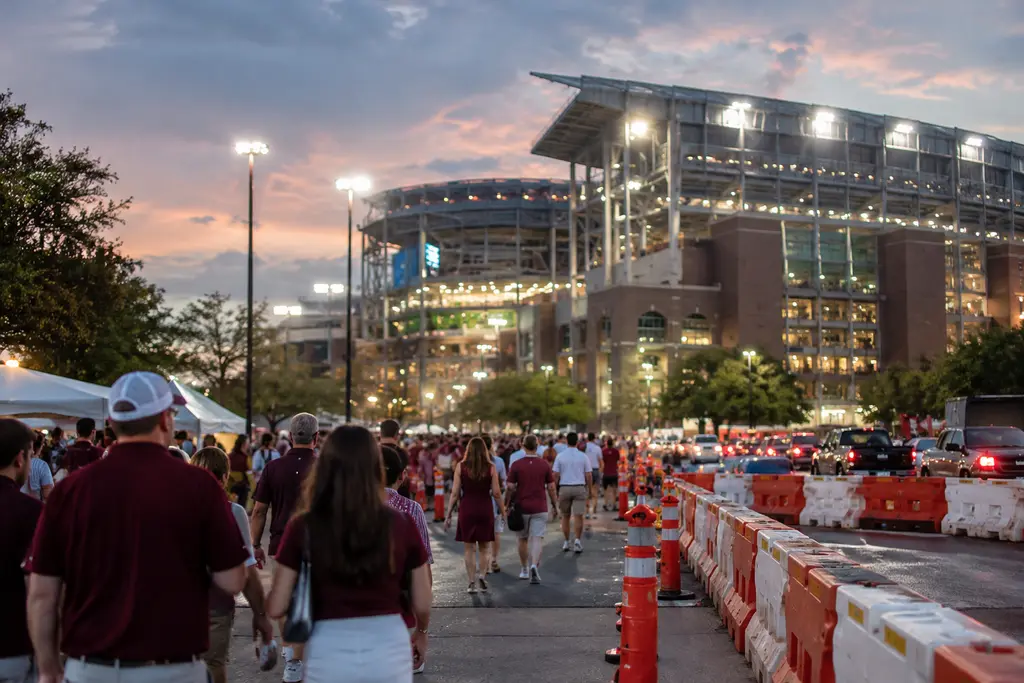

By Oct. 25, 2026, Kyle Field traffic around Texas A&M had settled into a different game-day pattern than many Aggies used in past seasons. Construction near the stadium, changed pedestrian access points, new garage movement and tighter control of roads around campus forced fans to plan earlier and move with more precision on football Saturdays.
The most visible changes were not tied to one single road. They came from the way Texas A&M separated pedestrians, vehicles, shuttles and ride-share traffic around the stadium core. That meant a fan walking from south of Kyle Field could face a different route than a fan leaving West Campus Garage, while drivers using Texas Avenue or Highway 6 had to account for construction-related adjustments before reaching campus.
For Texas A&M football, the traffic plan is part of the home-field operation. It affects arrival timing, parking choices, shuttle use and the way the crowd drains away from Kyle Field after the fourth quarter. For fans comparing recent changes, our breakdown of Texas A&M gameday transportation changes gives broader context on how the 2026 plan altered movement around campus.
How Kyle Field traffic Changed In Fall 2026
Kyle Field traffic Rules South Of The Stadium
The most important Kyle Field traffic change for pedestrians came south of the stadium. Starting with the 2026 season, guests approaching from the area around the Bright Complex, Texas A&M Foundation and Clayton Williams Building could no longer reach the west side of the stadium by cutting through near the now-demolished indoor track. Access to Entry 2, Entry 3, Entry 4 and the Southwest Activation Tower had to move through the east side, then Houston Street and the Zone Plaza, according to official Kyle Field gameday information.
That change mattered because it altered a familiar habit for fans who had used the south side as a direct approach to the west side of the stadium. The new pattern pushed more foot traffic toward defined routes. It also placed more value on knowing the correct gate before reaching the stadium edge. A fan entering at the wrong side no longer had the same easy cut-through option that existed before construction changed the area.
Why The South Route Matters
The south-side shift was less about distance alone and more about predictability. When a construction zone removes an informal walking path, game-day staff need fans to move through corridors that can be managed. The east-side approach through Houston Street and the Zone Plaza gave officials a clearer flow for crowds entering the west and southwest portions of Kyle Field.
For season-ticket holders, families and groups arriving from different parking areas, that placed a premium on coordinating the meeting point before reaching the stadium. A group split between south campus and west-side entry points could lose time if it assumed the old walking pattern was still open.
West Campus Garage And Safer Pedestrian Movement
Basement-Level Passage Added Near Reed Arena
Texas A&M also added a basement-level pedestrian route at West Campus Garage across Wellborn Road. The passage connects Olsen Boulevard and Pickard Pass and was designed to reduce vehicle-pedestrian conflicts near Reed Arena, according to a Texas A&M Transportation update.
That adjustment fit the larger theme of the 2026 plan: keep walkers and vehicles from crossing each other at the busiest pressure points. Reed Arena and West Campus Garage are major parts of the game-day footprint, especially for fans who park west of the stadium and walk toward Kyle Field. A dedicated passage gives that traffic a cleaner route and helps drivers avoid sudden pedestrian crossings in a packed area.
Lower Speeds And Construction Awareness
Parts of campus also operated under reduced speed limits during Fall 2026. The research notes tie those lower limits to construction zones, heavier pedestrian movement and changed travel paths. That may feel like a small operational change, but it affects the whole arrival window. Slower campus speeds mean drivers should not treat the last mile to parking as a normal weekday trip.
The Sept. 5, 2026 opener against Missouri State showed how construction could affect perception even when a major lane closure was not in place. Officials noted no Highway 6 lane closures that day, but the road still looked different because of ongoing work. The northbound Texas Avenue exit, a commonly used game-day route, had also undergone changes, and drivers were encouraged to use alternate routes.
Road Closures, Shuttles And Parking Rules
Pregame Closures Start Hours Before Kickoff
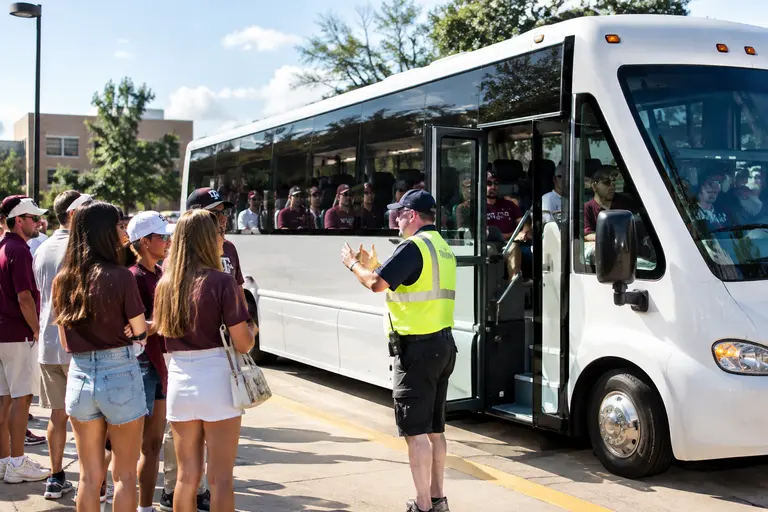
Road closures around campus began 4 1/2 hours before kickoff during the 2026 football schedule, or by 7:30 a.m. for morning games, whichever was later. Streets affected in the research notes included Houston Street, Joe Routt Boulevard, Gene Stallings Boulevard and a section of Olsen Boulevard between Reed Arena and West Campus Garage.
That schedule meant fans could not wait until the final hour and expect normal campus access. Once the closure window started, traffic became less about direct routes and more about where a driver was allowed to move. Transportation Services recommended approaching campus with FM 2818 or Highway 6, routes that helped drivers avoid the tightest congestion near the stadium core.
Fourth-Quarter Controls Shape The Exit
Postgame traffic management began at the start of the fourth quarter. That timing gave officials a head start before the largest wave of fans left Kyle Field. The research notes directed fans west of FM 2818 south on Wellborn Road, then toward Deacon Drive or Rock Prairie Road. Fans on the north side could use Villa Maria Road to bypass congestion.
The plan reflected a standard SEC-sized crowd problem: not every driver can leave through the same few streets at the same time. By dispatching traffic in defined directions, campus officials tried to reduce cross-traffic and limit the number of vehicles cutting back toward already crowded roads.
- Game-day shuttle service began 3 hours before kickoff and ran until 1 hour after the game ended.
- Bush Library shuttle service began 5 hours before kickoff.
- The Downtown Bryan Gameday Shuttle from Roy Kelly Garage was again the sole park-and-ride service during the 2026 schedule.
- No rideables, including bikes, scooters, skateboards and golf carts, were allowed in key walking areas from 3 1/2 hours before kickoff until 1 hour after the game.
- ParkMobile remained the only approved vendor for prepaid parking.
- Lot 30e was reserved for rideshare and vehicle-for-hire pickup and drop-off, and Lot 30 permit holders had to relocate vehicles the night before home games.
The shuttle and parking rules gave fans choices, but those choices came with fixed windows. Missing the pregame shuttle window or arriving after road closures began could force a longer walk or a different drop-off point. The “no wheels zones” also removed a backup option for fans who might have planned to cover the final stretch by scooter or bike.
What Kyle Field traffic Means For Aggie Saturdays
Planning Value For Fans
For Texas A&M, Kyle Field traffic is not separate from the football operation. It is part of how the university moves tens of thousands of people through a campus with active construction, limited street capacity and heavy pedestrian demand near kickoff. The 2026 changes made the plan more structured, especially on the south and west sides of the stadium.
The practical takeaway for Aggies is simple: the old shortcuts carried less value in Fall 2026. Gate location, parking assignment, shuttle timing and postgame exit direction all mattered before fans reached College Station. The south-side pedestrian rule changed how fans approached Entries 2, 3 and 4. The West Campus Garage passage changed how walkers crossed a busy part of campus. The fourth-quarter traffic controls changed how drivers left once the game ended.
For fans attending home games after Oct. 25, 2026, the safest read was to treat each trip to Kyle Field as a planned route, not a repeat of last year’s habits. Construction updates can change familiar paths quickly, and Texas A&M’s 2026 plan showed that small route changes near the stadium can have a large effect on the full game-day flow.