
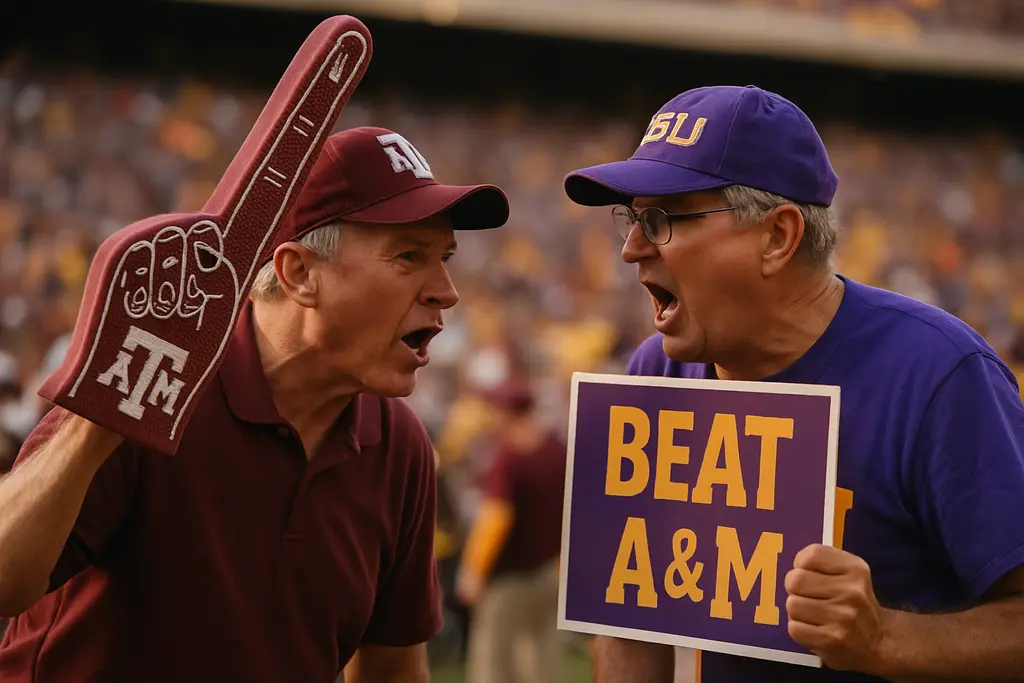

Texas A&M vs LSU has always felt a little different from a standard conference date. It is close enough for families, old classmates and alumni circles to overlap, but sharp enough that the colors never blend. The series has moved through long gaps, bowl stages, Baton Rouge runs, Cotton Bowl memory and SEC scheduling, leaving Aggies with a rivalry that is not only counted in wins and losses. It is counted in road trips, yell practice talk, late-November nerves, and the kind of stories older graduates pass down before kickoff.
As of October 15, 2026, the matchup is no longer waiting on its next chapter. LSU beat Texas A&M 35-6 on September 26, 2026 in Baton Rouge, according to the listed game log at StatMuse. That result landed after Texas A&M had won the previous two meetings, on October 26, 2024 and October 25, 2025. For Aggies, that shift matters because the rivalry has rarely stayed still for long. One side grabs hold, the other side stores the feeling, and the series keeps gathering local weight.
Texas A&M vs LSU As A Borderland Rivalry
Texas A&M vs LSU Began With A Lopsided Start
The first meeting came on December 2, 1899, when Texas A&M defeated LSU 52-0 in College Station. That score belongs to a different age of college football, long before the modern SEC, national television framing or the present rhythm of conference schedules. Still, the date gives the rivalry an old root. Before it became a regular SEC game, before the 2018 marathon, before the modern travel patterns between College Station and Baton Rouge, the Aggies and Tigers had already shared a field.
The through-2025 ledger showed 64 meetings, with LSU leading 32-25-3, according to SEC Football’s series record. With LSU’s September 26, 2026 victory added to that through-2025 record, the series moved to 65 meetings, with LSU at 33 wins, Texas A&M at 25, and 3 ties. The margin is wide enough to be meaningful, but not so wide that Aggies view the matchup as one-sided history. It sits in that uncomfortable rivalry space where both programs can find evidence for pride and frustration.
The Era Swings Tell The Real Story
The broad record hides how uneven the rivalry has felt depending on the decade. From 1899 to 1923, Texas A&M led the early span with seven wins, while LSU had three wins and the teams tied twice. That start gave Aggies an opening claim to the series memory, including the 63-9 Texas A&M win over LSU on October 31, 1914 in Dallas, which remains the largest margin listed in the matchup.
Then came a much different stretch. From 1942 to 1975, LSU controlled the series with 19 wins, while Texas A&M won seven times and the teams tied once. The longest uninterrupted run of annual meetings came from 1960 through 1975, all in Baton Rouge. That detail still gives the rivalry a particular feel for older Aggies: this was not always a balanced home-and-home rhythm. For a long stretch, Texas A&M had to carry its hopes into Louisiana and deal with the noise on LSU’s terms.
The 1986 through 1995 run shifted the tone back toward College Station. Texas A&M won six of those meetings, while LSU won four. That decade gave Aggies more modern bragging rights before the series paused again and later returned with conference force. The rivalry did not grow in a straight line. It lurched, disappeared, reappeared, and changed meaning each time college football changed around it.
The Games That Shaped Aggie Memory
The Seven-Overtime Night Still Hangs In The Air
No Texas A&M retelling can move far without November 24, 2018. Texas A&M beat LSU 74-72 in seven overtimes, the most overtimes in a single FBS game. The number alone feels unreal, but the memory in Aggie circles is not only numerical. It is the exhaustion of standing through one more possession, the disbelief after another answer, and the strange sensation that a football game had turned into a full evening of endurance.
For the 12th Man, that night became a shared reference point. Families remember where they stood. Former students remember who called them before the last overtime. Alumni remember the sound and the emotional release. Rivalry games earn their permanence when people stop needing the box score to explain how it felt, and that 2018 meeting reached that level almost immediately.
It also changed the modern emotional balance of the series. LSU had controlled many of the early SEC-era meetings, but Texas A&M had a defining answer. The win did not erase LSU’s series lead. It did not settle the rivalry. It gave Aggies a moment so large that any later discussion of the matchup has to pass through it.
Bowl Meetings Added Neutral-Site Weight
The rivalry also carries postseason memory. LSU beat Texas A&M 19-14 in the Orange Bowl in Miami on January 1, 1944. Decades later, LSU beat Texas A&M again in a bowl setting, winning 41-24 in the Cotton Bowl Classic in Arlington on January 7, 2011. Those games matter because they placed the matchup outside the normal campus rhythm. Bowl games turn school pride into a traveling production, with alumni groups, families and regional bragging rights sharing the same week.
The 2011 Cotton Bowl meeting came just before Texas A&M’s move into the SEC in 2012, which changed the relationship for good. Once the Aggies entered the league, LSU stopped being an occasional measuring stick and became a regular conference opponent. That shift is part of why the series feels renewed rather than merely old. The rivalry gained schedule pressure, recruiting relevance across neighboring states and a yearly SEC frame.
Why The SEC Era Raised The Stakes

Conference Games Changed The Emotional Math
Texas A&M joined the Southeastern Conference in 2012, and meetings with LSU became conference games from that point forward. For Aggies, that changed the way the matchup was discussed during the week. It was no longer just a familiar name from the past. It affected standings, late-season mood and how fans judged progress against an established SEC West power.
The early SEC years leaned toward LSU, but Texas A&M has picked up wins in the period since joining the league. The two Aggie wins on October 26, 2024 and October 25, 2025 gave the series a fresh College Station edge before LSU answered on September 26, 2026. That back-and-forth keeps the rivalry alive in a practical sense. It gives both fan bases recent evidence, which is the fuel every rivalry needs.
For readers who track how Texas A&M’s rivalries fit into the modern SEC schedule, the broader league setup has become part of the story as well. The renewed place of LSU, Texas and other conference opponents is part of the Aggies’ identity conversation, much like the way Texas A&M rivalries in the SEC schedule have been reshaped by league planning.
The 2026 Result Reframed The Recent Run
LSU’s 35-6 win on September 26, 2026 did more than end Texas A&M’s two-game streak in the series. It reminded both sides that momentum in this matchup is fragile. A two-year Aggie run can feel like a turning point until Baton Rouge answers. An LSU lead in the all-time record can feel firm until the Aggies stack home wins. Rivalries do not move by clean chapters; they move by interruption.
That is part of the human pull for Aggie fans. The game asks supporters to hold two truths at once. LSU owns the broader series edge. Texas A&M owns some of the loudest single-night memories, including 2018 and the recent wins before 2026. The emotional record is not identical to the official record, and that gap is where rivalry talk lives.
What Texas A&M vs LSU Means For Aggie Memory
What makes Texas A&M vs LSU endure is not only the record book. It is the way the series connects generations of Aggies who experienced different versions of the same opponent. Some remember the older Baton Rouge-heavy years. Others remember the Cotton Bowl stage in Arlington. Many younger fans start with the SEC era, the seven-overtime night, and the swing from Texas A&M’s 2024 and 2025 wins to LSU’s September 26, 2026 response.
The rivalry renewed because it has never belonged to one single period. It began in 1899, tilted through long LSU stretches, snapped back in Aggie-favorable runs, and found new life when Texas A&M entered the SEC in 2012. For the 12th Man, that layered memory is the point. Every new meeting carries the old scores with it, but it also gives the next group of students, former students and families a chance to attach their own story to the series.