
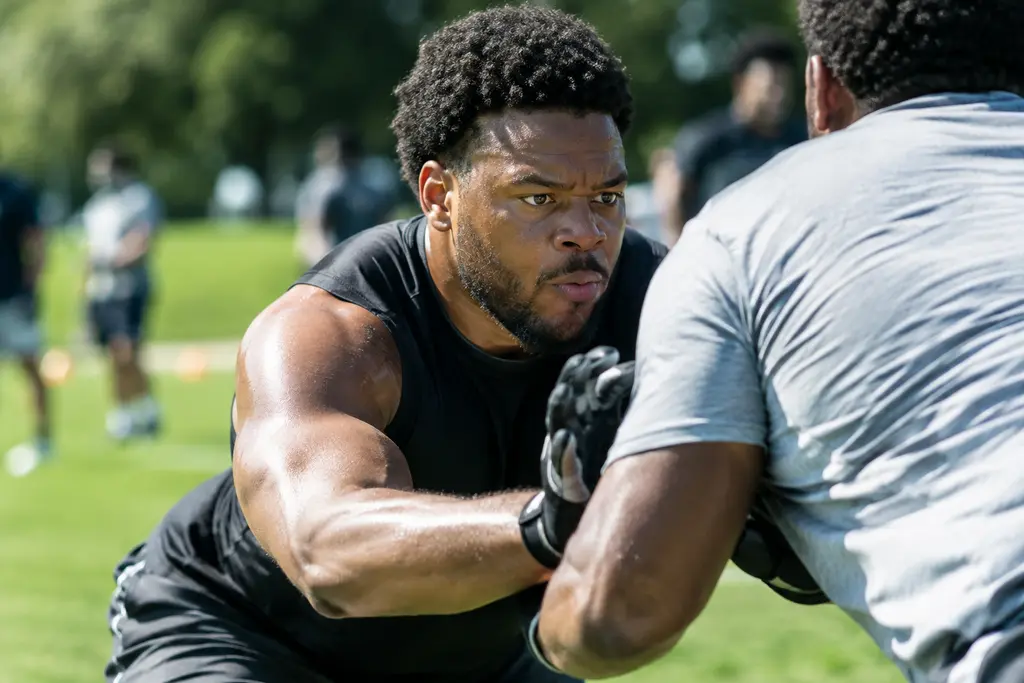

The A&M 2028 Class picture is still more sketch than portrait, and that matters before any serious discussion of Donnie Skinner or Kendrick Harris. Both are Texas high school prospects with different levels of public recruiting attention, different positional demands and different evaluation windows. Harris already carries a heavier national profile as an interior offensive lineman, while Skinner’s case is built more around production, versatility and the slower burn that often defines defensive back scouting.
That is the right place to begin for Texas A&M readers. This is not a list of finished players, and it should not be treated like one. In College Station, where the 12th Man tends to learn a prospect’s name long before he runs onto Kyle Field, the hardest part is separating genuine developmental signs from early-cycle noise. The 2028 group is young enough that physical growth, role changes, verified testing and junior-year film can still shift the conversation in a hurry.
For the Aggies, the value is in reading the shape of the evaluation. Harris plays closer to the heart of SEC football: mass, leverage, short-area power and pass-protection balance inside. Skinner’s profile asks a different question: how does a productive high school safety grow into a college projection when he has also worked at cornerback, receiver and in the return game? Those are not identical paths, but both speak to how Texas A&M can build a board with patience rather than chase every early label.
Why A&M 2028 Class Evaluation Starts With Patience
The A&M 2028 Class Is Still In Formation
The A&M 2028 Class conversation should be framed by uncertainty, not panic or hype. Harris is listed as uncommitted in the research available for late October 2026, and Texas A&M is described as one of the schools with interest rather than as a public commitment. Skinner, meanwhile, is not presented in the research as a Texas A&M commitment. That distinction is not small. Calling either player part of a signed or committed class would go beyond what is supported.
What can be said is that both names fit the kind of regional scouting work that matters for a program living in the SEC. Texas A&M cannot wait until every major service agrees on every player. The staff has to know the Dallas-area and North Texas fields, track who keeps producing in district play and decide where early size or early statistics line up with long-term positional value. That is where the human part of recruiting sits: Friday nights, family conversations, assistant coaches checking the same traits again and again, and a fan base trying to read the smoke without pretending it is fire.
Why Texas Roots Still Matter
Texas A&M’s recruiting identity has always carried a local weight. The drive from suburban stadiums to College Station is part geography and part culture. A player does not have to be committed to the Aggies to matter to the program’s board, especially when he comes from a competitive Texas high school setting.
That is why Skinner and Harris make sense as early-cycle study cases. Harris brings the type of interior size that SEC staffs keep tracking. Skinner brings a production profile that forces evaluators to ask whether the numbers match the film and whether his best college position is already clear. For more context on how Texas A&M has handled development-based recruiting, the same patience shows up in Texas A&M coaching development discussions around earlier classes.
Kendrick Harris Brings A Line-of-Scrimmage Lens
Harris’ Interior Profile
Kendrick Harris is listed by PrepRanks as a 6-foot-3, 310-pound interior offensive lineman in the 2028 class, with a national ranking of No. 36, a position ranking of No. 2 at interior offensive line and a composite score of 89.8 out of 100 according to his PrepRanks profile. Those details give the A&M 2028 Class discussion a clear line-of-scrimmage anchor, even with Harris still uncommitted in the cited profile.
For Texas A&M, the position itself is the story. Interior offensive line recruiting rarely brings the same flash as quarterbacks or wide receivers, but Kyle Field knows the feel of a game changing up front. Third-and-2 in the south end zone does not care about recruiting graphics. It cares about pad level, grip strength, communication, footwork and whether a guard or center can keep the pocket clean against SEC interior pressure.
At 310 pounds as an underclass prospect, Harris’ public profile already begins with size. The next steps in his evaluation are less about whether he looks the part and more about how he carries that frame through a full game. Does he bend well enough? Can he redirect against quick defensive tackles? Does he finish blocks without losing balance? Can he work in combination blocks and climb to linebackers? The research gives the measurable and ranking snapshot. The football projection still has to be earned on film and through development.
What The Aggies Would Need To Learn
Because Harris remains uncommitted based on the available research, any Texas A&M fit has to be discussed carefully. The Aggies’ interest, as noted in the research, places him in the orbit of a program that knows interior offensive line play must travel. The SEC schedule punishes soft depth. A prospect like Harris would be judged not only by his best clips but by how often he can repeat good technique when tired.
That is the part fans sometimes miss. Early rankings matter because they guide attention, but they do not block a blitz or call protection on a loud road snap. Harris’ profile gives him a strong starting point. The work between now and the end of his high school career will decide whether the early ranking grows into a college-ready projection.
Donnie Skinner Shows Defensive Back Growth
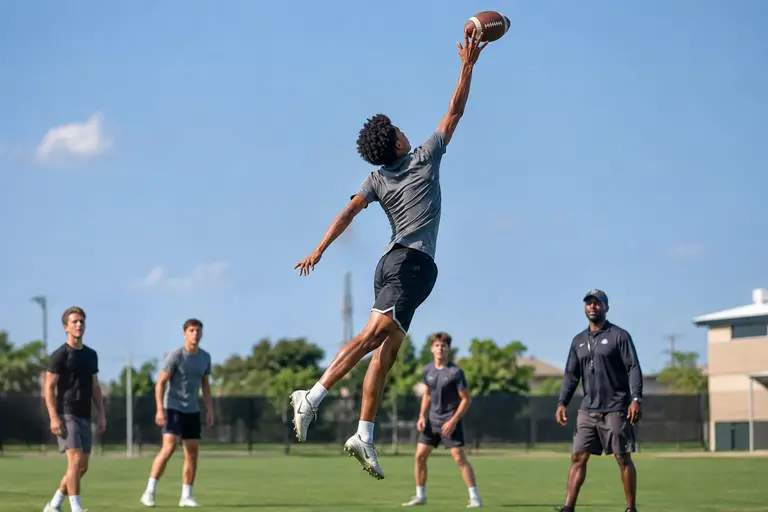
Production Gives Skinner A Starting Point
Donnie Skinner’s case is different. He is listed in the research as a 6-foot, 175-pound safety and defensive back from Wylie High School in Texas, a program page carried by On3 for Wylie athletics on its Wylie High page. The research notes also describe him as a player who has seen time at cornerback, wide receiver and in return roles, which matters because versatility often buys a young defensive back more chances to be evaluated.
Skinner’s reported production gives the profile some weight. The research lists him with 61 total tackles, including 41 solo stops, during the 2025-26 varsity season, along with 94 kickoff return yards. It also notes that in the 2026-27 season he led Wylie with 8.4 tackles per game as of the available update. Those numbers do not settle his college projection, but they do show a player who has been around the ball often enough to warrant attention.
For the A&M 2028 Class lens, Skinner is the kind of defensive back who tests how patient a staff can be. He is described in the research as unrated by Rivals and without a published scouting grade, yet he also has at least one Power Five offer from Ole Miss. That split is common in early recruiting. One part of the industry may still be catching up while college staffs are reacting to frame, movement, instincts and special teams value.
Safety Projection And Special Teams Value
Skinner’s reported playing style points toward a downhill defender with quick reaction ability and closing speed on ball-carriers. The research also notes special teams flashes, including blocked field goals, forced fumbles and return contributions in early 2026 film. Those details matter because young defensive backs often earn early college trust on coverage units before they become regular defensive players.
At Texas A&M, that kind of path has cultural weight. The 12th Man identity is not built only around stars. It is also built around players who cover kicks, run through contact and turn a routine field-position snap into a roar. If Skinner’s tackling rate and special teams work continue to match his film, his profile could become easier for evaluators to place. The unanswered question is whether he stays at safety, grows toward a nickel role or keeps enough corner flexibility to widen his college value.
- Harris’ clearest marker: verified size and a strong early interior offensive line ranking.
- Skinner’s clearest marker: on-field production and multi-phase defensive back value.
- Texas A&M’s key task: judge development over time rather than freeze either profile in 2026.
What A&M 2028 Class Evaluation Means For Aggies
Two Prospects, Two Different Timelines
The A&M 2028 Class evaluation around Skinner and Harris should leave Aggies with a grounded takeaway: these are not the same recruiting stories. Harris is already framed by national ranking data and a premium trench position. Skinner is framed more by production, role variety and the possibility that his evaluation catches up as more verified information becomes public.
That difference is healthy for a recruiting board. Texas A&M needs early identified talent, especially in the offensive line room, where size and technical development take time. It also needs room for defensive prospects who keep making plays before the recruiting industry fully sorts them. A strong class is rarely built from one type of prospect. It is built from the headliners, the steady risers, the late bloomers and the players whose best traits show up when the lights come on.
For now, the responsible read is simple. Harris is a highly rated, uncommitted 2028 interior offensive line prospect with a profile that naturally draws SEC interest. Skinner is a productive Wylie defensive back with reported Power Five attention and a role that may keep shifting as he grows. The A&M 2028 Class picture is not finished, but these two names show why the early work matters: the future of a roster often begins long before a commitment graphic reaches social media.