
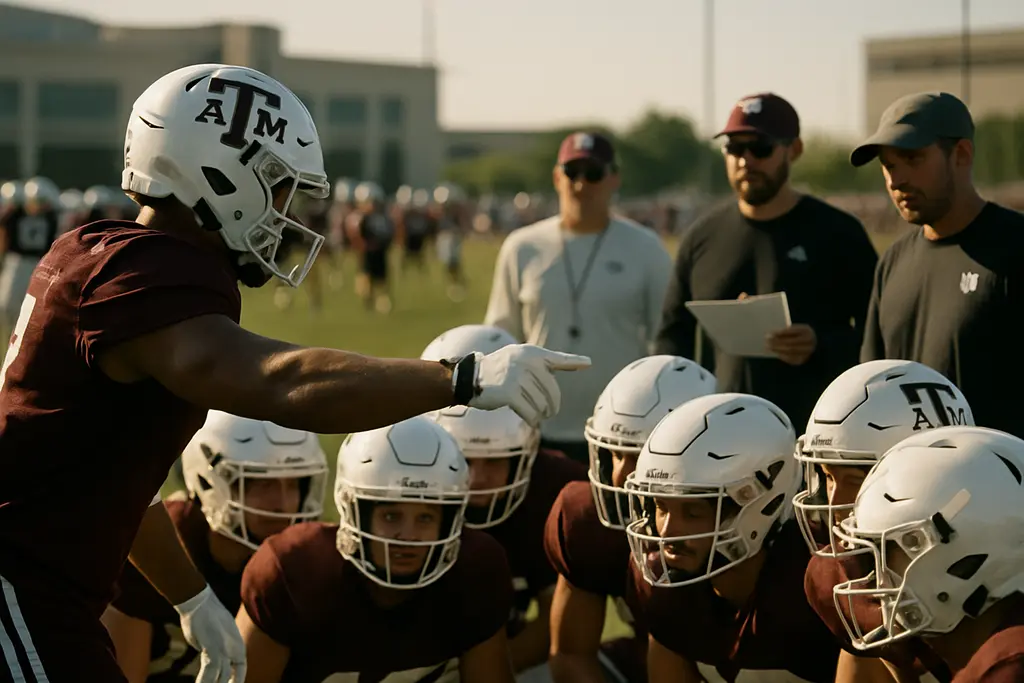

Texas A&M Freshmen enter September 1, 2026, with opportunity tied more to depth needs than ceremony. The Aggies have not yet played their first game of the 2026 season, so the discussion remains projection-based. The supported watch list starts with recruiting profile, early enrollment status, high school production and where the roster appears to need help before SEC play raises the snap-by-snap standard.
The freshman class has several names who fit that frame: Aaron Gregory at wide receiver, Brandon Arrington and Adonyss Currie at cornerback, Bryce Perry-Wright on the defensive front, KJ Edwards at running back, Asher Murray at placekicker and Lamont Rogers on the offensive line. Alex Abbott appeared in the research as a specialist name, but the same research noted roster data listing him as a redshirt sophomore, so he is not treated here as part of the true-freshman group.
Why Texas A&M Freshmen Matter Before SEC Play
Texas A&M Freshmen In The Early Role Mix
The first part of any freshman evaluation is availability. Gregory, a wide receiver from Augusta, Georgia, enrolled early in January 2026 and is listed on the official Texas A&M roster. That matters because early enrollment gave him spring and summer access before the first game week. For a young receiver, that time is often the difference between knowing where to line up and being trusted to adjust after the snap.
Gregory is listed as a 6-foot-2 receiver and arrived with a consensus four-star profile in the research. His high school production was the cleanest statistical case in the group: 163 career receptions, 2,930 receiving yards and 20 touchdowns, with a school record for career receiving yards. A SI summer preview identified him among Texas A&M’s freshmen most likely to surprise in 2026, with receiver turnover creating a possible opening.
Sorting Opportunity From Projection
The caveat is simple: none of these players has made a full college debut as of September 1, 2026. Recruiting rank can explain why a player is in the conversation. It does not guarantee a role when protections, coverage checks, tackling angles and special-teams responsibilities get tested against SEC personnel. That is why the watch list should be read as a depth-chart pressure report, not a declaration of starters.
For broader roster context, the same issue runs through the Aggies’ veteran and young-player mix in Texas A&M depth. The freshman class can help, but the staff still has to balance early upside with assignment reliability.
Skill Players Among Texas A&M Freshmen
Aaron Gregory And The Receiver Opening
Gregory is the cleanest offensive fit to track because the position naturally allows rotational work if a player can handle the route detail. His size gives Texas A&M another outside option, and his high school volume suggests he was used as more than a limited package player. The key question is how quickly that production translates against press coverage, tighter windows and safeties who close faster than most high school defenders.
The research does not establish a fixed role for Gregory, so the responsible read is a rotational path. He could help the receiver room if he proves dependable in practice, especially in formations that spread the field and ask younger wideouts to win specific matchups rather than carry the full passing-game burden.
KJ Edwards As A Change-Of-Pace Back
KJ Edwards brings a different kind of case. The research lists him as a four-star running back, one of the top backs in the 2026 cycle, and a player ranked No. 3 at the position and No. 6 in Texas by Rivals. His final high school season production was significant: 2,085 rushing yards and 31 touchdowns at roughly 13.8 yards per carry.
The role still has to be earned. The research places Edwards in competition with returning players including Reuben Owens II and Jamarion Morrow, which points toward a change-of-pace or rotational track rather than an automatic feature role. That can still carry value in SEC play. A freshman back who handles ball security, pass protection and limited touches can earn snaps even in a room with returning talent.
Defensive Backs And Front-Line Depth
Brandon Arrington Raises The Cornerback Ceiling
Brandon Arrington is the highest-profile defensive back in the group based on the research. He is listed as a five-star recruit in the 2026 class and the consensus No. 1 cornerback nationally per Rivals, with early enrollment at Texas A&M in January 2026. At roughly 6-foot-2 and 185 pounds, he brings the length profile SEC programs chase at corner.
His track background is a major part of the evaluation. The research credits him with state titles in the 100 meters and 200 meters, plus meet records in the 60 meters and 150 meters. His high school football work included two-way production, with 31 catches for 527 yards and five receiving touchdowns as a junior, plus 26 tackles, an interception and return duties. That profile does not make him a finished SEC corner, but it explains why he could push for an early look if the staff wants speed and length in the rotation.
Adonyss Currie And Bryce Perry-Wright Add Defensive Options
Adonyss Currie is listed in the research as a four-star cornerback from Lancaster, California, at about 6 feet and 174 pounds. The most realistic early path is depth work behind veteran corners, with possible snaps in nickel packages or rotational defensive back looks if he earns trust. For a freshman corner, the issue is not only coverage ability. It is tackling, communication and avoiding assignment busts against motion-heavy SEC offenses.
Bryce Perry-Wright gives the class a front-seven name to monitor. The research lists him as a four- or five-star defensive line recruit from Buford, Georgia, with a frame around 6-foot-2 and 255 to 270 pounds. His high school background included work on a successful Buford program, with reports of tackles for loss, sacks and pressures. The exact early role is not established, but interior and edge depth can change quickly once conference play starts wearing on defensive fronts.
Special Teams And Line Development
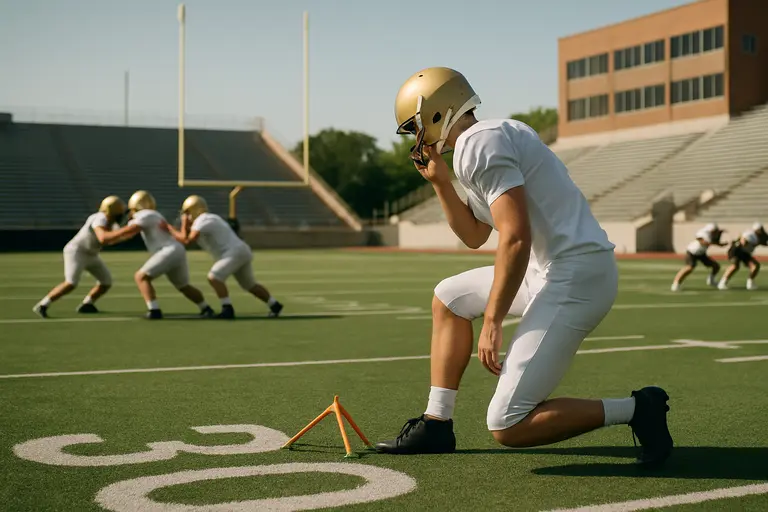
Asher Murray Brings Specialist Competition
Asher Murray, a freshman placekicker from Shreveport, Louisiana, is listed in the research at about 5-foot-10 and 176 pounds. Specialist roles are easy to overlook in August, but SEC games often turn on field position, kickoff placement and short field-goal execution. The research does not confirm that Murray has won a job. It only supports that he is a freshman specialist who could factor into field-goal or kickoff competition.
If Murray does play, the staff’s trust level will be shaped by practice consistency before anything public. Kicker development can move fast, but it can also be kept behind closed doors until game week forces a decision. For now, his name belongs in the watch group because the roster includes him and the special-teams role has a direct path to meaningful snaps.
Lamont Rogers And The Trench Timeline
Lamont Rogers appears in the research as an offensive line or interior line prospect identified in previews as a young trench player competing for early time. Public detail on his exact physical profile and high school production is thinner than it is for Gregory, Arrington or Edwards. That limits how far the evaluation can go.
Still, line depth is where freshman development can matter even before a player becomes a starter. Practice reps, travel roster decisions and late-game snaps can set the base for a larger role later in the schedule. Texas A&M does not need every young lineman to become an immediate first-team option. It does need enough playable depth to get through the weekly strain of SEC fronts.
What Texas A&M Freshmen Mean For SEC Depth
The strongest takeaway on September 1, 2026, is that this freshman group has several credible paths to the field, but each path is narrow. Gregory has the receiver profile and early-enrollee timeline. Arrington has the recruiting grade, speed and cornerback traits. Edwards has production and a possible rotational running back role. Perry-Wright and Rogers carry trench value if they adapt quickly. Currie adds secondary depth, and Murray brings a specialist angle.
For Texas A&M Freshmen, the first checkpoint is not star status. It is whether they can be trusted in defined jobs before SEC play exposes weak links. If two or three of these players become reliable rotational pieces, the class can help the Aggies manage injuries, personnel packages and matchup stress across the 2026 schedule.