
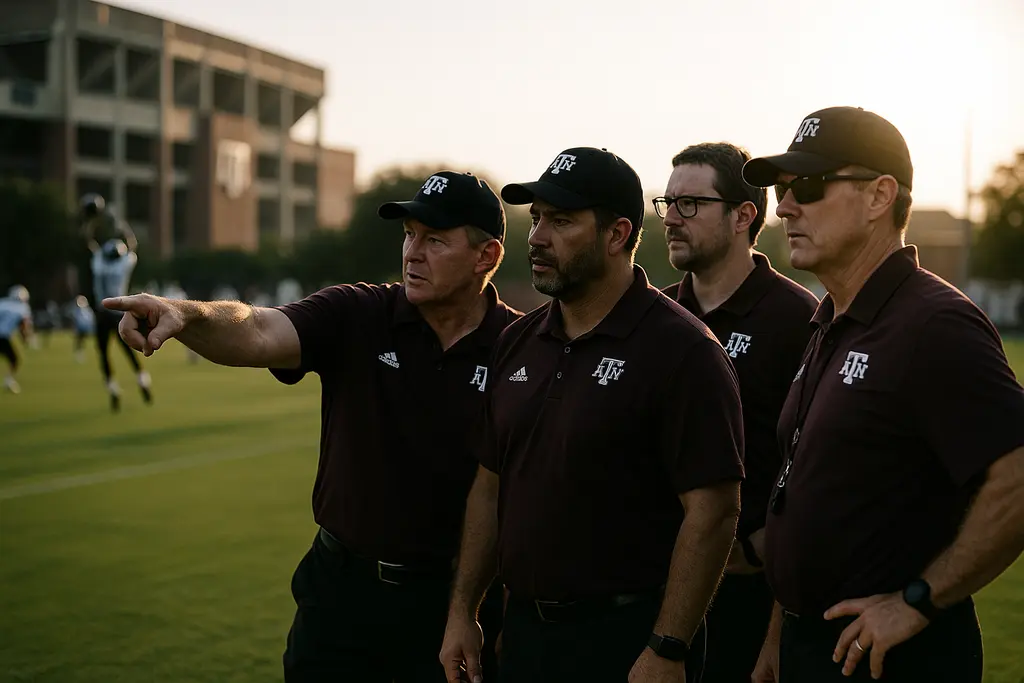

Fall Camp Assessments carry real weight for Texas A&M because this 2026 roster picture is not just about who signs or who transfers in. It is about who can handle practice volume, who earns trusted reps, and which position groups start to separate before the season structure hardens. For a staff sorting through returning players, transfer additions and a large recruiting class, the first read from camp is less about public projection and more about usable evidence.
Texas A&M enters this stretch with several roster questions that connect directly to development. The Aggies have a recruiting class listed by PrepRanks at 30 commits, with a 70 percent blue-chip ratio, four 5-star prospects and 17 4-star prospects according to PrepRanks. That type of class changes the practice field quickly, but rankings do not assign roles. Camp does.
The early evaluation period also gives Texas A&M a way to measure roster balance. The program has position groups with established names, others leaning on younger depth, and several spots where transfers are expected to raise the floor. That is why early practice work is so useful: it tests whether the roster looks as connected on grass as it does on paper.
Fall Camp Assessments Set The Depth Chart Baseline
Depth charts in August are rarely final, but they do reveal how a staff views trust. First-team reps matter. Second-team movement matters. So do special teams assignments, cross-training decisions and which younger players are given chances against better competition. Texas A&M does not need every answer in the first week, but it does need a clear order of operations.
What Fall Camp Assessments Can Confirm
Fall Camp Assessments can confirm whether a player is ready for a bigger workload, but they can also show where the staff may need more patience. That matters most at positions where the Aggies have talent without as much proven game production. SI described the linebackers as athletic but short on game-tested experience, with depth depending on underclassmen, while also noting that the secondary has been reinforced by transfers and the offensive line is being rebuilt with veteran anchors and new additions per SI’s position group review.
That framing makes the first practice evaluations especially important at linebacker and in the secondary. A young linebacker may run well and look the part in drills, but the staff still has to see fits, checks and communication against tempo. A defensive back may have length or transfer experience, but he still has to show he can function within Texas A&M’s coverage calls and tackle consistently enough to stay on the field.
Why Line Play Is A Separate Test
The line of scrimmage is usually where camp reports need the most caution. A defensive lineman can flash in one-on-one work, but the staff has to judge whether that translates into gap control, leverage and repeat effort across full-team periods. On the other side, offensive line reconstruction is not only about identifying five starters. It is about finding seven or eight usable linemen and deciding who can move between positions if injuries or matchups force a change.
For Texas A&M, that is where camp evaluation becomes roster insurance. If a transfer can push into the rotation, the staff gains flexibility. If a younger player can hold up physically, the Aggies can protect veteran snap counts and avoid rushing development. If neither happens, the staff has to narrow the plan before game week arrives.
Recruiting Context Around Fall Camp Assessments
Fall Camp Assessments connect recruiting wins to actual roster function. Texas A&M’s 2026 class has been described as defense-heavy, with notable recruiting movement into Georgia. That matters because the Aggies are trying to strengthen long-term depth while also competing in an SEC schedule that does not give young players many soft landings.
The class size and blue-chip ratio create pressure of a different kind. A large group of highly rated players raises the internal standard, but it also forces the staff to decide who is physically ready, who needs a developmental year, and who can contribute on special teams before taking regular offensive or defensive snaps. Those decisions are not made by recruiting stars. They are made through practice tape.
That is also why the connection between recruiting and camp is not limited to freshmen. If a roster has a strong incoming group, returning players feel it quickly. Competition can sharpen a room, but it can also expose thin spots. The Aggies need to know which older players have raised their level and which younger players are close enough to demand a role.
How The Defensive Emphasis Fits
The defensive emphasis in the recruiting class fits the broader roster conversation. Texas A&M has to build enough depth to survive SEC attrition, rotate in the front, cover space at linebacker and improve consistency in the back end. That does not mean every defensive signee needs to play right away. It does mean the staff must identify the early movers before the scout-team assignments become fixed.
A young edge player who can handle practice tempo may earn a situational pass-rush role. A defensive back who communicates well may get special teams work first. A linebacker who is not ready for full defensive responsibility might still become useful in coverage units. Camp is where those smaller roles become visible.
Position Groups With The Most To Prove
The strongest early camp stories for Texas A&M should come from the places where depth and role definition are not settled. SI viewed the receiving corps as the strongest unit, with returning talent and new additions, and listed the running back room as led by Rueben Owens II with promising depth behind him. Those are positive starting points, but strong rooms still require sorting.
Receiver And Running Back Roles
At receiver, the issue is not only talent. It is snap distribution. A deep room can help an offense, but only if roles are clear enough for quarterbacks to build timing. Slot work, outside targets, blocking responsibility and red-zone usage can separate players who otherwise look similar in drills. That makes the first two weeks of camp especially useful for identifying dependable combinations.
At running back, Owens gives the room a recognizable lead name, but depth still matters. Texas A&M needs to know who can protect the quarterback, who can handle short-yardage work, and who can stay reliable on passing downs. Explosive runs are easy to notice. Protection errors are just as important to the staff.
Linebacker And Secondary Questions
Linebacker may be the cleanest example of why camp reads matter. Athletic traits are valuable, but the position demands fast decisions. If the Aggies are leaning on underclassmen for depth, the staff has to learn quickly who can get the defense lined up, who can handle motion and who can finish tackles in space.
The secondary has a different pressure point. Transfers can raise competition, and Dezz Ricks was identified in the research as a cornerback moving into a larger leadership role. Leadership in that room is not just vocal. It shows in alignment, route recognition and how the group responds after a bust. The Aggies need that room to become more stable as camp moves from installation to game preparation.
How Early Camp Reads Shape Staff Decisions
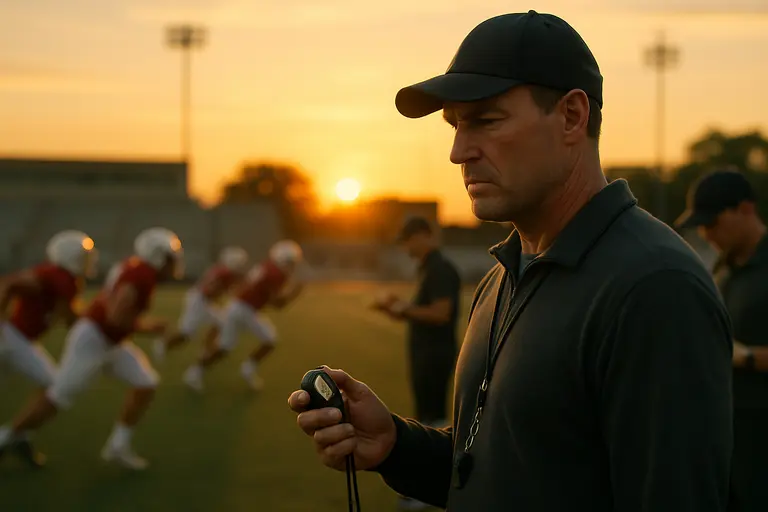
Coaches use the first phase of camp to build a working plan. That means identifying starters, but it also means building packages. A player may not be a full-time starter and still matter on third down, in goal-line personnel or on coverage teams. Texas A&M’s staff has to find those players early enough to give them repeat reps.
This is where Fall Camp Assessments differ from spring impressions. Spring can show baseline growth. Fall camp has urgency because the season is closer and roster decisions carry immediate consequences. Players who learn fast can climb. Players who miss assignments can lose ground even if their long-term ceiling remains high.
The staff also has to manage how much to reveal. Public reports may identify position battles, but the most important judgments stay internal. Coaches are tracking missed assignments, communication errors, conditioning response and whether players can repeat good reps after a correction. That is the work that turns a roster into a two-deep.
For more on the position battles already tied to the 2026 roster, the site’s Texas A&M fall camp battles preview fits the same roster conversation. The recruiting side also connects to the broader class outlook covered in the Texas A&M 2026 recruiting class breakdown.
Why The First Reads Matter For Texas A&M
Fall Camp Assessments matter because they create the first honest roster audit before Texas A&M reaches game-week mode. The Aggies have recruiting momentum, transfer help in key areas and several position groups with real competition. None of that guarantees clean answers. It gives the staff more options, and camp determines which options are ready.
The most important signs will be practical: which linebackers communicate well enough to play, which offensive linemen can hold up through repeated team periods, which receivers separate within a deep room, and which young defenders can earn trust without being rushed. That is the difference between having talent and having a rotation.
Texas A&M’s 2026 prospects will not be defined by one practice or one early camp report. They will be shaped by accumulation. The first week sets the baseline, the middle of camp tests consistency, and the final phase determines who enters the season with a role. For a roster built with young talent and new pieces, that evaluation window is one of the most important parts of the year.