


A&M Rivalry Games in 2026 carry more than rivalry-pageantry value. They sit directly inside Texas A&M’s SEC identity, with old Southwest Conference memory, new conference scheduling pressure, and Kyle Field logistics all hitting the same calendar. On September 26, 2026, Texas A&M was scheduled to travel to LSU. On October 3, 2026, the Aggies were scheduled to host Arkansas in a game tied to the university’s 150th Anniversary. On November 27, 2026, Texas was scheduled to come to Kyle Field for the Cotton Holdings Lone Star Showdown at 6:30 p.m. CT on ABC, according to Texas A&M’s official kickoff announcement.
Those dates matter because rivalry games compress the normal football equation. Talent still decides matchups, but rivalry settings change how teams handle field position, fourth-down risk, crowd noise, substitution tempo, and turnover response. A staff can install the right plan and still lose control if the emotional pace outruns the execution. That is why these games fit the “Iconic Seasons” category: they often become the reference points fans use years later to define whether a season had weight.
A&M Rivalry Games And The 2026 Calendar
How A&M Rivalry Games Set The Weekly Terms
A&M Rivalry Games work differently from ordinary conference games because the opponent brings its own memory into the building. Against LSU, Texas A&M deals with a border-state SEC opponent that has become a steady measuring stick since the Aggies joined the league. Against Arkansas, the old Southwest Classic frame still matters, even as the series has shifted between neutral-site history and campus settings. Against Texas, the emotional temperature is higher because the series is the longest for both programs, with 120 all-time meetings entering the 2026 matchup.
The order also matters. The LSU trip on September 26, 2026 arrived before the Arkansas home date on October 3, 2026, which created a quick physical reset between two opponents with very different historical profiles. LSU has usually been read through SEC line-of-scrimmage standards. Arkansas carries older regional memory and a rivalry record that still reflects decades before realignment changed the sport. The Texas game, set for November 27, 2026, landed at the back end of the regular-season schedule, where rivalry losses tend to color the full campaign.
The Protected Rivalry Effect
The SEC’s 2026-2029 format identified Texas, LSU, and Missouri as annual Texas A&M conference opponents in the research notes. That format gives the Aggies less room to treat rivalry games as isolated moments. They become recurring program audits. If a staff has a clear identity on early downs, in red-zone sequencing, and in late-half clock management, those traits show up year after year against the same opponents. If a staff is patching problems, protected series expose that too.
For Aggies fans tracking the schedule mechanics, the broader rivalry structure connects naturally with the site’s prior breakdown of Texas A&M SEC opponents. The key football point is simple: annual opponents create a feedback loop. Coaches do not just prepare for one opponent one time. They build answers, then opponents build counters, then the next meeting tests which staff adjusted with cleaner detail.
Texas Carries The Largest Historical Weight
Cotton Holdings Lone Star Showdown Returns To Kyle Field
The Texas game is the largest historical marker on the 2026 schedule. The rivalry dates back to October 19, 1894, when Texas won the first meeting 38-0. As of November 28, 2025, Texas led the series 78-37-5 and held a three-game winning streak over Texas A&M. That record does not decide the 2026 game, but it shapes the pressure inside it. Players inherit the noise even if they did not live the earlier chapters.
From a film standpoint, the Lone Star Showdown usually turns on composure as much as structure. The home team has to use the Kyle Field crowd without letting the cadence of the game become frantic. Offensively, that means staying on schedule instead of chasing explosive plays just because the moment feels large. Defensively, it means forcing Texas to earn drives rather than giving away cheap field position through missed fits or coverage busts after motion.
Why Old Series Records Still Matter
Historical records can be misused if they are treated as predictive math. Texas leading the series does not create a matchup advantage by itself. The value is psychological and institutional. A rivalry record tells players what the game has meant before them. It tells coaches what a fan base will remember. It tells administrators and schedule planners why a late-November broadcast window at Kyle Field can carry local economic and cultural weight beyond one Saturday.
The 2026 Texas game also sits in a specific fan-planning lane. A 6:30 p.m. CT kickoff on ABC changes the rhythm of College Station for travel, parking, tailgating, and postgame movement. Night rivalry games tend to stretch the entire game-day operation. The football staff cannot control those logistics, but it can control whether the team starts fast enough to keep the crowd tied to the plan rather than the anxiety of the moment.
LSU And Arkansas Test Different Parts Of The Program
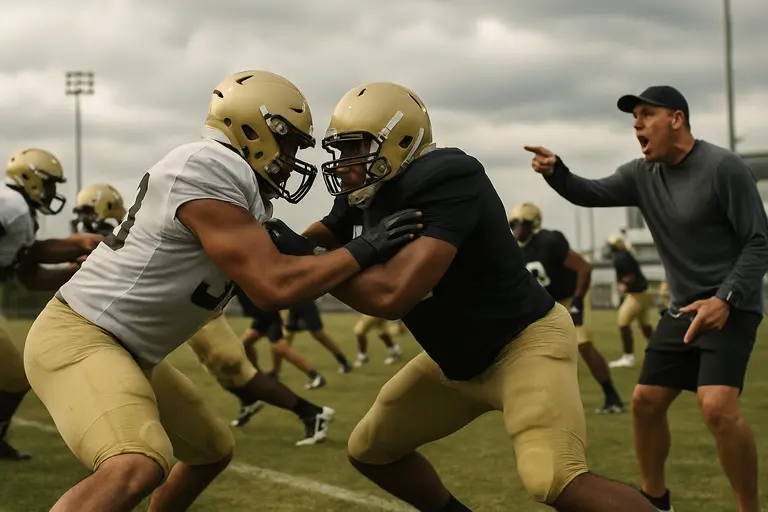
LSU Forces SEC Line-Of-Scrimmage Answers
Texas A&M and LSU first met in 1899, and the all-time series favored LSU 35-22-3 in the research notes. Sports Illustrated’s review of Texas A&M’s 2026 opponents also noted that A&M had won five of the last eight against LSU after NCAA-vacated wins were accounted for in its opponent history. That recent split gives the September 26, 2026 trip a different feel from a one-sided historical ledger.
The tactical test at LSU is usually physical clarity. Can Texas A&M stay balanced enough to protect the passer? Can the defensive front close interior gaps without overcommitting and opening cutback lanes? Can the secondary tackle in space after early-down throws? Rivalry pressure often exposes technique flaws because players try to solve plays alone. The better response is boring and repeatable: correct fits, clean communication, and disciplined pursuit angles.
Arkansas Brings Southwest Conference Memory Back To Kyle Field
The Arkansas game on October 3, 2026 brought a different kind of historical load. The rivalry dates to 1903, and Arkansas led the all-time series 42-37-3 as of October 2025. Since the rivalry was renewed in 2009, Texas A&M had gone 13-4 against Arkansas in the research notes. That creates an unusual split: Arkansas owns the older series edge, while A&M has controlled much of the modern stretch.
That split matters because it changes how both teams frame the game. For Texas A&M, the danger is assuming recent success explains the next matchup. For Arkansas, the older series record gives the game a longer memory even when recent results have tilted toward College Station. The Aggies’ staff would need to treat the matchup as a physical SEC contest first, not as a nostalgia event. Run fits, protection calls, and red-zone finishing matter more than the name attached to the series.
| Opponent | 2026 Date | Historical Note | Main Football Stress Point |
|---|---|---|---|
| LSU | September 26 | First met in 1899; LSU led 35-22-3 in the research notes | Line-of-scrimmage control and road composure |
| Arkansas | October 3 | Series dates to 1903; Arkansas led 42-37-3 as of October 2025 | Physical reset after LSU and red-zone efficiency |
| Texas | November 27 | 120 meetings entering 2026; Texas led 78-37-5 as of November 28, 2025 | Emotional control, field position, and late-game execution |
Why A&M Rivalry Games Define The 2026 Run
A&M Rivalry Games define the 2026 run because they measure more than win-loss accounting. They test whether Texas A&M can carry a coherent football identity through different kinds of pressure: a road SEC rivalry at LSU, a historically layered Arkansas game at Kyle Field, and a late-November Lone Star Showdown with the state’s loudest stakes attached.
The safest way to read these games is through repeatable traits. Does the offense avoid negative plays on first down? Does the defense tackle well enough to survive explosive athletes in space? Does the staff manage tempo without burning timeouts to fix alignment issues? Does special teams protect hidden yardage? Rivalries magnify every one of those details because the emotional swing after one mistake is larger than normal.
For an iconic season to form, Texas A&M does not need empty theater. It needs proof. The proof comes when the Aggies handle the specific demands each rivalry presents and still play their own football. That is the historical significance of the 2026 slate: the past gives each game weight, but execution decides whether the season earns a place in the program’s memory.