


Aggies Sports Culture in Bryan-College Station is not limited to football Saturdays. Kyle Field remains the most visible stage, but the local sports identity around Texas A&M is built through student participation, service projects, youth programs, alumni ties and year-round campus activity. That wider base helps explain why Texas A&M athletics carry weight beyond the scoreboard.
For a football audience, the connection matters. The same habits that fill intramural fields, Rec Sports facilities and student organizations help shape the 12th Man environment on game day. Texas A&M does not have to manufacture local identity from scratch each fall. It pulls from a campus and community structure that is already active, organized and used to showing up.
Aggies Sports Culture Starts With Participation
Rec Sports Sets The Base
Texas A&M’s participation numbers give the clearest snapshot of the scale. Texas A&M Rec Sports spans nearly 700,000 square feet of indoor space and about 50 acres of outdoor field space, and it recorded roughly 2 million visitor entries in fiscal year 2025, according to Texas A&M Rec Sports. The same report said 69.4% of students used Rec facilities, with about 52,280 unique student users. That included 14,414 students in intramurals, 8,770 fitness participants and 3,919 sport club participants.
Those figures matter because local sports culture is not built only by varsity programs. It is built when students compete after class, train in shared spaces and carry those habits into the stands. A student who plays intramurals during the week is more likely to understand the rhythm of competition, team identity and campus pride when the football team runs out at Kyle Field.
Aggies Sports Culture Beyond Varsity Teams
The sport club structure adds another layer. Research provided for this report shows the Texas A&M Sport Clubs Program has about 1,500 active participants and competes in 40 intercollegiate sports as of 2025, with disc golf among the recent additions. Over five decades, those clubs have won more than 400 national championships. That record gives students a competitive outlet outside NCAA varsity athletics while keeping the Aggie name in front of regional and national opponents.
That is where Aggies Sports Culture takes on a wider meaning. Football may carry the largest audience, but the local identity is reinforced by students who row, lift, run, play, travel and represent the school in less-publicized venues. The result is a sports ecosystem with varsity attention at the top and broad participation underneath it.
Service And Campus Networks Extend The Reach
The Big Event Keeps The Bond Local
Texas A&M’s community influence is not strictly athletic, but it supports the same local bond that athletics draw from. On March 21, 2026, The Big Event involved 17,594 student volunteers who served 2,553 residents across Bryan-College Station, based on the research provided. For local residents, that kind of turnout puts students in neighborhoods, not just stadium seats.
The service side matters for sports culture because it changes the relationship between campus and town. Bryan-College Station is not just a host market for Texas A&M athletics. It is a community where students work, volunteer, train and compete. That daily contact can soften the line between university events and local identity, especially during football weekends when traffic, hotels, restaurants and neighborhood routines all feel the campus pull.
Alumni And Student Groups Add Scale
Texas A&M reported more than 1,300 recognized student organizations for fall 2025, while the Corps of Cadets had more than 2,400 members, according to Texas A&M University facts. Those numbers help explain why the school’s sports culture has so many entry points. Some students connect through the Corps. Others connect through club sports, service groups, residence halls, academic organizations or the student section at football games.
The former student network also adds reach. Research provided for this report places the Aggie Network above 600,000 people globally. That matters in a football context because alumni engagement is part of the weekly rhythm around Texas A&M sports. Former students return to College Station, support student groups and carry the school’s identity into other markets. The effect is most visible around major home football dates, but it is not limited to those weekends.
- Rec Sports gives students a daily sports outlet before they enter the football stands.
- Student organizations create smaller communities that feed larger game-day identity.
- Service events keep the university tied to Bryan-College Station residents.
- Alumni support extends the Aggie identity beyond campus boundaries.
Football Sits Inside A Bigger Community Model
Kyle Field Is The Front Door
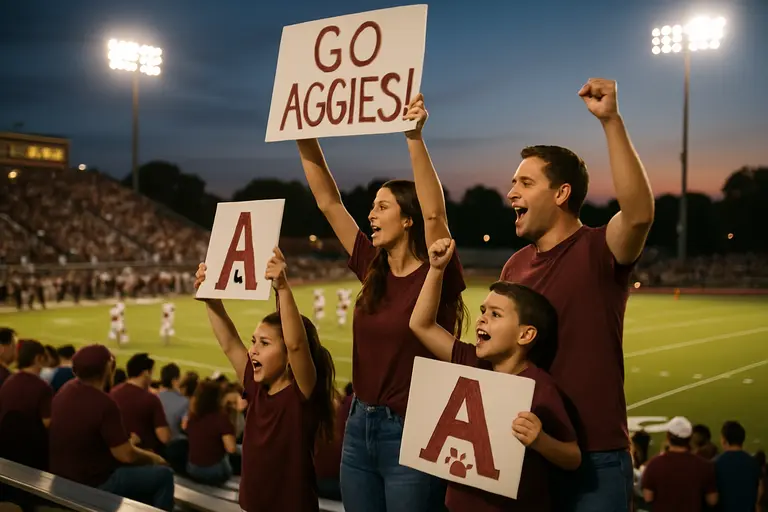
For football readers, Aggies Sports Culture is the frame around the Saturday product. Coaches, players and depth charts decide games, but the local setting affects how the program is experienced. Kyle Field is the front door for many visitors, yet the game-day energy comes from a campus that has been active all week through recreation, service, student groups and alumni planning.
That is why fan planning stories around Texas A&M cannot stop at kickoff windows. Parking patterns, tailgates, student turnout, family visits and local business traffic all connect to the larger College Station sports routine. Game themes and stadium traditions are part of that routine as well; the site’s recent look at A&M game themes fits into the same discussion about how organized fan behavior shapes the football environment.
Youth Programs Build The Next Layer
The community pipeline starts before college. Research provided for this report shows Texas A&M’s Office for Youth Engagement reaches more than 50,000 young people each year through programs and partnerships. It also awards more than $100,000 in summer camp scholarships annually, a practice listed as active since 2023, and its Aggie Camp Finder tool lists more than 100 summer camps and programs.
For a regional football audience, that matters because sports loyalty often begins with access. Camps, youth programs and campus visits put younger students near Texas A&M facilities and coaches across multiple disciplines. Not every child who attends a camp becomes an athlete, and not every family becomes a season-ticket household. Still, repeated contact with campus builds familiarity with the Aggie brand before a student ever applies to the university.
NM State Shows The Aggie Brand Travels
The Aggie identity is not exclusive to College Station. New Mexico State’s version in Las Cruces offers a useful comparison, though it sits outside the Texas A&M football beat. Research provided for this report says New Mexico State Athletics was under new leadership with athletic director Joe Fields as of October 2025, and the department’s multi-year partnership with adidas and Game One took effect on July 1, 2026. That agreement included uniforms, NIL opportunities for more than 400 Aggie student-athletes and planned community outreach through branded gear and promotional visibility.
That comparison does not change the Texas A&M story, but it shows how an Aggie identity can anchor local sports pride in more than one college town. In College Station, the scale is larger and the SEC football spotlight is brighter. In Las Cruces, rivalry games such as the Battle of I-25 against New Mexico carry local meaning. Both examples point to the same idea: college athletics can become civic identity when teams, students and residents keep crossing paths.
Why Aggies Sports Culture Shapes Bryan-College Station
What It Means For Local Fans
Aggies Sports Culture is best understood as a layered system. Texas A&M football sits at the top of public attention, but the base includes Rec Sports participation, sport clubs, student service, youth programs, alumni ties and local residents who deal with the campus impact every week. That base gives football Saturdays more weight because the crowd is not detached from daily campus life.
The football program will still be judged by wins, roster development, SEC results and the standard set inside the Bright Football Complex. That has not changed. What the community data shows is that Texas A&M’s local sports identity does not rise and fall only with one result. It is reinforced by students using facilities, volunteers serving neighborhoods, families entering youth programs and former students returning to town.
For Bryan-College Station, that makes the Aggies more than a fall attraction. They are a year-round sports and community presence. The strongest version of the football environment comes when those pieces are aligned: active students, connected alumni, local residents with a stake in campus life and a stadium that reflects more than three hours of football.