
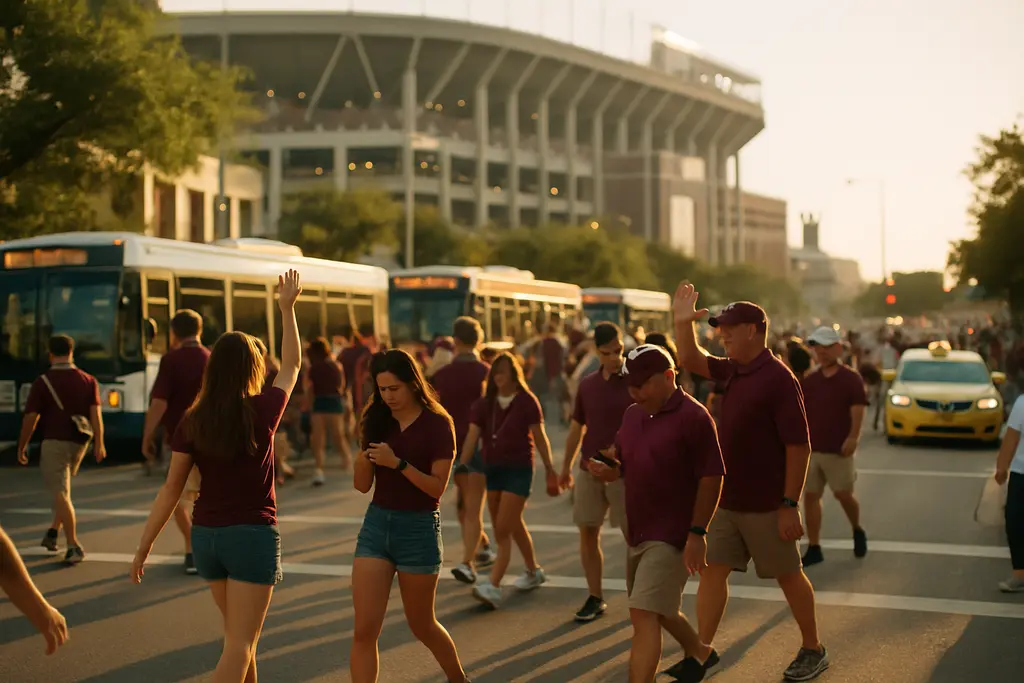

Kyle Field transportation is no longer just a parking question for Texas A&M home games. It is a campus operations issue, a Bryan-College Station traffic issue and, for a program that regularly pulls heavy football crowds, a local planning issue that now starts hours before kickoff and carries into the postgame exit. The current plan traces back to the congestion that followed the 2013 Alabama game, when about 88,000 fans were inside Kyle Field and another 35,000 were outside the stadium area, according to the Texas A&M Transportation Institute.
That history matters because the 2026 plan is not a one-year patch. It is the latest version of a system first implemented in 2014 and adjusted as stadium crowds, campus construction, parking demand and pedestrian patterns changed. For Texas A&M fans, the visible pieces are road closures, shuttles, digital parking credentials and walking routes. For the local community, the impact reaches further: neighborhood traffic timing, downtown shuttle use, business access, emergency routing and the weekly rhythm around home football Saturdays.
Why Kyle Field transportation Changed
Kyle Field transportation Origins Still Matter
The starting point remains the same: Kyle Field draws a crowd that can overwhelm normal street patterns. The 2013 Alabama game became the reference point because the stadium crowd and the outside-stadium crowd combined to stress roadways, sidewalks and parking supply. The central point for Kyle Field transportation is coordination before the bottleneck forms, not reaction after fans are already stacked on Houston Street, Joe Routt Boulevard, Gene Stallings Boulevard or the West Campus side of the stadium.
Texas A&M’s current plan reflects that lesson. Road closures now begin several hours before kickoff in key areas around the stadium. Postgame closures typically begin at the start of the fourth quarter, giving crews time to set up exit patterns before the largest wave of pedestrians and vehicles hits the same corridors. That timing affects more than fans parked on campus. It changes how nearby residents, restaurants, ride services, university staff and local workers plan their Saturday movement.
The 2026 Adjustments Are Built Around Separation
The most important operational idea is separation: keep pedestrians, buses and cars from fighting for the same space at the same time. One of the new 2026 features is a pedestrian passageway through the basement level of the West Campus garage, adjacent to Reed Arena. Texas A&M described the route as a safer and less congested option for fans moving between tailgates and Kyle Field as of the first home game of 2026, according to Texas A&M Transportation Services.
That change may sound narrow, but it touches a major pressure point. West Campus is a heavy tailgate and parking area, and the walk toward the stadium can put fans near vehicle movement and garage exits. A defined passageway helps shift some of that foot traffic away from the most crowded edges. It also gives game-day staff a clearer route to manage when waves of fans move toward Kyle Field in the final hour before kickoff.
How Routes And Shuttles Reworked Fan Movement
Shuttle Timing Gives Fans A Wider Arrival Window
Shuttle service is one of the clearest signs that Texas A&M is trying to spread demand across time and geography. For the Missouri State home opener on Sept. 5, 2026, on-campus and off-campus shuttles ran three hours before kickoff and one hour after the game ended. The Downtown Bryan Free Gameday Shuttle also operated from Roy Kelly Garage during those same windows.
That structure gives fans another choice besides driving directly into the stadium zone. It also gives Downtown Bryan a practical role in game-day movement, not just pregame dining or postgame traffic overflow. When more fans park outside the core campus area, the local impact shifts. Bryan businesses can see more foot traffic, while College Station streets near the stadium face less direct parking pressure than they would if every vehicle pushed toward the same campus lots.
For fans trying to understand how these changes fit into the broader football Saturday setup, our related breakdown of Texas A&M gameday transportation covers how parking, shuttles and pedestrian movement connect around Kyle Field.
Digital Parking Cuts One Delay But Creates Another Risk
Prepaid parking and digital credentials are now part of the plan. ParkMobile is the approved vendor for non-Aggie permits, and Texas A&M has advised permit holders to screenshot or download credentials before leaving home because cellular service near Kyle Field can be unreliable on game days. That guidance fits the reality of large college football crowds: the phone may be the pass, but the network may not cooperate when thousands of people arrive in the same area.
For traffic flow, digital credentials can reduce gate delays when they work cleanly. For individual fans, the risk is arriving at a lot entrance without a usable pass on screen. That can slow a line, force a driver to pull aside or send a vehicle back into traffic. The local benefit depends on preparation before fans leave home, not just signage at the lot entrance.
Local Business, Neighborhood And Campus Effects
Traffic Changes Reach Beyond The Stadium Block
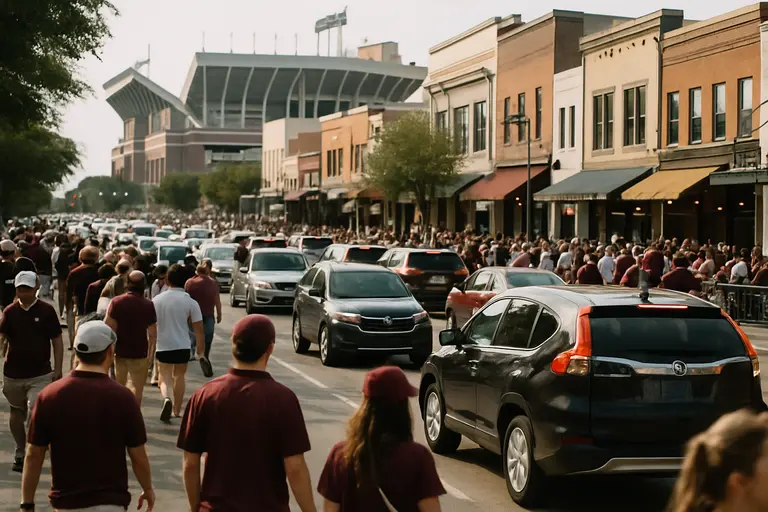
For Texas A&M, Kyle Field transportation now functions as part of the weekly event plan for the city around football games. Road closures on Houston Street, Joe Routt Boulevard, Gene Stallings Boulevard and parts of Olsen Boulevard near West Campus do more than move fans. They redirect regular local trips. Residents who are not attending the game still have to account for the same closures and reduced access windows.
Speed limits have also been reduced in several campus areas during the 2026 season to account for increased pedestrian movement on game days. That is a safety measure, but it also signals a shift in priority. Around Kyle Field, the plan favors controlled pedestrian movement and predictable bus routes over normal vehicle convenience during the peak event window.
Highway 6 construction and changes to the northbound Texas Avenue exit add another layer. Texas A&M noted before the Sept. 5, 2026 home opener that there were no full Highway 6 lane closures for that game, but drivers still faced changed conditions and were encouraged to consider alternate routes. That matters for fans coming from Houston, Dallas-Fort Worth, Austin, East Texas and the Brazos Valley. It also matters for local commuters who may not think of football traffic until they hit a changed exit pattern.
The Community Impact Is Practical, Not Abstract
The local impact lands in small decisions. A family leaving South College Station may choose an earlier arrival window. A downtown restaurant may plan staffing around shuttle traffic. A West Campus tailgate group may adjust its walking route through the garage passageway. A student worker may need to cross campus before fourth-quarter closures reset the postgame pattern.
Those decisions create the difference between a stadium district that locks up and one that moves in stages. The plan cannot remove congestion from a major SEC home date. It can manage the timing, reduce conflict points and give fans more predictable choices. That is the main value of the current system.
Why Kyle Field transportation Matters For Bryan-College Station
The scale of Texas A&M football makes game-day movement a regional concern. A home game changes campus access, downtown parking behavior, hotel-area traffic, restaurant timing and neighborhood cut-through patterns. If Kyle Field transportation works, fewer drivers make last-minute decisions inside the tightest stadium zone. If it breaks down, the effects spread quickly from campus streets to city corridors.
The 2026 plan shows where the university and local traffic partners have put the emphasis: earlier closures, shuttle options, defined pedestrian routes, digital parking preparation and lower speeds in high-foot-traffic areas. None of those steps is flashy. They are operational choices meant to handle a football crowd that arrives from across Texas and moves through a compact campus district.
For Aggies fans, the practical read is simple: the best trip to Kyle Field now starts before the car leaves the driveway. Download the parking credential, know the shuttle window, check the route around Highway 6 and expect postgame streets to be set before the fourth quarter ends. That is how Texas A&M is trying to turn one of the SEC’s largest game-day crowds into a more orderly local event.