
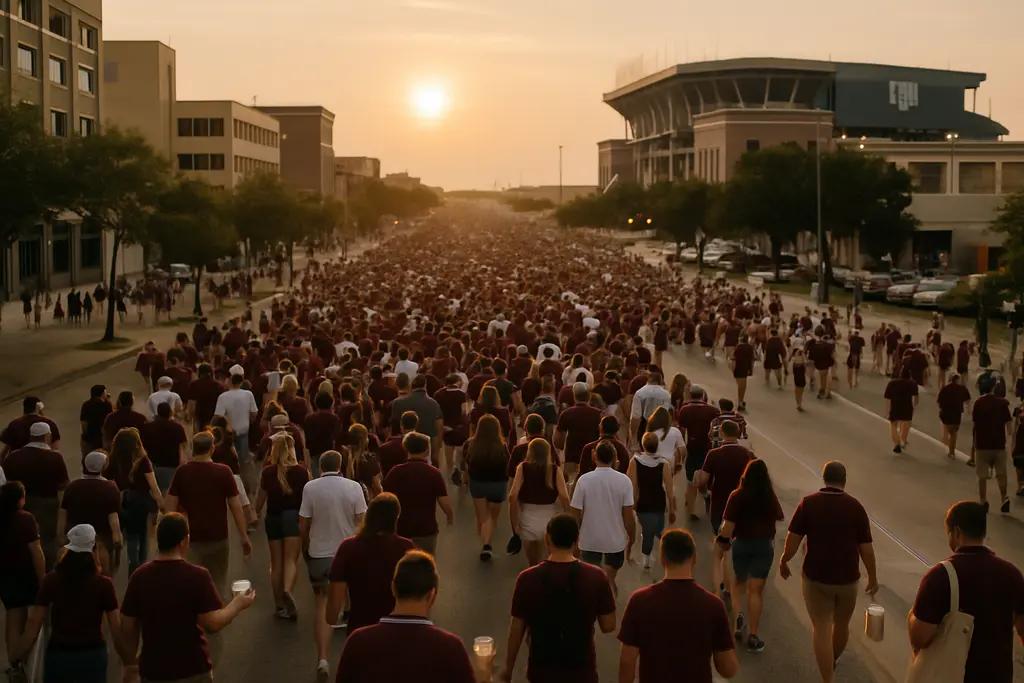

Texas A&M Gameday operations took on a different shape in September 2026, with transportation changes affecting how fans moved by car, shuttle and foot around Kyle Field. Texas A&M Transportation Services announced the changes on September 4, 2026, one day before the Aggies’ September 5 opener against Missouri State, including a reconfigured northbound Texas Avenue exit, lower speed limits on parts of campus and a new pedestrian path through West Campus Garage Texas A&M traffic update.
The changes did not amount to a full reset of the Kyle Field fan experience. They were targeted adjustments to known pressure points: vehicle exits, pedestrian conflicts, shuttle demand and accessible parking. For a stadium that draws heavy local and regional traffic, small operational changes can matter. The effect showed up less in one headline move and more in how Texas A&M tried to separate walkers, drivers and shuttle riders before and after kickoff.
The timing also mattered. These policies were in place as the 2026 home schedule began, giving fans a new set of habits to learn before later SEC weekends brought heavier travel patterns. The practical read for Aggies fans is simple: the best game-day plan in College Station now starts earlier and depends more on knowing which side of campus fits the trip.
How Texas A&M Gameday Traffic Changed
Why Texas A&M Gameday Routing Matters
The northbound Texas Avenue exit reconfiguration was one of the most visible traffic changes announced before the Missouri State game. Texas Avenue has long been one of the major approaches for fans trying to reach campus, but game-day traffic volume makes every merge, turn and exit point more sensitive. Reworking that northbound exit was aimed at moving vehicles through a busy corridor with fewer conflicts near campus access points.
Texas A&M also lowered speed limits across parts of campus, including areas tied to West Campus travel. The safety logic is clear: lower speeds give drivers more reaction time in areas where fans are walking from parking areas, tailgates and shuttle stops. That matters most in the pregame window, when vehicle arrivals and pedestrian movement overlap.
Road closures remain a major part of the operating plan. Football game-day closures begin 4½ hours before kickoff, or at 7:30 a.m. if that time is later. The affected areas include parts of Houston Street, Joe Rout Boulevard, Gene Stallings Boulevard and a section of Olsen Boulevard. Postgame closures begin near the start of the fourth quarter, with traffic directed toward broader access points such as FM 2818 and Highway 6.
West Campus Garage Gets A Pedestrian Fix
The new pedestrian pathway through the basement level of West Campus Garage is a smaller change with a clear purpose. It connects Olsen Boulevard and Pickard Pass, giving walkers a route that avoids crossing in front of garage exits. That is the type of adjustment that can reduce friction after years of fans moving through the same tight areas around parking structures.
For Texas A&M Gameday planning, the West Campus Garage path is less about speed and more about predictability. Drivers leaving the garage have fewer people cutting across exit lanes. Fans walking toward tailgates or Kyle Field have a defined route. In a heavy crowd, that kind of separation can keep movement from stalling near pinch points.
Parking, Shuttles And Pedestrian Flow
Shuttle Timing After The Changes
Texas A&M’s shuttle operation now starts three hours before kickoff and continues until one hour after the game ends for both on-campus and off-campus routes. The Bush Library route starts earlier, opening five hours before kickoff and ending one hour after the game. Those windows give fans a clearer framework, especially for games with kickoff times that shift through the SEC television schedule.
The Downtown Bryan Game Day Shuttle also remains a park-and-ride option tied to Roy Kelly Garage. Fans can use free and paid downtown parking, then connect to Kyle Field through free shuttle service. That service runs three hours before kickoff until one hour after the game. For fans coming from north of campus or planning time in Bryan before the game, that option spreads demand away from the most crowded campus lots.
These transportation changes connect closely to broader fan-planning issues around Kyle Field. The same themes — digital passes, parking location, shuttle timing and entry windows — have been part of recent Texas A&M game-day planning discussions as the school keeps refining how fans reach the stadium.
Parking Choices Carry More Weight
Permit and non-permit parking rules are another key piece. Vehicles without prepaid parking are directed to pay-upon-arrival locations near Bush Library, Bonfire Memorial and Agronomy Road. Game-day rates listed in the research range from $25 to $40, depending on the location. That pricing spread makes location selection part of the travel decision, not just a final step after arriving in College Station.
- Fans without prepaid parking are steered toward designated pay-upon-arrival areas.
- Shuttle windows now define the practical arrival and departure plan for many lots.
- Road closures beginning 4½ hours before kickoff make late route changes harder.
- Pedestrian routing through West Campus Garage reduces conflicts at garage exits.
No Wheels Zones also changed the flow around Kyle Field. These zones are in place from 3½ hours before kickoff through one hour after the game. Cyclists, scooter riders, skateboarders and others using wheeled devices must dismount and walk through those areas. The rule is aimed at pedestrian safety in the busiest stadium-adjacent zones, where mixed speeds can create problems in tight crowds.
Accessible Parking And Texas A&M Gameday Flow
Accessible Options Added In 2026
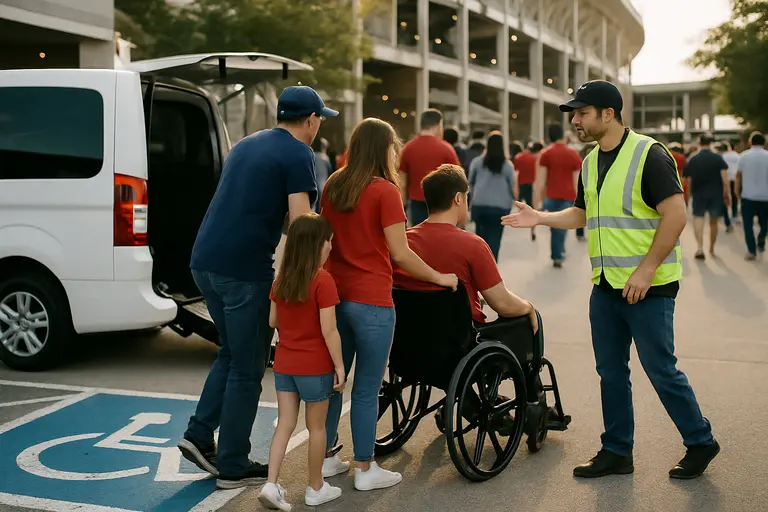
Accessible parking was part of the 2026 adjustment. Texas A&M listed accessible spaces in University Center Garage at $40 and Lot Y/114 at $25, with accessible shuttle service from Lot Y/114 through the Stotzer route accessible football parking. That gives fans with accessible parking needs more defined choices depending on whether they prioritize proximity, shuttle access or cost.
For families and older fans, that clarity can shape the whole day. Accessible game-day plans are not just about the parking space. They involve arrival timing, shuttle capacity, distance to stadium gates and the ability to leave without crossing against heavy postgame traffic. The Stotzer route connection from Lot Y/114 gives Texas A&M another tool to move fans who may not be able to handle longer walks from remote lots.
The accessible parking changes also fit the larger pattern: the university is trying to sort different types of movement into more predictable lanes. Vehicles have assigned approaches. Shuttle riders have defined windows. Pedestrians have new routing at West Campus Garage. Fans using accessible parking have published locations and shuttle connections. The plan depends on communication, but the structure is more specific than a general instruction to arrive early.
Where The Experience Still Depends On Fans
Even with new routes and added structure, the plan still depends on fan behavior. A driver who ignores closure timing can get pushed into longer loops. A fan who arrives after shuttle demand peaks may face a slower trip. A scooter rider entering a No Wheels Zone still has to dismount. The transportation system can reduce conflicts, but it cannot remove the impact of late arrivals or unfamiliar routes.
That is especially true for Texas A&M Gameday traffic after the fourth quarter begins. Postgame closures starting near that point mean fans who leave late and fans who stay through the final whistle are entering different traffic conditions. West Campus Garage, downtown shuttle users and remote-lot drivers all face different exit patterns. The best plan is tied to where a fan parks, not just where a fan sits in Kyle Field.
What The Transportation Changes Mean At Kyle Field
The first read on the 2026 changes is that Texas A&M is treating game-day movement as a safety and timing issue, not only a parking issue. The reworked Texas Avenue exit, lower campus speed limits, West Campus Garage pedestrian path, No Wheels Zones and accessible parking options all point in the same direction: fewer conflicts between cars and people near the stadium.
That does not mean every trip into College Station is faster. Some fans may trade a closer parking location for a smoother shuttle ride. Others may pay more for convenience or walk farther to avoid the heaviest vehicle zones. The main shift is that the school has created more defined choices, which rewards fans who plan by route, lot and shuttle window before reaching campus.
For the Aggies’ home schedule, the transportation changes put more responsibility on pregame decisions. Texas A&M Gameday now asks fans to know their parking status, understand closure timing, pick the right shuttle window and adjust to pedestrian-only safety zones around Kyle Field. That is a different experience, but it is a more organized one if fans use the information before traffic begins to build.