
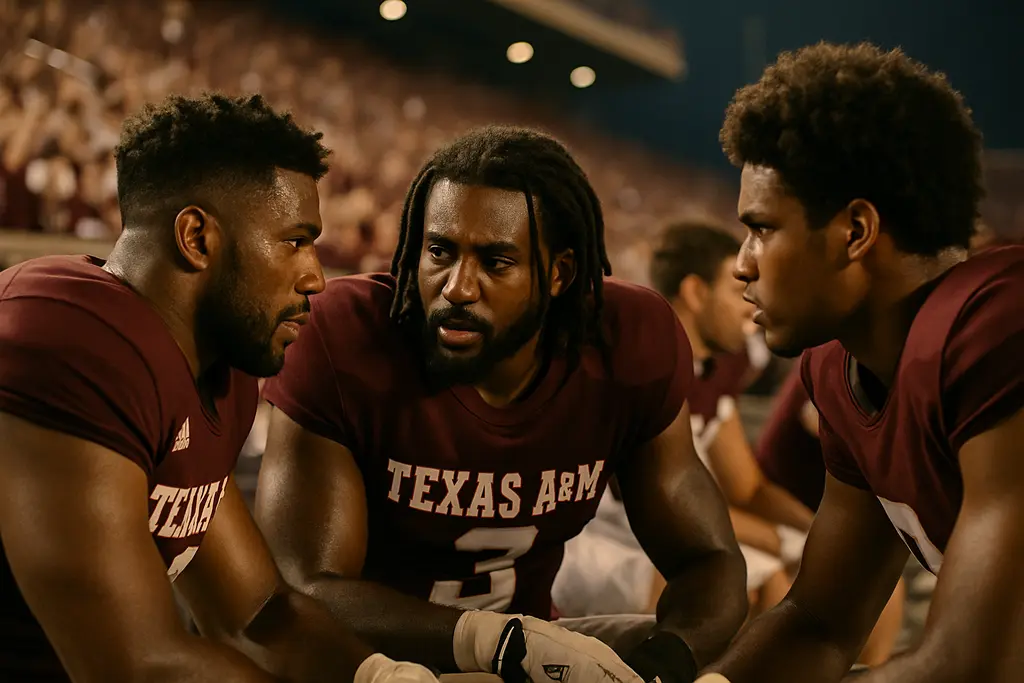

Texas A&M Depth is no longer a preseason talking point tucked into camp notes. After the 2026 SEC season opened on Sept. 5, the Aggies’ margin became something more physical: the second receiver who hears the signal cleanly, the reserve lineman who holds up in a road quarter, the young defender who can survive a tempo series without Kyle Field needing to hold its breath. That is where the 2026 roster conversation sits as of Sept. 9, 2026, not in slogans, but in whether the middle of the roster can keep the same standard after the first wave comes off the field.
College Station knows how to measure that kind of thing. The 12th Man may roar for touchdowns, sacks and long runs, but the seasoned eyes in the stands also notice when a backup finishes a block, when a rotation keeps legs fresh, and when an offense does not shrink after substitutions. In the SEC, those are not small details. They are survival traits.
Texas A&M Depth And The 2026 SEC Grind
What Terry Bussey’s Comment Revealed
Texas A&M wide receiver Terry Bussey highlighted the Aggies’ growing offensive depth and maturity as the program entered fall camp, according to a Sports Illustrated report. That is a meaningful camp note because Bussey’s words were not just about one position room having bodies. They pointed toward an offense that needed steady contributions beyond the most visible names.
For the Aggies, Texas A&M Depth is tied to rhythm. A receiver rotation that keeps its timing can help a quarterback stay on schedule. A second-unit lineman who communicates well can prevent a drive from turning into a survival drill. A skill player who understands spacing can be the difference between a three-and-out and a drive that gives the defense a breather. Depth sounds like a roster term, but on Saturdays it becomes oxygen.
Texas A&M Depth And The Second Wave
The second and third tiers matter because SEC games rarely stay clean. A plan built only for starters does not last long once tempo, heat, crowd noise, road travel and collisions start adding up. The best roster rooms do not treat reserve snaps as charity. They treat them as part of the game plan.
That is where Bussey’s comment fits the bigger picture. If the Aggies’ offense truly entered the season with more maturity, the proof was always going to come through substitution patterns and response. Can a young receiver handle a third-down route when the first option needs a series off? Can a rotational back protect the quarterback, not just run through a crease? Can the offense keep its voice calm after a false start or a sudden-change possession? Those are the plays that tell fans whether depth is real.
The SEC Has Made Rotation A Weekly Question
Oklahoma Shows How Depth Changes Perception
The SEC has a way of turning roster talk into a weekly audit. Oklahoma offered a useful league-wide comparison before the season when Yahoo Sports framed the Sooners’ lack of preseason First-Team All-SEC selections less as a snub and more as a sign of rotational strength in a Yahoo Sports analysis. That idea travels. In this league, a roster can be dangerous without having every headline player placed on a preseason list.
For Texas A&M, the lesson is not that preseason honors do not matter. They do, especially as a sign of respect and proven production. The deeper point is that the SEC punishes thin teams even when they have stars. A program may have a standout at the top of a position group, but if the drop from first string to second string is too steep, opponents will eventually find the stress point.
Why Roster Volume Is Not The Same As Trust
Across the league, the 2026 roster cycle was shaped by recruiting additions, portal movement and turnover. That created larger questions than simple head counts. Having players available is one thing. Trusting them in the fourth quarter of an SEC game is another.
The Aggies’ staff had to sort through that difference before the first league tests settled into view. Coaches can like the size of a room in August and still have questions about who can handle pressure in September. That is especially true in the SEC, where a reserve’s first meaningful snap may arrive against a defender or coverage look that does not forgive hesitation.
For a broader roster frame, the site’s related look at Texas A&M Depth facing SEC stress fits the same central question: how much of the roster can the Aggies trust when the schedule starts leaning on them?
Where The Aggies Need Answers From The Middle Of The Roster
The Offensive Rotation Has To Travel
Depth at home can look different from depth away from Kyle Field. At home, the offense can feed off a familiar sideline and a crowd that understands the rhythm of a drive. Away from home, communication becomes harder, and young players have to create their own calm. The Aggies’ offensive depth, especially after Bussey’s camp comments, needed to show that it could travel with the same maturity it showed in practice settings.
The areas worth tracking are not complicated, but they are demanding:
- Receiver rotation: Can the second wave keep spacing and timing without forcing the offense to shrink the call sheet?
- Protection depth: Can reserve linemen and backs handle pressure looks without turning one missed assignment into a stalled drive?
- Defensive substitution: Can the front and back end stay connected when fresh bodies enter during tempo or sudden-change series?
- Special teams maturity: Can young contributors handle field position snaps without penalties or busted lanes?
None of those questions are glamorous. All of them shape SEC games. A roster with real staying power tends to win snaps that never make the highlight reel.
The Human Side Of The Depth Chart
Depth charts can feel cold from the outside: names stacked in columns, starters separated from reserves, young players waiting for a turn. Inside a program, those lines carry weight. A player buried in August may become essential in October. A freshman who starts on special teams may earn a larger role by proving he can handle one small job every week.
That is the human part of roster change. Families in the stands know it. Teammates know it. The 12th Man knows it when a reserve jogs onto the field and the noise rises before the snap, not after. College football culture in College Station has always had room for the player who works his way into trust. Depth is where many of those stories begin.
The 12th Man Sees Depth Before The Box Score
Kyle Field Rewards The Prepared Player
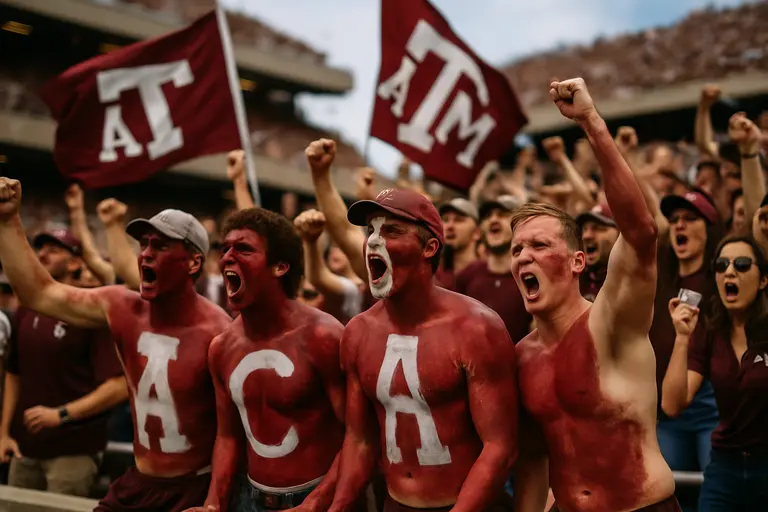
Kyle Field has a way of exposing preparation. The building amplifies confidence, but it also makes hesitation easy to spot. When a young Aggie enters and lines up quickly, communicates cleanly and finishes the snap, the crowd senses it. That reaction is part of the home-field exchange. The players feed off the stands, and the stands respond to competence as much as emotion.
That matters because the 2026 SEC season did not leave time for slow discovery. Texas A&M needed answers from players who may not have been the headline names during the offseason. The program’s depth was not just a coaching concern. It shaped how fans understood the team’s ceiling, how road trips felt, and how much confidence surrounded late-game substitutions.
Why The Fan Experience Is Tied To Trust
For Aggies fans, depth affects more than play-calling. It changes the feel of a Saturday. A team that can rotate without losing its identity gives the crowd something sturdy to believe in. A thin team creates tension every time a starter comes up slow or a drive stalls after substitutions.
That is why depth conversations belong in the same breath as game-day experience. The 12th Man does not just cheer for the first unit. It stands behind the whole roster, including the players who may need one snap to prove that a week of practice translated under pressure.
Why Texas A&M Depth Matters At Kyle Field
Texas A&M Depth will be judged through ordinary snaps before it is praised through major moments. The Aggies entered the 2026 SEC season with a public note of offensive growth from Bussey and a league around them defined by roster movement, recruiting competition and rotation pressure. That is enough to make depth one of the central football questions in College Station.
The answer will not come from one quote or one projected chart. It will come from whether the Aggies can keep their shape when backups enter, whether the offense keeps its maturity past the first script, and whether Kyle Field feels the same trust in the second wave that it has in the starters. In the SEC, that trust is not decorative. It is how a team carries itself from one bruising Saturday to the next.