
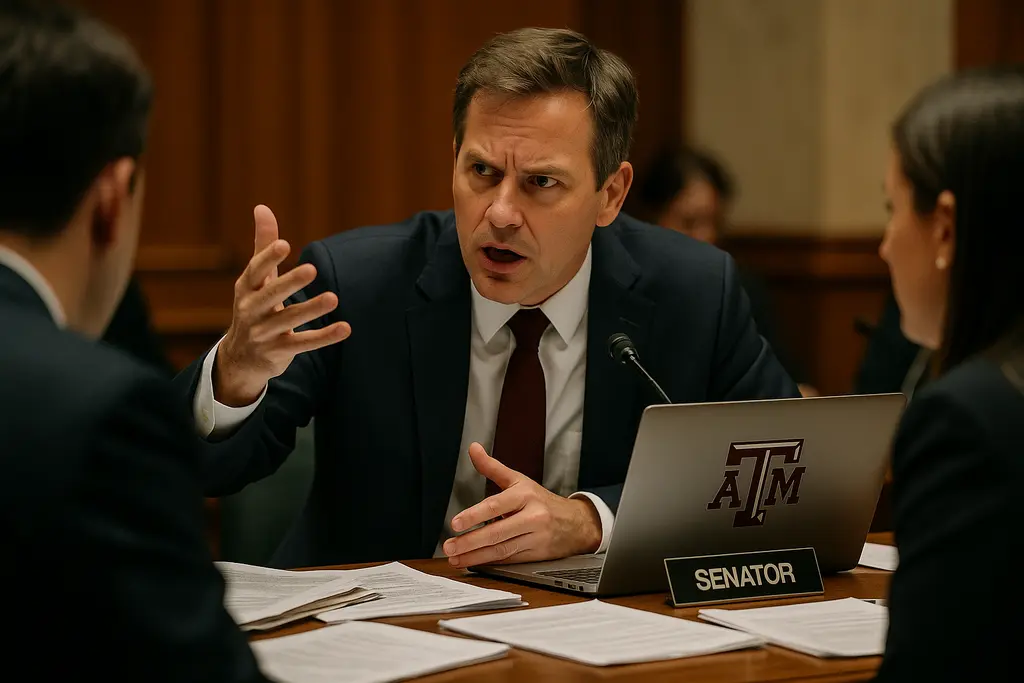

The Texas A&M Senate fight over college sports legislation is not some far-off Washington matter for Aggies who plan Saturdays around Kyle Field. The debate around the Protect College Sports Act has moved close enough to College Station that it now touches the way fans should think about roster funding, media control, NIL standards, and the long-running promise that college athletics should serve more than football alone.
That is why the public posture from Texas A&M leadership matters. The school is not simply reacting to a bill title. Its leaders are pressing for changes in a federal debate that could shape how athletic departments manage rights, protect athlete opportunities, and keep the SEC’s financial engine tied to campus priorities. For the 12th Man, the issue is less about Capitol Hill procedure and more about whether the next version of college sports still feels connected to the campus, the teams, and the athletes who carry the maroon and white.
The Texas A&M Senate Position In The PCSA Fight
Why The Texas A&M Senate Letter Drew Attention
The clearest public marker came from a joint letter. On June 29, 2026, Texas A&M University System Board of Regents Chairman Robert L. Albritton and University of Texas System Board of Regents Chairman Kevin P. Eltife sent a joint letter to Senators Ted Cruz and John Cornyn opposing the Protect College Sports Act in its current form, according to KBTX reporting. That pairing alone carried weight in Texas: two flagship systems, fierce rivals on the field, speaking together on a federal sports issue.
The phrase Texas A&M Senate belongs in this discussion because the pressure point is the Senate negotiation itself. A&M’s regents were not writing into an abstract policy forum. They addressed Texas’ two U.S. senators, both positioned in a debate that could affect how schools manage the business side of college athletics. The letter did not reject the need for reform outright. The supported fact is narrower and more precise: the chairmen opposed the PCSA in its current form and called for revisions to better preserve the future of college athletics.
That distinction matters for Aggies. College Station has lived through conference realignment, NIL changes, and the growing cost of staying competitive in the SEC. A federal bill could offer consistency, but only if schools believe the structure protects what they have built. Texas A&M’s stance, as described in the public reporting, is best read as a push for different terms rather than a refusal to accept any federal role.
The Texas Political Layer Around College Sports
There is also a Texas football subtext here that every Aggie understands. Texas A&M and Texas do not often share public ground in college athletics. When their regent leaders align, it signals that the issue reaches beyond rivalry. It speaks to institutional control, conference value, and the future cost of fielding broad athletic programs in a state where college football is both civic identity and economic activity.
For Kyle Field regulars, the Senate talks can feel distant until they hit familiar Saturday topics: television windows, SEC revenue, athlete retention, and whether the athletic department can keep supporting sports that do not pull football-sized crowds. Those concerns sit behind the public letter and explain why this is not just a legal story. It is a fan experience story, too.
Media Rights, NIL, And The Aggies’ Local Stakes
The SEC Media Rights Concern
One of the most direct concerns tied to Texas A&M’s position involves media rights. Texas A&M Chancellor Glenn Hegar highlighted the importance of retaining control over media rights and tied the SEC’s value to its media agreements, with the PCSA’s media-rights pooling provisions described as a point of contention in the same KBTX report. For a football fan, that may sound technical. In the SEC, it is anything but.
Media agreements help shape exposure, revenue, kickoff windows, and the weekly rhythm of the sport. Texas A&M’s move to the SEC placed the Aggies in a conference where television value and national attention are woven into recruiting, facilities, and game-day demand. If federal legislation changes how rights can be pooled or controlled, A&M leaders have reason to scrutinize the details before accepting the bill as written.
This is where the Texas A&M Senate debate meets the living sound of Kyle Field. A television contract may be negotiated in boardrooms, but its effects show up in hotel bookings, family travel plans, student attendance, and the way a night kickoff can turn College Station into a full-day gathering place. Control over media value is not just an accounting line. It helps set the conditions for the entire football operation.
Uniform NIL Rules And Student-Athlete Welfare
Texas A&M’s Office of Government Relations has advocated for uniform federal Name, Image, and Likeness standards, arguing for consistency across states and protection against exploitation of student-athletes through its federal NIL position. That view fits the broader concern many athletic departments have raised since NIL rules began varying by state law, school policy, and market conditions.
For A&M football, NIL is not an accessory to the sport anymore. It sits beside player development, roster retention, recruiting relationships, and locker-room management. Federal standards could reduce confusion, but the terms would matter. A&M’s public posture suggests the school wants clarity without surrendering core control over how its athletic model functions.
Readers following the policy side may also find useful context in the site’s coverage of how the Protect College Sports Act tests Texas A&M, especially around roster funding and institutional control. The same themes run through the current Senate talks: who sets the rules, who carries the costs, and how much flexibility remains on campus.
Academic Claims Behind The Legislative Push

Academic Benchmarks In The Argument
Texas A&M’s case is not framed only around football revenue. The university’s government relations material points to an 87% Graduation Success Rate among student-athletes as of 2025 and notes that 82 student-athletes were named to the Fall SEC Academic Honor Roll in 2024, according to its NIL policy page. Those figures give A&M a way to argue that athlete welfare includes academic progress, not just market access.
That point matters because the best version of college sports policy has to account for athletes who will not play professionally. A football Saturday can make the whole enterprise feel centered on one scoreboard, yet the athletic department carries responsibilities across teams and classrooms. When Texas A&M raises student-athlete welfare in the federal debate, those academic markers help explain the institutional position.
Roster Depth And Non-Revenue Sports
The university has also expressed concern that without federal NIL regulation, the collegiate model could be threatened in ways that may affect opportunities for student-athletes in non-revenue sports, according to the same official A&M government relations source. That is a key part of the Texas A&M Senate story because football revenue and Olympic-sport opportunity often live under the same athletic budget roof.
At Kyle Field, fans see the visible front porch of the department. The flyovers, yell practice energy, Corps blocks, and fourth-quarter noise create the public face of A&M athletics. Behind that face are scholarship decisions, travel costs, coaching budgets, academic support, and compliance work across sports. Any federal framework that shifts NIL rules or media-rights control could ripple through those less visible areas.
That does not mean every feared outcome is certain. The research available supports A&M’s stated concerns and public opposition to the PCSA in its current form. It does not prove what the final bill will say, whether revisions will satisfy the school, or how any passed law would be implemented. The careful read is that A&M wants federal help on NIL consistency while resisting provisions it believes could weaken local or conference control.
For more on the money side of that balancing act, the related analysis of SEC revenue sharing and Texas A&M shows why new revenue rules only help if schools manage depth, demand, and spending discipline. The Senate debate sits on top of that same pressure.
Why Texas A&M Senate Pressure Reaches Kyle Field
The 12th Man Watches More Than The Scoreboard
The Texas A&M Senate pressure matters because Aggies fans know the program is built from more than Saturdays. The 12th Man is a football tradition, but it is also a civic habit: families driving in from Houston, Dallas, Austin, San Antonio, and small towns across Texas; former students walking familiar routes; students standing through heat, rain, and late-night finishes because that is what the place asks of them.
Federal legislation will not change the sound of the War Hymn by itself. It will not decide a third-and-short against LSU or fix a protection call in November. But it could influence the financial and regulatory structure around the people who make those moments possible. That is why A&M’s public role in the Senate talks deserves attention from football readers, not just policy watchers.
The most grounded view is this: Texas A&M supports the need for better rules around modern college sports, especially NIL consistency, while challenging pieces of the PCSA that its leaders see as harmful in their current form. The Aggies’ position blends institutional self-interest with a broader claim about athlete welfare, academic outcomes, conference media value, and the survival of opportunities beyond football.
For the fan in Section 125 or the student pressed shoulder-to-shoulder on the east side, that may sound distant until the effects arrive through kickoff windows, roster continuity, or the sports A&M can keep supporting. The Senate debate is not the noise inside Kyle Field. It is part of the structure holding that noise up.